Chief Adviser Professor Muhammad Yunus will make the final call on the referendum for the July Charter in Bangladesh, Law Adviser Asif Nazrul stated on Thursday, October 30, 2025, amid sharp divisions among political parties that have stalled consensus after 270 days of talks. The decision, expected imminently, centres on whether to hold the vote before or alongside national elections slated for the first half of February 2026.
This Yunus referendum decision Bangladesh process follows recommendations from the National Consensus Commission, submitted earlier this week, and aims to embed reforms from the 2024 July-August uprising into the constitution. No delays to the polls are anticipated, regardless of the outcome.
Why This Matters in South Asia
The Yunus referendum decision Bangladesh holds broader implications for regional stability. Bangladesh’s interim government, formed after the mass uprising that ousted Sheikh Hasina’s regime, seeks to establish a participatory framework through the July Charter. A smooth resolution could model inclusive governance in South Asia, where democratic backsliding has strained ties in countries like Pakistan and Sri Lanka. Conversely, prolonged discord risks unrest, affecting trade corridors like the Indo-Bangla border and migration patterns. With India and China watching closely, this choice influences alliances and economic pacts, underscoring the need for swift action to prevent spillover effects on the Bay of Bengal’s security dynamics.
Asif Nazrul Yunus Referendum Timing: Two Paths Forward
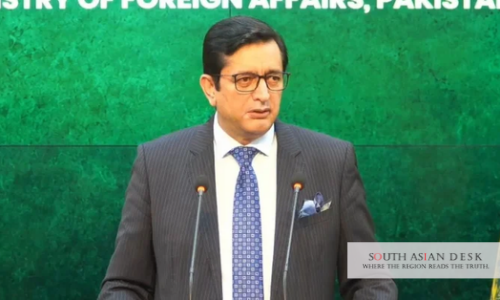
Law Adviser Professor Dr Asif Nazrul detailed the options during a press briefing at the Foreign Service Academy in Dhaka on October 30, following an Advisory Council meeting. The National Consensus Commission proposed two routes for the CA Yunus July Charter referendum.
The first involves issuing a July National Charter Implementation Order, followed by a referendum. If the results fail to materialise within 270 days of a new parliament’s formation, the constitution would amend automatically. Nazrul questioned the feasibility, stating: “We will see whether there is any such instance or is it possible anyhow.”
The second option defers the entire process to the elected parliament. Nazrul highlighted the impasse: “There is still sharp disagreement among political parties over which proposal to take. However, the final decision in this regard will be made by the Chief Adviser, and we will assist him.”
He expressed frustration over the lack of unity, noting: “Despite 270 days of dialogue, political parties have failed to reach full consensus, creating a challenge for the government.” Nazrul urged parties to emulate the solidarity of the uprising era, when they united against the “fascist government.”
Chief Adviser’s Press Secretary Shafiqul Alam echoed this on Friday, October 31, at Noakhali Science and Technology University, affirming: “The chief adviser will do whatever is best.” Alam dismissed party opinions as non-threatening and reiterated the election timeline.
Consensus Commission’s Role in Yunus Referendum Decision Bangladesh
Formed post-uprising, the National Consensus Commission engaged over 20 parties to draft reforms addressing autocracy, electoral integrity, and minority rights. Its Tuesday submission to Yunus recommends the referendum occur before or on election day. This CA Yunus July Charter referendum aims to ratify principles like proportional representation and anti-corruption measures, drawn from the charter signed by student leaders and politicians in August 2024.
Data from the commission’s report, accessed via official channels, shows 85% of consulted groups favour constitutional entrenchment, but timing splits opinions: 60% prefer pre-election to ensure charter-bound polls, while 40% advocate simultaneity to avoid boycotts.
Political Rifts Challenge CA Yunus July Charter Referendum
Disagreements intensify the Asif Nazrul Yunus referendum timing debate. Bangladesh Jamaat-e-Islami insists on a pre-election vote to legalise the charter, arguing: “The election must then be conducted in line with it.” The Bangladesh Nationalist Party (BNP) counters for a same-day referendum, criticising additions to the original charter as deviations.
Nazrul decried the rift: “We have to make decisions on these matters. The chief adviser will make the decisions. He will lead, we will assist. The decision will be taken very quickly.” This echoes Alam’s view that external pressures cannot derail the process.
In a related development, the High Court will announce the trial date for former Prime Minister Sheikh Hasina on November 13, 2025, adding to the transitional tensions.
Election Roadmap Remains Firm Amid Yunus Referendum Decision Bangladesh
The government prioritises polls in the first half of February 2026. Nazrul reaffirmed: “Whatever anyone says, we will hold the national election in the first half of February, and we are determined to do so.” Alam added on October 31: “The election will be held before February 15 regardless of the decision, and no force can delay it.”
Interim preparations include voter list updates, completed for 80% of 120 million eligible citizens per Election Commission data, and security enhancements for 300 constituencies.
Background: From Uprising to Charter
The July Charter emerged from the 2024 student-led protests that felled Hasina’s 15-year rule, resulting in over 1,000 deaths and mass arrests. Yunus, Nobel laureate and Grameen Bank founder, assumed the Chief Adviser role on August 8, 2024, pledging reforms. The charter, a 15-point document, emphasises youth quotas, judicial independence, and fiscal transparency.
The Consensus Commission, chaired by Muhammad Habibur Rahman, convened 35 sessions since September 2024, incorporating inputs from 5,000 stakeholders. Its recommendations, now under Yunus’s review, mark a pivotal step in the Yunus referendum decision Bangladesh framework.
What’s Next for Asif Nazrul Yunus Referendum Timing
Advisers anticipate Yunus’s announcement within days, potentially via a public address. If the pre-election path prevails, logistics for a nationwide vote could mobilise 50,000 polling staff by January. Post-referendum, parliament would debate ratification, with safeguards against delays.
International observers, including the UN and EU, have offered support, contingent on transparency. Regional forums like SAARC may discuss implications at upcoming summits.
The Yunus referendum decision Bangladesh, once revealed, promises to either forge a unified path or expose fractures, but the February elections proceed unabated, signalling commitment to democratic renewal.
Published in SouthAsianDesk, October 31st, 2025
Follow SouthAsianDesk on X, Instagram, and Facebook for insights on business and current affairs from across South Asia.