

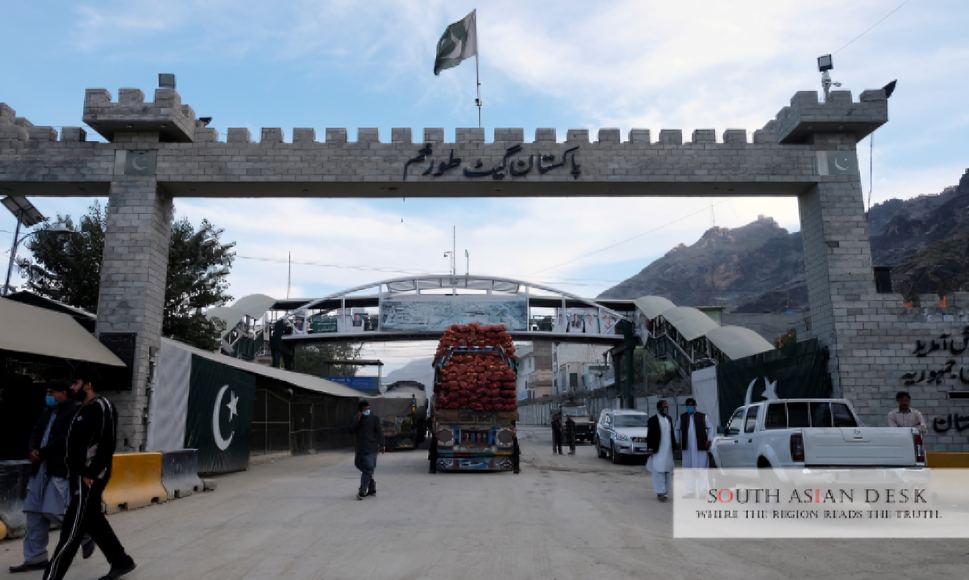
The Torkham border reopens on Friday for Afghan deportation, enabling the repatriation of undocumented migrants after a 20-day closure triggered by cross-border clashes. Khyber Deputy Commissioner Bilal Shahid confirmed the move, with hundreds crossing in the initial hours. This follows a ceasefire extension on October 31, 2025, though trade remains suspended.
Pakistan Resumes Afghan Refugees Removal at Torkham
Pakistan’s government has intensified efforts to repatriate undocumented Afghans, with the Torkham border reopening marking a pivotal step. Officials report that over 1,477,592 Afghan nationals had returned by October 16, 2025, via various crossings, including Torkham. The resumption addresses a backlog of stranded families, many expelled from provinces like Punjab.
Deputy Commissioner Bilal Shahid stated that the border now allows Afghan refugees to return to their homeland, prioritising those without valid documents. This aligns with Prime Minister Shehbaz Sharif’s directive that no further extensions will be granted to Afghan refugees, and all camps must close. Sharif emphasised treating elderly persons, women, and children with dignity during the process.
Data from the United Nations High Commissioner for Refugees (UNHCR) and International Organization for Migration (IOM) indicate that between October 19 and 25, 2025, approximately 18,630 Afghans returned through Torkham and Ghulam Khan crossings, despite partial disruptions. Overall, nearly 2.3 million Afghans have returned from Pakistan and Iran in 2025 alone, highlighting the scale of the operation. In the week prior to the full closure on October 11, arrests of undocumented Afghans surged by 19 per cent, with 6,564 detained nationwide.
The Ministry of Foreign Affairs clarified on November 1 that the Torkham border reopening focuses solely on repatriation, not trade resumption, which depends on improved security. Foreign Office Spokesperson Tahir Andrabi noted that all crossings remain closed for commercial activity, urging Afghanistan to prevent cross-border militancy.
Humanitarian Strain as Illegal Afghans Repatriated via Torkham October End
Thousands of Afghan families faced acute hardships during the closure, with Afghan Consul General Hafiz Mohibullah Shakir reporting on October 31 that hundreds of vehicles carrying returnees were stranded between Nowshera and Torkham. Many lacked food, water, or shelter, exacerbating vulnerabilities among registered refugees holding Proof of Registration (PoR) cards.
Shakir appealed for urgent aid, including water, tents, and provisions, criticising the UNHCR for failing to assist the stranded. The Afghan Embassy in Islamabad echoed this, demanding that Pakistan either reopen all ports or halt deportations until facilities improve.
Enforcement actions underscore the drive’s intensity. In Rawalpindi and Attock, over 50 landlords faced charges for renting properties to illegal Afghans, with 110 undocumented individuals detained and transferred to holding centres for deportation. Authorities classify harbouring such residents as a serious offence, promising stern penalties.
Security Context Behind the Closure
The Torkham shutdown stemmed from clashes on October 11, 2025, between Pakistani and Afghan forces, halting all movement and inflating essential goods prices in border regions. A ceasefire agreed in Doha on October 19 eased immediate tensions, extended until October 31. Qureshi Badloon, head of Information and Culture in Afghanistan’s Nangarhar province, welcomed the reopening: “Torkham gate is now open for refugees. We welcome our countrymen.”
Pakistan’s stance reflects broader security priorities, with Andrabi stating the country seeks no escalation but expects Afghanistan to curb militancy. This comes amid reports of stalled bilateral trade, entering its 19th day of disruption by October 30.
Background on Pakistan’s Afghan Repatriation Policy
Pakistan has hosted millions of Afghans for over four decades, stemming from conflicts like the Soviet invasion and subsequent instability. The current drive, launched in late 2023, targets undocumented migrants, with deadlines extended multiple times before the firm October 31, 2025, cutoff.
In August 2025, authorities began deporting even registered refugees, prompting UNHCR concerns over forced returns affecting around one million people. By April 2025, thousands crossed at Spin Boldak and Torkham in a fresh wave post-deadline expiry.
Government directives in January 2025 impacted Afghan nationals, including arrest protocols and flow monitoring. Quarterly IOM reports detail PoR holders’ options for voluntary return via UNHCR support, though many face re-entry barriers to Pakistan.
The policy intersects with economic pressures; border closures have stranded goods trucks, disrupting supply chains in Khyber Pakhtunkhwa and Nangarhar. In September 2025 alone, 45,473 Afghans returned through Torkham and Ghulam Khan, per UNHCR-IOM estimates.
This repatriation surge coincides with Taliban restrictions in Afghanistan, forcing UNHCR to close aid centres for returnees in September due to women’s access curbs. Returnees often arrive to limited services, compounding reintegration challenges.
Why This Matters in South Asia
The Torkham border reopening for Afghan deportation alleviates immediate humanitarian bottlenecks but exposes deeper regional fault lines. Pakistan’s actions, while framed as security measures, strain Afghan-Pakistani relations and displace communities across South Asia. With over two million returns in 2025, the policy influences migration patterns, trade flows, and stability in border provinces. It also tests international aid frameworks, as UNHCR grapples with funding shortfalls and access issues under Taliban rule. For South Asia, this underscores the interconnected costs of conflict, where one nation’s border policy ripples into neighbourly economies and refugee crises.
What’s Next for Repatriation Efforts when Torkham Border Reopens
Future phases hinge on sustained ceasefire adherence. Officials anticipate accelerated returns, with Pakistan committing to dignified processing. However, trade resumption at Torkham remains uncertain, potentially prolonging economic woes. Afghan authorities prepare reception facilities, while UNHCR scales up assistance. Monitoring will focus on vulnerable groups, with calls for bilateral dialogues to balance security and humanity.
In conclusion, the Torkham border reopens for Afghan deportation, reinforcing Pakistan’s resolve to manage its migrant population while navigating fragile peace.
Published in SouthAsianDesk, November 1st, 2025
Follow SouthAsianDesk on X, Instagram, and Facebook for insights on business and current affairs from across South Asia.
