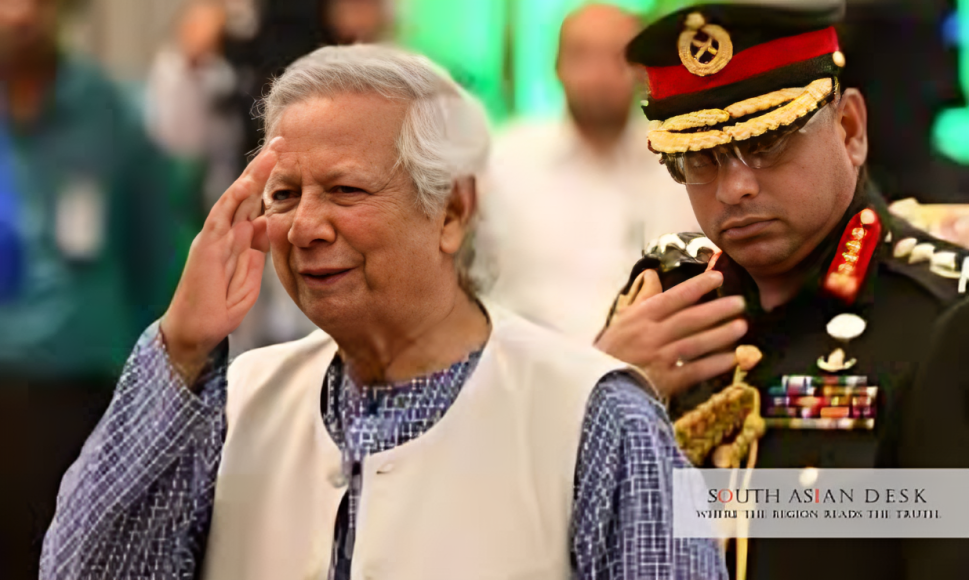
Dhaka, Monday, August 25, 2025 – Chief Adviser Professor Muhammad Yunus directed the army for election security in Bangladesh during a key meeting with service chiefs on Saturday evening. The order targets the 13th National Parliament election set for the first half of February 2026. National Security Adviser Dr Khalilur Rahman attended the session at State Guest House Jamuna. Yunus stressed free, fair and peaceful voting. Chiefs briefed him on preparations. This move bolsters interim government efforts after 15 months of stability.
Bangladesh’s push for secure elections under Yunus’s leadership signals a pivotal shift for South Asia’s democracy. The region faces fragile transitions post-authoritarian rule. A successful poll could inspire neighbours like Pakistan and Myanmar, grappling with instability. It tests interim governance models amid economic recovery and youth-led reforms. Failure risks renewed unrest, affecting trade corridors and refugee flows.
Yunus Directs Army for Election Security Bangladesh: Key Meeting Details
Professor Muhammad Yunus convened with Bangladesh’s top military leaders to prioritise CA Yunus armed forces election preparations. The Saturday gathering at State Guest House Jamuna focused on Bangladesh service chiefs meet Yunus polls strategy. Attendees included Army Chief General Waker-uz-Zaman, Navy Chief Admiral Mohammad Nazmul Hasan and Air Chief Marshal Hasan Mahmud Khan.
Yunus commended the forces for their role in national stability. “Members of all forces, including the army, have worked very hard to maintain law and order in the country over the past 15 months,” he stated. This acknowledgment highlights their shift from counterinsurgency to electoral support.
The chiefs outlined deployment plans. They assured full readiness for duties. Yunus responded with clear instructions. He urged comprehensive measures for flawless execution. The interim government views this as essential for voter confidence.
Deployment Scale in Focus
Authorities plan to mobilise 90,000 army personnel nationwide. This covers urban centres and rural polling stations. Navy deploys 2,500 members for coastal and riverine areas. Air force commits 1,500 personnel for aerial surveillance and logistics.
One army company stations in each upazila. This totals over 4,500 units across 495 sub-districts. The strategy aims to deter disruptions. Past elections saw violence claims. Current setups include rapid response teams.
Yunus emphasised coordination with police. Joint patrols will monitor hotspots. Technology aids oversight. Drones and communication networks enhance coverage. Budget allocations support equipment upgrades.
CA Yunus Armed Forces Election Preparations Gain Momentum
CA Yunus armed forces election preparations integrate lessons from recent crises. The 2024 uprising ousted prior rule. Yunus’s interim team prioritises reforms. Electoral security forms a core pillar.
Service chiefs detailed training programmes. Simulations cover crowd control and threat assessment. Personnel receive human rights briefings. Yunus praised this proactive approach. “The interim government is committed to holding the upcoming election in the first half of February in a free, fair, neutral, peaceful, and festive manner,” he affirmed.
Discussions touched logistics. Supply chains ensure timely arrivals. Bases near borders stay vigilant. Yunus directed reviews of vulnerability maps. Chiefs committed to weekly updates.
Bangladesh service chiefs meet Yunus polls underscores unity. Military apolitical stance reassures stakeholders. International observers note this positively. EU plans 150-200 monitors. US groups like IRI confirm deployments.
Quotes from the Table
Yunus reiterated trust in forces. He invited chiefs to Armed Forces Day on November 21. This gesture fosters morale. No chiefs quoted directly. Press releases confirm alignment.
Interim reforms complement security. July National Charter unites parties on conduct. Voter registration hits 95 per cent. Youth turnout expected high. Half population under 27.
Challenges persist. Disinformation campaigns loom. Yunus warned of foreign meddling. Forces train on cyber threats. Media literacy drives counter efforts.
Background: Interim Government’s Path to Polls
Bangladesh entered interim rule in August 2024. Student protests ended Sheikh Hasina’s tenure. Yunus assumed charge on August 8. His Nobel background lent credibility.
First 15 months focused stabilisation. Economy rebounded with 6.2 per cent growth forecast. Inflation eased to 9 percent. Remittances surged 12 per cent to USD 22 billion.
Electoral roadmap emerged early. Election Commission reformed. Caretaker model revived. Polls timetable announced March 2025. Delays avoided through consensus.
Armed forces transitioned smoothly. From 2024 operations to civic roles. Deployments aided flood relief. Public approval ratings exceed 70 percent.
Regional context amplifies stakes. South Asia watches closely. India’s border security ties in. Pakistan eyes governance lessons. Sri Lanka shares reform pains.
Yunus directs army for election security Bangladesh fits broader vision. Sustainable development goals integrate. Gender quotas in candidate lists push inclusion.
What’s Next: Timeline and Watchpoints
Election Commission schedules nominations in December. Campaigning starts January 2026. Polling days span three phases for logistics.
Observer missions arrive January. UN and Commonwealth teams join. Local civil society monitors 5,000 sites.
Security drills intensify September. Mock elections test chains. Yunus plans follow-up meets monthly.
Potential flashpoints include urban rallies. Forces prepare non-lethal tools. Voter education campaigns roll out.
Success hinges on execution. Transparent counting centres reduce disputes. Results announcement within 48 hours.
Yunus directs army for election security Bangladesh sets stage for renewal. Forces stand ready. Nation anticipates peaceful verdict. This chapter closes turmoil era. Fresh mandate awaits.
Published in SouthAsianDesk, November 2nd, 2025
Follow SouthAsianDesk on X, Instagram, and Facebook for insights on business and current affairs from across South Asia.