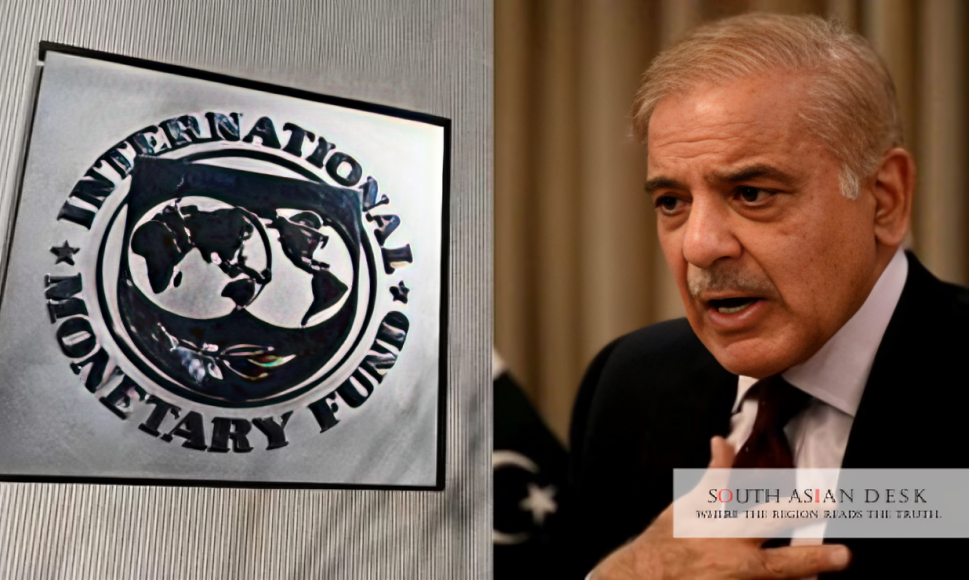
ISLAMABAD: The Pakistani government released its key IMF report release ahead of the IMF board meeting on Pakistan’s economic review. This document outlines adherence to bailout conditions for 2025 and seeks approval for further funding. Officials described it as a “milestone” in economic stabilisation efforts. The release addresses who, what, when, where, why, and how of Pakistan’s fiscal trajectory under international scrutiny.
This development carries weight across South Asia, where Pakistan’s economic health affects migrant remittances, cross-border trade, and regional security dynamics. A successful review could stabilize the rupee and mitigate the spillover effects of inflation on neighboring countries like India and Bangladesh. Failure risks heightened volatility, straining the subcontinent’s interconnected financial networks.
IMF Board Meeting Pakistan Economic Review Set for Crucial Verdict
The IMF board meeting on Pakistan’s economic review, scheduled for next week, will dissect the Pakistan Govt IMF report release. Finance Minister Muhammad Aurangzeb confirmed the timing during a briefing. “This report reflects our commitment to reforms,” he stated in an official release. The meeting evaluates progress since the last tranche disbursement in June 2025.
Data from the report show that Pakistan met 80% of its quantitative targets, including reducing the fiscal deficit to 6.9% of GDP from 7.5% the previous year. Reserves stood at $10.2 billion as of August 2025, up from $9.1 billion. Inflation eased to 11.2%, per preliminary figures. These metrics form the backbone of the IMF board meeting Pakistan economic review.
Secondary indicators reveal challenges. The current account deficit narrowed to $1.5 billion in the July quarter, driven by growth in textile exports. Remittances reached $3.2 billion per month, a record. Yet, debt servicing obligations loom at PKR 6.5 trillion for the fiscal year. The report emphasizes structural reforms, such as expanding the tax base, aiming for a 15% revenue-to-GDP ratio by 2026.
Pakistan IMF Bailout Conditions 2025: A Tighter Framework
Pakistan’s IMF bailout conditions for 2025 require stricter fiscal discipline than those of prior programs. The $7 billion Extended Fund Facility, approved in 2024, includes 28 benchmarks. Key among them: subsidy rationalisation and energy sector viability. The government report on IMF compliance claims full adherence to 22 targets and partial adherence to six.
Energy reforms top the list. Circular debt in the power sector dropped to PKR 2.3 trillion from PKR 2.6 trillion through tariff hikes and improved collections. “We have recovered PKR 150 billion in overdue bills,” noted a ministry spokesperson. Privatisation efforts advanced with bids for Pakistan International Airlines, though delays persist.
Monetary policy tightened, with the State Bank raising rates to 19.5% in July 2025 to combat imported inflation. The report projects GDP growth at 2.8% for 2025-26, below the 3.5% target but above last year’s 2.4%. External buffers strengthened via $500 million in green bonds issued in London.
Critics, including economists at the Pakistan Institute of Development Economics, argue that the 2025 IMF bailout conditions for Pakistan overlook social costs. Austerity measures lifted 2 million people out of poverty, but pushed food prices up by 15%. The report counters with social safety net expansions, allocating PKR 500 billion to the Benazir Income Support Programme.
Govt Report on IMF Compliance: Key Highlights and Gaps
The govt report on IMF compliance, a 150-page dossier, breaks down quarterly performance. It highlights success in capital expenditure, up 20% to PKR 1.2 trillion, with a focus on CPEC Phase II projects. Digital tax filings rose 40%, adding 500,000 new taxpayers.
Quotes from the document underscore resolve. “Pakistan stands at a crossroads; this compliance demonstrates resolve,” reads the executive summary. IMF Resident Representative Esther Perez confirmed receipt, tweeting: “Looking forward to constructive dialogue
Gaps remain in governance reforms. Anti-corruption benchmarks lag, with only 60% implementation. The report pledges accelerated NAB prosecutions. Climate resilience, a new pillar, allocates PKR 100 billion for flood recovery following the 2022 deluge.
Background: Pakistan’s Rocky IMF Journey
Pakistan’s ties with the IMF date to 1958, with 24 programmes since. The current iteration, launched in 2024, averted default after reserves dipped to $3 billion. Previous bailouts in 2019 and 2023 experienced slippages, resulting in suspensions. This cycle emphasises ownership, with parliamentary oversight committees monitoring progress.
Regional context amplifies urgency. South Asia’s GDP growth averages 6%, but Pakistan’s growth rate lags at 2.5%. Neighbours watch closely; India’s $600 billion reserves contrast sharply, influencing the dynamics of bilateral aid.
What’s Next: Board Decision and Reform Roadmap
Following the release, the finance team travels to Washington for bilateral talks. Approval of the seventh tranche, worth $1 billion, hinges on board nod by September 2025. Rejection could trigger market jitters, with the KSE-100 index already volatile at 68,000 points.
Looking ahead, the Pakistan government’s release of the IMF report sets the tone for mid-term reviews in December. Sustained compliance promises debt reprofiling, easing Pakistan’s external liabilities by PKR 25 trillion. Failure invites tougher conditions, potentially including capital controls.
In summary, the release of Pakistan’s IMF report marks a pivotal juncture, striking a balance between optimism and caution in Pakistan’s IMF bailout conditions for 2025.
Published in SouthAsianDesk, November 5th, 2025
Follow SouthAsianDesk on X, Instagram, and Facebook for insights on business and current affairs from across South Asia.