New Delhi anti-pollution protests turned tense on Sunday when police detained dozens of demonstrators at India Gate, demanding urgent action against choking smog that has gripped the capital. The event unfolded around 7:30 p.m., with families and activists raising banners amid an air quality index that hovered in the very poor range. Authorities cited unauthorised assembly as the reason for the intervention, bundling protesters into buses. Opposition figures decried the move, while officials pledged ongoing anti-pollution measures. This clash highlights the escalating public frustration with seasonal air crises.
These New Delhi anti-pollution protests matter across South Asia, where cities like Lahore and Karachi face similar smog onslaughts, straining health systems and economies in a region home to over 1.9 billion people. Delhi’s plight highlights a shared vulnerability to crop burning, vehicular emissions, and industrial pollution, underscoring the need for cross-border cooperation at forums like the UN climate talks.
India Gate Smog Protest Draws Families and Activists
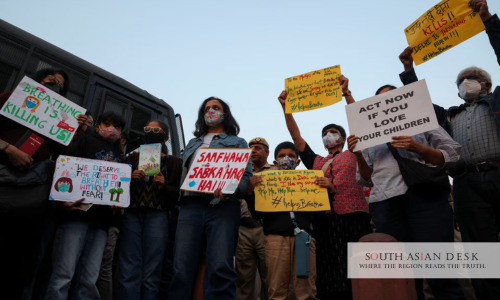
Hundreds gathered at the iconic India Gate monument on November 9, 2025, for what organisers called a peaceful India Gate smog protest. Protesters, including parents with young children, waved placards reading “Breathing is killing us” and “Our right, clear air”. Chants echoed through the evening haze as participants highlighted the toll of Delhi’s toxic air demonstration on daily life.
Visuals from the scene showed a diverse crowd, from masked youth to elders, converging under the war memorial’s arches. One participant, Neha, who declined to provide a surname, told reporters: “We have only one problem, and that is clean air. This problem has been going on for many years, but no action is being taken.” Her words captured the raw urgency driving the New Delhi anti-pollution protests, where families invoked the health of their children amid rising respiratory cases.
The assembly swelled as dusk fell, with estimates from on-site reports placing attendance at over 200. Demonstrators urged stricter enforcement of emission norms and bans on stubble burning in neighbouring states. This India Gate smog protest marked a rare public outburst in a city where such actions often face swift dispersal, reflecting deepening exasperation with annual winter woes.
Delhi Air Pollution Detention Ignites Political Backlash
By 8 pm, New Delhi police moved in, ordering an immediate evacuation. Officers described the site as non-designated for gatherings, leading to the detention of dozens due to Delhi air pollution. Footage captured authorities physically escorting protesters, some dragged towards waiting buses. Sources close to the operation confirmed at least 50 individuals were briefly held, with most released after identification.
The detentions sparked immediate condemnation. Congress leader Rahul Gandhi posted on X: “The right to clean air is a basic human right. Our Constitution guarantees the right to peaceful protest. Why are citizens who have been peacefully demanding clean air being treated like criminals? Air pollution is affecting crores of Indians, harming our children and the future of our nation.” Gandhi’s statement, viewed over 799,000 times within hours, amplified calls for accountability.
Aam Aadmi Party (AAP) leaders echoed the sentiment, accusing the Bharatiya Janata Party (BJP)-led Delhi government of suppressing dissent. “Delhiites detained during protest against toxic air,” read one AAP release, framing the Delhi air pollution detention as an assault on democratic expression. Protesters who were released later recounted rough handling, but no formal charges were filed, underscoring the swift yet controversial nature of the response.
This Delhi air pollution detention fits a pattern in New Delhi anti-pollution protests, where security forces prioritise order over assembly rights. Legal experts noted the action aligns with Section 144 restrictions occasionally imposed in high-pollution zones, though no such order was active on Sunday.
Government Vows Action Amid Delhi Toxic Air Demonstration
Delhi’s Environment Minister, Manjinder Singh Sirsa, responded via a BJP Delhi statement on X, affirming the commitment to pollution curbs. “We will continue every possible effort to rid ourselves of pollution. This is the resolve of our government,” Sirsa said. He highlighted recent initiatives, including staggered office timings and expanded public transport, as part of a multi-pronged strategy.
The ministry referenced October’s cloud-seeding trial, which aimed to induce rain but yielded limited results due to unfavourable winds. Officials also pointed to the National Clean Air Programme, which has allocated INR 9,000 crore (approximately USD 1.07 billion) since 2019 for urban air quality improvements. Yet, critics argue that implementation lags, with farm fire incidents up 15% this season, according to satellite data.
In the wake of the Delhi toxic air demonstration, the Commission for Air Quality Management (CAQM) activated Stage II of its Graded Response Action Plan on November 9. Measures include bans on non-essential diesel generators and the control of construction dust. Sirsa’s office emphasised collaboration with Punjab and Haryana to curb stubble burning, a key contributor to transboundary pollution.
Air Quality Plunges to Hazardous Levels
Delhi’s air quality deteriorated sharply on November 10, 2025, with an overall Air Quality Index (AQI) of 391, classifying it as “very poor” according to Central Pollution Control Board (CPCB) standards. Hotspots like Bawana recorded 412, entering “severe” territory, while Wazirpur hit 397. Over half the city’s 39 monitoring stations reported AQI above 300, driven by stagnant winds and residual Diwali emissions.
CPCB data shows PM2.5 levels averaging 250 micrograms per cubic metre—eight times the World Health Organisation’s safe limit of 25. PM10 particles reached 400 in industrial belts. These figures from the Delhi toxic air demonstration exacerbate a public health emergency, with hospitals reporting a 20% spike in asthma admissions since October.
Meteorologists attribute the surge to a cold front trapping pollutants, a recurring pattern in November. The CPCB bulletin, updated at 4 pm on November 10, warns of prolonged haze without wind shifts, urging the use of masks and reduced outdoor activity.
Background
Delhi’s air pollution crisis stems from rapid urbanization and agricultural practices. Stubble burning in Punjab contributes 30-40% of winter PM2.5, according to studies by the Indian Institute of Tropical Meteorology. Vehicular exhaust accounts for 20%, with over 12 million registered vehicles contributing to road congestion. Industrial clusters in the National Capital Region add to the mix, despite cleaner fuel mandates.
Historically, anti-pollution protests in New Delhi have been sporadic, peaking during the 2019 “Choking Delhi” campaign. That year, AQI touched 500, prompting school closures. Recent efforts, such as the odd-even vehicle scheme, offered temporary relief but failed to address the root causes. Regional parallels abound: Lahore’s AQI mirrored Delhi’s at 380 on November 10, fuelling calls for SAARC-level interventions.
The UN Environment Programme has identified South Asia’s air quality as a top global concern, with an estimated 1.6 million premature deaths annually attributed to pollution. Pakistan’s delegation at recent UN climate sessions highlighted transboundary haze from India, though bilateral talks remain stalled.
What’s Next
Authorities plan emergency measures, including potential school suspensions if AQI exceeds 450. The CAQM meets on November 12 to review enforcement. Activists vow to regroup, eyeing virtual campaigns to sustain momentum. For South Asia, the protests signal a push for UN-backed regional pacts on emissions.
As the anti-pollution protests in New Delhi fade into the smog, the call for breathable air lingers, demanding sustained policy shifts to protect future generations.
Published in SouthAsianDesk, November 9th, 2025
Follow SouthAsianDesk on X, Instagram, and Facebook for insights on business and current affairs from across South Asia.