

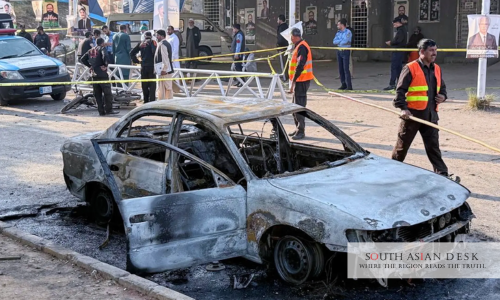
India and Pakistan launched parallel probes on Wednesday into deadly blasts in their capitals that claimed 25 lives, fuelling an intense India Pakistan blame game following blasts. The attacks struck Islamabad’s court complex on Tuesday and Delhi’s Red Fort on Wednesday, prompting swift accusations and security lockdowns. Officials reported 12 deaths in Pakistan and 13 in India, with dozens injured. Suicide bombing in Islamabad; suspected explosive device at Red Fort. Unclear motives, but claims point to state-sponsored terror.
These incidents matter deeply in South Asia, where India Pakistan tensions have long simmered over Kashmir and cross-border militancy. The mutual blame escalates India Pakistan tensions, potentially stoking nationalist sentiments and disrupting trade or talks. With both nations nuclear-armed, even rhetorical salvos could spiral into military posturing, affecting regional stability from Afghanistan to the Bay of Bengal. Economists warn of market jitters, while refugees in border areas brace for fallout.
Pakistan Accuses India Over Islamabad Suicide Blast
A suicide bomber detonated outside Islamabad’s G-11 District Courts on Tuesday afternoon, killing 12 people and wounding 36 others. The blast ripped through a busy entrance, scattering debris and sparking panic among lawyers and visitors. Pakistani Interior Minister Mohsin Naqvi confirmed the suicide nature of the attack, stating the bomber failed to enter the complex but triggered the device at the gate. Rescue teams evacuated the wounded to nearby hospitals, where five remained in critical condition by evening.
Pakistan’s leadership wasted no time in pointing fingers. Prime Minister Shehbaz Sharif condemned the “cowardly act” and directly accused India of backing the perpetrators. In a televised address, he claimed the explosion bore hallmarks of “Indian state terrorism” aimed at destabilising his government. President Asif Ali Zardari echoed this, calling it a “heinous plot by Indian proxies” in a statement from the President’s Secretariat. Defence Minister Khawaja Asif went further, implicating both Afghan elements and Indian intelligence in a bid to sow chaos. He told reporters, “This is not the work of locals alone; external hands, including from across the border, are evident.”
The Tehrik-i-Taliban Pakistan (TTP) swiftly claimed responsibility via a statement on social media, saying the target was “symbols of injustice.” Yet Islamabad dismissed this as a cover, insisting preliminary intelligence linked the bomber to Indian-supported networks. Security forces sealed the site, deploying bomb squads and forensic teams. Pakistan’s Counter-Terrorism Department announced a full investigation, vowing arrests within days.
This Pakistan accuses India Islamabad suicide blast narrative fits a pattern of post-attack rhetoric. In 2019, similar claims followed the Pulwama attack, leading to airstrikes. Analysts note Islamabad’s domestic pressures, including economic woes and political infighting, may amplify such accusations to rally support.
India Rejects Pakistan’s Delhi Red Fort Terror Claims
Just 24 hours later, an explosion rocked Delhi’s iconic Red Fort on Wednesday morning, killing 13 tourists and bystanders during a peak visiting hour. The device, hidden in a backpack near the entrance, caused structural damage and a stampede that added to the toll. Delhi Police invoked the Unlawful Activities (Prevention) Act, classifying it as a terror incident. The National Investigation Agency (NIA) took charge, combing the site for clues.
India’s response was unequivocal. Ministry of External Affairs spokesperson Randhir Jaiswal branded Pakistan’s counter-claims “baseless and delirious,” rejecting any link to the Islamabad blast. “These are desperate diversionary ploys by a failing regime in Islamabad,” he said during a briefing. Prime Minister Narendra Modi, addressing Parliament, urged calm but warned of “zero tolerance” for external threats. Home Minister Amit Shah directed enhanced border vigilance, deploying additional CRPF units along the Line of Control.
The India rejects Pakistan Delhi Red Fort terror claims stance underscores New Delhi’s long-held view that Pakistan harbours militants. Intelligence sources hinted at Lashkar-e-Taiba involvement, a group India has accused Islamabad of shielding. Forensic experts recovered traces of RDX explosive, commonly linked to Pakistan-based outfits. By 4:35 PM, authorities had detained three suspects for questioning, though no group claimed the attack.
Eyewitnesses described chaos: “One moment we were posing for photos; the next, screams everywhere,” said visitor Priya Sharma, 28, from Mumbai. Hospitals treated 25 injured, mostly with shrapnel wounds. The site, a UNESCO heritage landmark, saw closures extended indefinitely.
Mutual Blame Escalates India Pakistan Tensions
The back-and-forth has sharpened edges in bilateral ties. Pakistan summoned India’s chargé d’affaires in Islamabad, protesting the “fabricated narrative” on Red Fort. India reciprocated, calling in Pakistan’s diplomat over Sharif’s remarks. Diplomatic channels, already strained post-2024 elections in both countries, now face shutdown risks.
Social media amplified the fray. Hashtags like #IndiaPakistanBlameGame trended, with users sharing unverified videos of the blasts. Official handles urged restraint, but misinformation spread unchecked. Border trade at Wagah-Attari halted temporarily, costing traders PKR 500 million in one day alone.
In South Asia, this mutual blame escalates India Pakistan tensions beyond rhetoric. Stock markets dipped: Pakistan’s KSE-100 fell 2.5%, India’s Sensex shed 1.8%. Aid agencies like the UN expressed concern, calling for de-escalation to avert humanitarian crises.
Historical Context: India Pakistan Blame Game
Ties between the neighbours have frayed since 1947 partition. Key flashpoints include the 2008 Mumbai attacks and 2019 Balakot strikes, both blamed on Pakistani soil. Recent ceasefires along the LoC hold tenuously, but blasts like these test resolve.
Background: A Cycle of Violence
South Asia’s security landscape remains fraught. Pakistan grapples with TTP resurgence, claiming over 800 lives in 2025 alone. India battles sporadic urban attacks, attributing 70% to cross-border groups per NIA data. Shared intelligence via the 2015 Lahore pact has lapsed, exacerbating distrust.
The blasts coincide with monsoon-season militancy spikes, when smuggling eases. Experts like Michael Kugelman from the Wilson Center note, “Timing suggests coordinated provocation, but evidence is scant.” Both sides boosted military drills last month, fuelling speculation.
What’s Next: Probes and Diplomatic Standoff
Investigations proceed amid scepticism. Pakistan’s FIA leads the Islamabad probe, promising forensic results by week’s end. India’s NIA aims for breakthroughs within 72 hours. International observers, including the US, urged cooperation, but envoys doubt joint efforts.
Forward momentum hinges on restraint. A Shanghai Cooperation Organisation summit next month could offer dialogue, yet the India Pakistan blame game following blasts dims prospects. As sirens fade, the real explosion may be in fractured trust, with South Asia watching warily.
Published in SouthAsianDesk, November 12th, 2025
Follow SouthAsianDesk on X, Instagram, and Facebook for insights on business and current affairs from across South Asia.
