

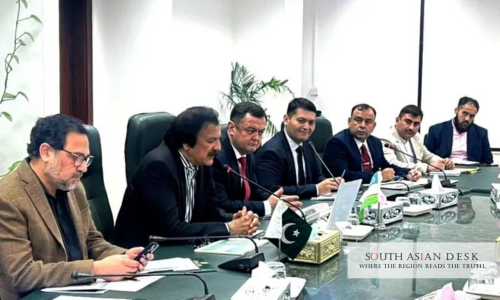
Pakistan Uzbekistan pharma joint committee formed during bilateral talks on Monday, November 17, 2025, aims to enhance pharmaceutical trade by resolving certification delays. Officials from both nations agreed to include drug regulators and industry associations. The pact addresses barriers in medicine approvals and banking. Discussions targeted USD 2 billion in overall bilateral trade. This initiative, announced at 4:35 PM on Monday, August 25, 2025, marks a step in economic integration.
The 8th Review Session of Pakistan-Uzbekistan Cooperation highlighted pharmaceuticals as a priority sector. Haroon Akhtar Khan, Special Assistant to the Prime Minister on Industries and Production, chaired the meeting. Participants included federal and provincial officials, the Special Investment Facilitation Council, business leaders, and diplomats. The agreement establishes the Pakistan Uzbekistan pharma joint committee to tackle regulatory hurdles swiftly. Uzbekistan’s market offers untapped potential for Pakistani generics, which dominate 90 per cent of domestic needs.
Pakistan Uzbekistan Pharma Joint Committee: Key Components and Goals
The Pakistan Uzbekistan pharma joint committee comprises the Drug Regulatory Authority of Pakistan (DRAP), Uzbekistan’s equivalent agency, and the Pakistan Pharmaceutical Manufacturers Association (PPMA). This tripartite structure ensures regulatory alignment and industry input. The body will focus on expediting certification of Pakistani medicines in Uzbekistan, where delays have hampered exports. Khan assured: “The certification process would be expedited.”
Bilateral trade currently stands at USD 100 million annually, with pharmaceuticals contributing modestly. Pakistan exports generics and over-the-counter drugs, but regulatory mismatches limit growth. The committee targets mutual recognition of standards to cut approval times from months to weeks. Uzbekistan seeks affordable Pakistani drugs amid its healthcare expansion. Pakistani firms eye Uzbekistan’s USD 500 million pharma market, projected to grow 10 per cent yearly.
The session also addressed banking integration. Several Pakistani banks stand ready to facilitate transactions, reducing reliance on third-country routes. The National Bank of Pakistan plans a branch in Tashkent to ease payments. Uzbek Ambassador Alisher Takhtayev emphasised: “Connecting the markets of Central and South Asia remained a central objective for both nations.” This Pak-Uzbek pharma trade body will oversee pilot projects for joint ventures in manufacturing.
Pak-Uzbek Pharma Trade Body: Broader Economic Linkages
The Pak-Uzbek pharma trade body extends beyond drugs to foster synergies in textiles, surgical instruments, mining, and information technology. Aviation emerged as a catalyst, with calls for direct flights from Karachi to Tashkent. Khan stated: “Pakistan-Uzbekistan air links were essential for unlocking commercial and travel opportunities. He added that Uzbekistan could serve as a new gateway for travel between the Gulf region and Europe.”
Pakistan’s pharma sector, valued at USD 3.29 billion, grew 13.1 per cent annually from 2018 to 2021. Exports reached USD 250 million in 2024, per Trade Development Authority of Pakistan data. Uzbekistan imports 80 per cent of its medicines, creating opportunities for Pakistani suppliers. The body will negotiate tariff reductions and quality assurance pacts.
Uzbekistan’s pharma market emphasises affordability, aligning with Pakistan’s strength in low-cost generics. The joint committee plans quarterly meetings to monitor progress. Initial focus: Harmonising good manufacturing practices under WHO guidelines. PPMA representatives hailed the move as a “game-changer” for small exporters.
Regulatory Hurdles and Solutions
Certification delays stem from differing standards. Pakistani drugs often require re-testing in Uzbekistan, inflating costs by 20-30 per cent. The Pakistan Uzbekistan pharma joint committee will introduce a fast-track lane for pre-approved products. DRAP committed to reciprocal inspections. Uzbekistan’s State Committee on Pharmaceuticals will reciprocate.
Banking issues compound problems, with transaction fees averaging 5 per cent via intermediaries. The new branch and local banking ties aim to slash this to under 2 per cent. Trade finance guarantees from both export credit agencies will support small firms.
Uzbekistan Pharma Cooperation Pakistan: Regional Context
Uzbekistan pharma cooperation Pakistan builds on Shanghai Cooperation Organisation (SCO) frameworks. A September 2023 SCO conference in Suzhou, China, gathered regulators from Pakistan, Uzbekistan, and others. DRAP’s Asim Rauf noted: “The SCO region holds immense potential for enhancing pharmaceutical collaboration, and we are committed to contributing to this shared vision.”
Pakistan’s Strategic Trade Policy targets USD 1 billion in Central Asian exports by 2027. Pharmaceuticals lead, with Uzbekistan as a gateway to five landlocked states. Bilateral trade hit USD 100 million in 2024, up 25 per cent from prior year. Overall goal: USD 2 billion by 2030. Ambassador Tukhtaev affirmed: “Pakistan and Uzbekistan are committed to achieve target of the bilateral trade volume worth one billion dollar” in interim steps.
The Pak-Uzbek pharma trade body aligns with Pakistan’s “Look East” policy, diversifying from traditional markets. Uzbekistan’s reforms since 2016 opened sectors, boosting FDI to USD 9 billion. Pakistani investors eye joint ventures in active pharmaceutical ingredients.
Why This Matters in South Asia
Pakistan Uzbekistan pharma joint committee strengthens economic corridors linking South and Central Asia. It counters regional fragmentation, where trade volumes lag at 5 per cent of potential. For Pakistan, facing USD 30 billion import bills for drugs, exports via this body could save PKR 50 billion annually in forex. Uzbekistan gains access to quality generics, curbing 15 per cent inflation in healthcare costs.
South Asia benefits from diversified supply chains amid global disruptions. The initiative supports SDGs on health access, impacting 500 million in the extended neighbourhood. It bolsters CPEC extensions, with pharma hubs in Gwadar eyeing Uzbek routes. Stability in Afghanistan could amplify flows, but current barriers persist.
Broader ties reduce dependency on China and India, fostering balanced geopolitics. Trade growth aids job creation: Pakistan’s pharma employs 90,000; expansions could add 10,000 roles. Regional forums like ECO gain momentum, targeting USD 100 billion intra-trade.
Background: Evolving Bilateral Relations
Pakistan and Uzbekistan elevated ties in 2021 via a joint declaration, pledging USD 3 billion trade. Pharma emerged post-2022, with MOUs on health cooperation. The 8th review session followed virtual talks in 2024. Pakistan’s pharma evolved from aid-dependent in the 1970s to a USD 3 billion powerhouse, exporting to 60 countries.
Uzbekistan’s 2017 liberalisation spurred pharma imports to USD 400 million. SCO health working group facilitated exchanges. DRAP’s guidelines, updated November 2024, eased foreign registrations.
What’s Next: Implementation Roadmap
The committee convenes first in Q1 2026, with certification pilots by mid-year. Air services talks advance via bilateral aviation panel. Monitoring via annual reviews ensures USD 500 million pharma trade milestone by 2028. Pakistan Uzbekistan pharma joint committee positions both nations for sustained growth in a competitive landscape.
Published in SouthAsianDesk, November 18th, 2025
Follow SouthAsianDesk on X, Instagram, and Facebook for insights on business and current affairs from across South Asia.
