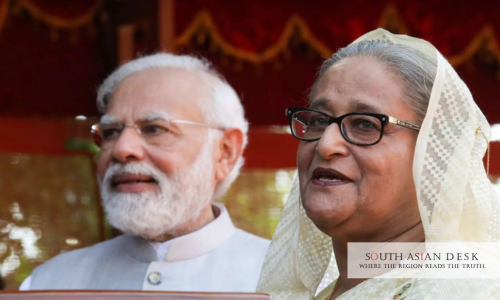
A special tribunal in Dhaka sentenced former Prime Minister Sheikh Hasina to death on Monday for crimes against humanity during the 2024 protest crackdown. The Hasina conviction strains India Bangladesh ties as Dhaka demands her extradition from India where she lives in asylum. Bangladesh’s interim government views the verdict as justice for over 1,400 deaths. India has not responded officially. The ruling follows Hasina’s ouster in August 2024 amid student-led unrest. This marks the first major test for bilateral relations since Muhammad Yunus took interim charge.
The Hasina conviction strains India Bangladesh ties in South Asia by risking economic interdependence worth $13 billion annually. Bangladesh relies on India for 70% of its raw materials and energy imports. India accesses Bangladesh for north-eastern connectivity across a 4,096km border. Strains could fuel extremism or refugee flows affecting regional security. Trade data shows resilience but political friction threatens projects like rail links and power grids. Dhaka’s pivot to China and Pakistan amplifies concerns for New Delhi’s influence.
Sheikh Hasina Extradition from India: Diplomatic Hurdles
The tribunal convicted Hasina in absentia for ordering lethal force against protesters. Charges include mass killings and enforced disappearances. The 2024 uprising killed at least 1,400 people and injured thousands. Hasina fled to India seeking humanitarian protection. Bangladesh renewed calls for Sheikh Hasina extradition from India immediately after the verdict. Interim Foreign Affairs Adviser Md Touhid Hossain stated the request stands firm under the 2013 extradition treaty. “We have already made the formal request. India must honour bilateral commitments,” Hossain told reporters in Dhaka.
India faces limited options on Sheikh Hasina extradition from India. The treaty allows refusal for political offences or humanitarian grounds. New Delhi granted asylum citing threats to Hasina’s life. Officials declined comment on the conviction. A 2023 MEA brief on India Bangladesh relations 2025 highlights shared history but notes evolving challenges. No fresh statement emerged by 4:35 PM on Monday. Analysts say extradition remains unlikely given Hasina’s ties to Indian leadership.
Public sentiment in Bangladesh sours ties. A Centre for Alternatives survey shows 75% view China favourably versus 11% for India. Protests targeted Indian missions post-verdict. Dhaka cancelled judicial exchanges and slowed energy deals. Bangladesh leans towards Beijing for infrastructure loans. Pakistan and Turkey gain ground in defence talks. These shifts test India Bangladesh relations 2025 amid upcoming elections.
India Bangladesh Relations 2025: Trade Amid Tension
Bilateral trade hit $13 billion in 2024 with India exporting $11.32 billion in cotton yarn, machinery and petroleum. Bangladesh sent $1.86 billion in garments and jute. February 2025 data records $1.04 billion Indian exports against $151 million imports. India supplies electricity via grids and LNG from ports. Over $8 billion in concessional credit flowed since 2015. Duty-free access covers 100 Bangladeshi items.
The Hasina conviction strains India Bangladesh ties by halting connectivity projects. Rail links built under Hasina stall. Border haats face delays. Yunus’s administration reviews deals for “de-Indianising”. A MEA document from 2024 outlines 2025 goals for mutual recognition of standards and port access. Yet friction rises over water sharing and transit fees.
Experts urge patience. Pinak Ranjan Chakravarty, former Indian high commissioner to Dhaka, said: “Foreign policy isn’t driven by public perception or morality. Relations between states rarely are.” He noted economic ties endured past strains like 2001-2006 BNP rule. Trade grew then despite cool politics. Bangladesh needs Indian cooperation for water and power. “It would be difficult for Bangladesh to function without India’s co-operation,” said a South Asian studies professor.
Hasina leads the Awami League from exile. She criticised the tribunal as “politically motivated” in a video message. Supporters rally in Delhi. The verdict bars her from 2025 polls. Yunus promises credible elections by mid-year. India monitors to avoid Islamist gains.
The 2013 extradition treaty binds both. Article 4 exempts political crimes. Hasina’s case qualifies. India extradited militants before but spared allies. Relocation to a third country poses security risks.
Background
India aided Bangladesh’s 1971 birth. Ties flourished under Hasina with $3 billion in projects. The 2024 uprising reversed gains. Yunus heads a caretaker regime until elections. Protests exposed graft and suppression. Over 300 security personnel died too. The tribunal formed post-ouster targets ex-leaders.
Trade interdependence dates to 1972. India built cross-border rails. Bangladesh hosts 200,000 Indian students yearly. Shared rivers like Teesta remain unresolved. Climate pacts advance but politics hinder.
What’s Next
Elections could stabilise India Bangladesh relations 2025 if fair. A new Dhaka government may sideline Hasina for pragmatism. India eyes engagement with military and parties. Trade forums resume in December. Persistent demands for Sheikh Hasina extradition from India risk escalation. Watch for MEA response this week.
The Hasina conviction strains India Bangladesh ties yet underscores enduring economic bonds. Stability demands quiet diplomacy.
Published in SouthAsianDesk, November 20th, 2025
Follow SouthAsianDesk on X, Instagram, and Facebook for insights on business and current affairs from across South Asia.