

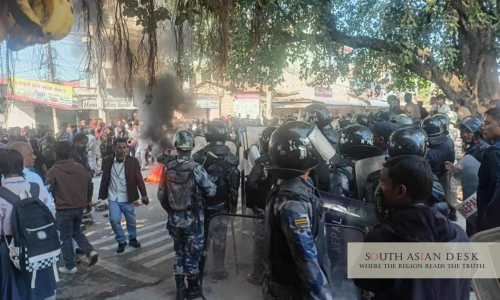
Nepal Simara Gen Z protests intensified on Thursday, November 21, 2025, when youths clashed with police in Simara, Bara district. The demonstrations, sparked by Wednesday’s UML clash Nepal youths brawl, drew over 100 participants demanding arrests. Authorities imposed a curfew from 12:45 p.m. to 8 p.m. Ten injuries were reported overall, with flights at Simara Airport halted.
These Nepal Simara Gen Z protests signal deepening youth discontent in Nepal, a South Asian hotspot for generational shifts. With elections looming in March 2026, unrest risks spilling across borders to India, disrupting trade at Birgunj and amplifying calls for anti-corruption reforms that echo regional youth movements.
Clash Origins and Escalation
The Nepal Simara Gen Z protests stemmed from opposition to a CPN-UML event. On Wednesday, November 20, between 100 and 150 youths assembled at Simara Chowk by 10:00 a.m. They aimed to block UML General Secretary Shankar Pokharel and Politburo member Mahesh Basnet, who were scheduled to land at Simara Airport at 10:30 a.m. for a Youth Awakening Campaign in Parwanipur.
Verbal exchanges turned physical near the chowk, 200 metres from the airport. UML cadres allegedly assaulted protesters, injuring six Gen Z supporters. Victims included district coordinator Samrat Upadhyaya, Shankar Pathak, Saurabh Karki, Sheikh Safik, and Tek Bahadur Bhandari. Injuries affected faces and heads. Protesters received treatment at Simara Hospital.
Police fired tear gas to contain the spread. Demonstrators vandalized the airport gate, prompting a brief suspension of flights. Buddha Air cancelled all Kathmandu-Simara services that day. A UML welcome gate and party flags fell to stones and fire.
Gen Z district coordinator Samrat Upadhyaya filed a complaint against six UML cadres at the Area Police Office. He accused them of attacking peaceful protesters in front of over 1,000 officers. “We protested peacefully when UML cadres attacked us,” Upadhyaya stated.
Tensions lingered into Thursday. Youths regrouped at Simara Chowk from 11 am, burning tyres and chanting against the “outgoing murderous government.” Police dispersed them with force, adding four more injuries. The total reached 10, according to hospital records.
Curfew and Security Measures
Authorities declared a Simara curfew, but Gen Z defiance challenged it from 12:45 p.m. on Thursday. The order covered 500 metres along the Gandak canal-Pathlaiya road and around Simara Airport. It aimed to restore order but proved ineffective. Traffic stalled, yet protesters persisted.
Chief District Officer Dharmendra Kumar Mishra extended the curfew to 8 pm. He cited risks to public safety. Police detained two UML-affiliated ward chairs: Dhan Bahadur Shrestha of Ward 2 and Kaimudin Ansari of Ward 6, Jeetpur Simara Sub-metropolitan City. Arrests followed accusations of obstructing earlier detentions.
The District Administration Office in Bara banned gatherings in 12 districts, including Bara. Security deployed 500 personnel, including armed police. No deaths reported, but ambulances ferried the injured. Gen Z spokesperson Manish Sapkota noted four severe cases from Thursday. “Our demands remain unmet,” he said. Kapil Kharel, another leader, claimed two attackers surrendered voluntarily.
The 2025 Bara district protests disrupted local commerce. Shops shuttered, highways blocked briefly. Residents stocked essentials amid fears of escalation.
Political Demands and UML Response
Protesters in these Nepal Simara Gen Z protests are seeking the arrest of all six named assailants. They also demand compensation for injuries and probes into police inaction. Upadhyaya’s Tuesday Facebook post ignited the spark, urging action against government “murderers.”
CPN-UML condemned the violence. Party officials called it “orchestrated disruption.” Basnet and Pokharel were rerouted to Parwanipur by road, addressing 500 supporters without incident.
The clash highlights the UML clash with the Nepal youths’ frictions. Gen Z views UML as emblematic of nepotism, a grievance from September’s nationwide uprising that ousted KP Oli. That movement claimed 76 lives and Rs50 billion in damages. The District Security Committee mediated talks on Friday at the Armed Police Force Technical School, Pathahiya. Gen Z delegates Sudhan Gurung, Purushottam Yadav, and Shiva Yadav arrived from Janakpur. No signed accord emerged, but a verbal six-point deal addressed demands.
Key points included swift arrests, medical aid, impartial inquiry, no reprisals, established dialogue channels, and the right to protest. Gen Z vowed to resume on Tuesday if progress stalls by Monday.
Regional Ripples and Youth Activism
The 2025 Bara district protests tie into Gen Z’s broader campaign. Since September, youths rallied against corruption, unemployment at 21%, and 2,000 daily migrant outflows. Remittances account for 25% of GDP, yet opportunities remain underutilized.
India watches closely. Simara’s proximity to the Birgunj border exacerbates concerns about smuggling if unrest spreads. The Kathmandu Post reports that tourism has dipped, with Indian pilgrims avoiding sites like the Kailash Manasarovar routes. Social media amplified calls. Hashtags #NepalGenZProtest trended, with videos of tear gas and burning tyres viewed 1,000 times. Posts from activists like Anusha Koirala showed clashes, urging solidarity.
Economists warn that growth is expected to be below 1% this fiscal year. FNCCI President Chandra Dhakal urged resilience, estimating losses of Rs 40 billion due to disruptions. Gen Z frames this as anti-establishment. “Youth activism reshapes dialogue,” noted one X post. Yet critics label it destabilising ahead of polls.
Background: Gen Z Uprising Roots
Nepal’s Gen Z movement erupted in September 2025, toppling Oli’s coalition over graft and favouritism. Protests shut businesses, charred vehicles, and halved tourism. Bhat-Bhateni lost 21 outlets.
The uprising exposed fault lines. Youths, digitally savvy, demand transparency. Older leaders cling to the status quo. Transitional justice groups echoed calls, protesting commissions as “puppets.” Bara fits patterns. Madhes Province saw similar flares in 2024 over federalism. UML’s youth wing clashed before, but Gen Z’s scale differs. Historical echoes: Jana Andolan II in 2006 empowered the youth. Now, digital tools mobilise faster.
What’s Next: Dialogue or Deadlock?
Talks continue Saturday. Gen Z eyes visible arrests by Monday. Police monitor borders, fearing an influx. If resolved, it models youth inclusion. Failure risks a 12-district spread. Kathmandu deploys army for polls, but focus shifts to reconciliation.
Authorities pledge probes. UML invites dialogue. Gen Z insists on action. As embers cool, Nepal Simara Gen Z protests underscore the youth’s pivot. They challenge old guards, forging paths in a quake-prone democracy.
Published in SouthAsianDesk, November 22nd, 2025
Follow SouthAsianDesk on X, Instagram, and Facebook for insights on business and current affairs from across South Asia.
