COP30 key takeaways reveal a climate summit in Belém, Brazil, that ended in deep divisions over fossil fuels and finance, with no agreement on phasing them out despite two weeks of tense talks. Hosted by President Luiz Inácio Lula da Silva, the event drew frustration from over 80 countries pushing for action, while producers like Saudi Arabia blocked progress, leading to external roadmaps with uncertain legal force.
For South Asia, these COP30 key takeaways underscore the vulnerability of nations like India and Pakistan to rising sea levels and extreme weather, where delayed climate finance hampers adaptation efforts. The failure on fossil fuels risks locking in emissions that disproportionately affect the region, even as BASIC countries like India gain leverage in global talks.
COP30 Fossil Fuels: A Roadmap That Went Nowhere
The push for a fossil fuel roadmap dominated discussions at the COP30 Brazil summit, but it collapsed under opposition from major producers. Early drafts included vague references to transitioning away from coal, oil, and gas, but these vanished in the final text to avoid a total breakdown.
Why the Fossil Fuel Language Failed
Delegates from Arab countries and Russia refused to join informal huddles, known as mutirões, aimed at building consensus. One Saudi delegate told the EU team in a closed-door meeting, “We make energy policy in our capital not in yours,” according to an observer. This stance reflected broader power shifts, with BASIC and BRICS nations like China and India staying low-profile on the issue, focusing instead on real-world gains in renewables.
Li Shuo from the Asia Society noted, “Overall we are seeing a European Union that has been cornered.” He added, “This partly reflects the power shift in the real world, the emerging power of the BASIC and BRICs countries, and the decline of the European Union.” The EU, along with the UK and Colombia, had rallied around 80 countries to demand stronger language, but COP President André Corrêa do Lago prioritised consensus, removing the roadmap to salvage the deal.
In the end, Brazil proposed external roadmaps on fossil fuels and deforestation outside the formal COP process. These were applauded in the plenary session, but experts question their legal standing. Harjeet Singh, an activist with the Fossil Fuel Treaty Initiative, told BBC News, “We can’t discard it entirely.” He continued, “But it requires retrofitting. We will need processes outside this system to help complement what have done so far.”
The absence of fossil fuel commitments vindicates producers, yet it leaves vulnerable regions exposed. Solar power, now the cheapest energy source, offers hope, but China’s dominance in the sector puts the US in a tough spot, as Li Shuo observed: “Solar is the cheapest source of energy, and the long term direction is very clear, China dominates in this sector and that puts the US in a very difficult position.”
COP30 Brazil Summit: Lula’s Ambitions Meet Reality
The COP30 Brazil summit aimed to be an “implementation COP” focused on the energy agenda, but organisational frustrations and deep rifts overshadowed Brazil’s hosting efforts. President Lula da Silva had promoted the fossil fuel roadmap to a handful of world leaders before talks began, setting high expectations in Belém.
Brazil’s Balancing Act in Belém
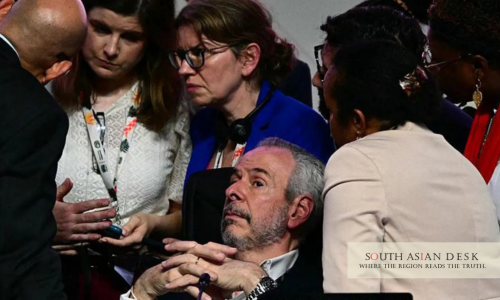
Talks stretched into the early hours, with key sessions dragging until 3am amid sleep-deprived arguments over wording. Brazil’s warmth as host clashed with the event’s chaos, as negotiators from oil-rich states boycotted group discussions. The summit, held over two weeks, exposed a gulf between Lula’s bold vision and do Lago’s insistence on unity.
China kept a low political profile, as Li Shuo noted, “And they focussed on making money in the real world.” This pragmatic approach highlighted how emerging powers are reshaping climate diplomacy, often at the expense of ambitious targets.
For South Asian observers, the COP30 Brazil summit signals a need for regional alliances to push implementation, especially as India navigates its coal reliance alongside renewable growth.
COP30 Climate Finance: Tripling Delayed to 2035
COP30 climate finance pledges offered a rare win, with agreement to triple adaptation funding, though the timeline slipped from 2030 to 2035. This vague wording survived from early drafts, baked into the text despite EU pushback.
Adaptation Funding’s Uneven Path
Developing countries hailed the tripling as essential for resilience against floods and droughts, but richer nations like the EU saw it as leverage lost. The compromise timeline reflects the haggling that defined the summit, where finance became a bargaining chip in fossil fuel debates.
Alden Meyer from E3G described trade as an “orchestrated” issue in every room, linking carbon border taxes to finance flows. The EU’s planned tax on high-carbon imports like steel and cement drew fire from China, India, and Saudi Arabia, who deemed it unfair. A dialogue involving the World Trade Organisation was launched for future talks, aiming to balance protectionism with global equity.
This finance shift matters for South Asia, where adaptation costs soar amid monsoon disruptions, yet delays exacerbate the burden on economies like Bangladesh.
Background
The COP30 Brazil summit built on three decades of UN climate talks, delivering the Paris Agreement a decade ago to limit warming. Held in Belém from early November 2025, it gathered thousands of delegates in air-conditioned tents for marathon sessions. Brazil positioned it as a pivot to action, but rifts over energy and trade exposed eroding consensus, with external roadmaps emerging as a makeshift fix. The event, one of the most fractious in COP history, underscored the challenge of aligning 198 parties amid geopolitical tensions.
What’s Next in COP30 Key Takeaways
- External Roadmap Implementation: Brazil will lead efforts to flesh out fossil fuel and deforestation plans outside COP, with updates expected at mid-year reviews in 2026.
- Trade Dialogue Launch: The new WTO-linked forum on carbon border taxes convenes in early 2026, focusing on impacts to exporters in Asia and the Middle East.
- Reform Push: Activists and leaders call for COP “retrofitting,” including hybrid formats to boost relevance before COP31 in a yet-to-be-named host.
These COP30 key takeaways will shape South Asia’s climate strategy, demanding urgent regional advocacy for faster finance and fossil fuel accountability to safeguard millions from escalating risks.
Published in SouthAsianDesk, November 24th, 2025
Follow SouthAsianDesk on X, Instagram, and Facebook for insights on business and current affairs from across South Asia.