

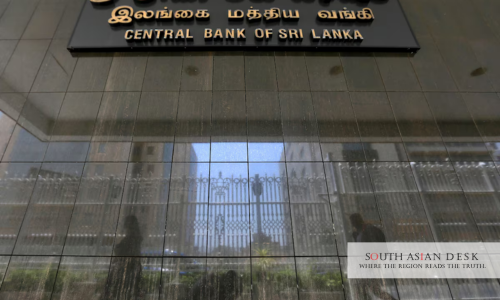
Sri Lanka central bank holds rates steady 2025 at 7.75% on Wednesday, November 26, 2025, in Colombo. The Monetary Policy Board cited stable inflation and credit growth as factors. Officials await budget approval and IMF review to guide future moves. No cuts occurred despite the economist’s calls.
Steady Rates Bolster Sri Lanka’s Economic Rebound
The decision maintains the overnight policy rate at 7.75%. This marks the sixth hold since May 2025. Credit to the private sector expanded broadly this year. Low rates supported that growth. The bank projects 4.5% GDP expansion for 2025, down from 5% in 2024.
Inflation trends favour caution. Prices rose 1.5% year-on-year in September 2025. The central bank targets 5% by mid-2026. Leading indicators point to sustained momentum. The Sri Lanka interest rate decision in the IMF context weighs heavily. An upcoming $347 million tranche hangs in the balance.
CBSL Steady Policy Rate Budget Ties
CBSL’s steady policy rate budget alignment underscores fiscal prudence. Parliament votes on the 2026 budget on December 5, 2025. The plan emphasises consolidation under IMF terms. Revenue-to-GDP hit 13.5% in 2024, up from 8.2% in 2022.
Gross reserves reached $6.5 billion by March 2025. Central bank purchases bolstered that figure. Debt restructuring nears completion. These steps address the 2022 crisis scars from dollar shortages. The Sri Lanka monetary policy IMF review shapes subsequent phases. Staff-level pacts in October 2025 cleared paths for board nod.
The board considered domestic and global risks. Energy prices dipped inflation below targets earlier. Fiscal outcomes beat expectations in the first half of 2025, aided by vehicle import taxes. Social spending lagged behind indicative goals, per prior reviews.
Why Sri Lanka Central Bank Holds Rates Steady 2025 Resonates Regionally
This move highlights South Asia’s fragile recoveries. Sri Lanka’s path mirrors Pakistan and Bangladesh’s efforts under IMF scrutiny. High rates curb inflation but squeeze borrowers. Growth at 4.5% aids poverty reduction yet exposes trade vulnerabilities.
Neighbours watch for spillovers: remittances and tourism fuel Sri Lanka’s rebound. Regional trade policies add uncertainty. Sustained reforms could unlock potential across the subcontinent. The decision tests commitments to stability amid political shifts.
Sri Lanka Interest Rate Decision IMF: Key Drivers
Sri Lanka’s interest rate decision: IMF links tighten policy. The $2.9 billion EFF, started in March 2023, nears its fifth review. Executive board eyes approval next month. Prior disbursements total $1.74 billion. Performance stayed strong overall.
Quantitative targets met in recent quarters. Structural benchmarks advanced, some with delays. Governance reforms progress. Revenue boosts and tax compliance stand central. Exemptions avoidance aids consolidation.
Economists polled by Reuters backed the hold. Thirteen foresaw no change. Broad credit expansion signals health. Private sector loans grew notably. Low rates enabled that. Yet deflation risks linger from global factors.
Background: From Crisis to Cautious Growth
Sri Lanka’s 2022 default triggered austerity. Foreign reserves collapsed. IMF aid demanded reforms. Growth resumed at 4.3% average since Q3 2023. Real GDP recovered 40% of 2018-2023 losses by end-2024.
The single overnight policy rate debuted on November 27, 2024. It replaced dual facilities for clarity. Prior cuts eased from 10% levels. Holds since May reflect balance. The Sri Lankan central bank holds rates steady. 2025 fits this trajectory.
Political transitions influenced paths. The new administration in late 2024 prioritised reforms. Presidential polls in November 2024 shifted leadership. Finance duties stayed with the president. Legislative wins secured majorities.
Inflation returned positive in 2025. September’s 1.5% rise signals control. Energy adjustments met prior actions. Electricity tariffs now recover costs through 2025.
Sri Lanka Monetary Policy IMF Review: Progress and Gaps
Sri Lanka’s monetary policy, IMF review spotlights resilience. The fourth review in July 2025 unlocked $350 million. Total support hit $1.74 billion then. The third review in March added $334 million. The fifth staff agreement in October praised H1 growth at 4.8%. Reserves built via interventions. Yet social nets need bolstering. Indicative spending was missed in December 2024.
Global uncertainties mount. Trade policies threaten exports. Middle East tensions risk remittances. Upside inflation from energy persists. Downside hits from slowdowns. The budget draft aligns with the programme. Second reading advances reforms. Automatic tariff mechanisms operationalise. These ensure cost recovery.
What’s Next: Budget Vote and Tranche Await
Parliament acts on the budget on December 5. Approval unlocks fiscal space. IMF board follows with a tranche decision. An approving nod could spur confidence.
The central bank monitors indicators. Following review in early 2026. Growth projections hold at 4.5%. Inflation paths to target remain key. Reforms deepen in governance and supervision. State-owned banks face scrutiny. Non-performing loans resolution accelerates. Parate executions reinstated for defaulters.
International partners track progress. World Bank indicative aid covers gaps. An additional $135 million ring for insurance. Program financing stays assured through 2027. The Sri Lankan central bank holds rates steady; 2025 sets the tone for endurance. Steady policy navigates towards sustainability.
Published in SouthAsianDesk, November 26th, 2025
Follow SouthAsianDesk on X, Instagram, and Facebook for insights on business and current affairs from across South Asia.
