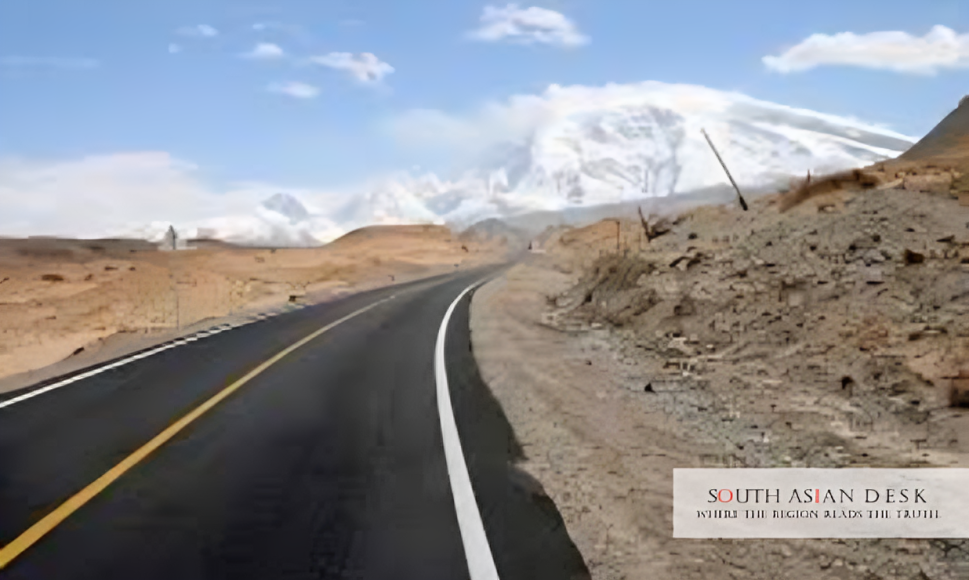
MANSEHRA: The Mansehra district administration imposed Kaghan GB route travel restrictions on Thursday, halting all passenger vehicles, private motorists and tourists from crossing into Gilgit-Baltistan via Kaghan Valley until next summer. Heavy snowfall and deteriorating road conditions prompted the measure, announced after a high-level meeting of departmental heads. Officials led by Assistant Commissioner Balakot Hasrat Khan. Complete ban on the Mansehra-Naran-Jalkhad road beyond Naran. Effective immediately, lasting through winter. Kaghan Valley linking Khyber Pakhtunkhwa and Gilgit-Baltistan. Why: Safety risks from ice and snow. How: Enforced by local police and administration patrols.
These Kaghan GB route travel restrictions matter across South Asia as they sever a primary artery for adventure tourism in Pakistan’s north, where seasonal closures exacerbate economic strains in border regions shared with India and China. The ban disrupts supply chains and migrant flows, amplifying vulnerabilities in an area prone to glacial lake outbursts and avalanches that ripple into broader regional stability concerns.
Babusar Top Road Closed Snowfall Hits Connectivity Hard
The Babusar Top road closed snowfall in early November sealed the fate of the Kaghan GB route travel restrictions. At 4,173 metres, Babusar Pass receives the season’s first heavy dumps, rendering the pass impassable without extensive clearance efforts. District officials confirmed the closure spans the entire Mansehra-Naran-Jalkhad stretch, with no vehicles permitted past Naran until May.
Assistant Commissioner Balakot Hasrat Khan stated: “We have now completely restricted passenger vehicles, motorists and tourists from travelling to neighbouring Gilgit-Baltistan for their safety.” This echoes earlier advisories issued amid the initial flakes. The Chilas district administration in Gilgit-Baltistan mirrored the order, banning inbound travel along the same corridor.
Heavy machinery stands ready for emergencies, but routine patrols halt as police posts in upper reaches shut down. Sub-inspector Qaisar Khan of Naran police station noted on 7 November: “We have closed our three posts after Kaghan Valley received the heaviest snowfall of the season. The remaining posts are also being wrapped up gradually as traffic between Khyber Pakhtunkhwa and Gilgit-Baltistan has been suspended until summer next year.”
Local traders in Naran report stockpiling essentials, anticipating a quiet winter. Hotels and guesthouses beyond the cutoff point empty out, with operators relocating south.
Naran Kaghan Tourism Advisory Urges Caution
A Naran Kaghan tourism advisory complements the Kaghan GB route travel restrictions, limiting day trips to safer zones. Tourists may visit Battakundi and Saiful Muluk Lake only from 11am to 3pm, equipped with snow chains on tyres. Vehicles must return before dusk, as night frosts thicken ice layers.
Hasrat Khan added: “We have decided to allow tourists to travel only up to Battakundi and Saiful Muluk between 11am and 3pm, and only with chained tyres, as vehicles cannot move safely on icy roads before or after the four-hour period.” No curbs apply to Naran access yet, pending the next snowfall spell.
The advisory stems from a strategy meeting chaired by Deputy Commissioner Mansehra Khalid Iqbal, who emphasised proactive monitoring. Additional Deputy Commissioner Assad Lodhi affirmed: “We have decided to deploy heavy machinery in landslide-prone and snowbound areas to ensure uninterrupted movement of people and quick clearance of main and link roads.”
This timed access balances thrill-seeking with peril, yet enforces strict compliance. Violators face fines or vehicle impoundment.
Punjab KP Travel Bans Winter Isolate Northern Hubs
Punjab KP travel bans winter extend the Kaghan GB route travel restrictions’ reach, curbing inter-provincial flows from Punjab’s lowlands to Khyber Pakhtunkhwa’s heights. Buses from Rawalpindi and Islamabad reroute via longer Karakoram Highway paths, adding hours and PKR 2,000 per ticket in fuel surcharges.
The bans target seasonal migrants too. Indigenous communities in Barawai and Battakundi migrate annually, but this year’s early onset accelerated evacuations. Most families descended by mid-November, with stragglers urged to leave within a week. “The residents have migrated to lower parts of Mansehra district and the rest of Hazara division to spend the winter in their seasonal dwellings,” Khan explained.
Businesses grind to a halt. Basel’s high-altitude markets, vibrant with woollen crafts in autumn, now echo empty. Supply trucks bypass the valley, inflating costs for remaining stock.
Background: Seasonal Perils in Kaghan Valley
Kaghan Valley draws 500,000 visitors yearly for its alpine meadows and trout streams, but winter transforms paradise into peril. The Babusar Top road closed snowfall pattern repeats annually from November to May, isolating Gilgit-Baltistan’s eastern flanks. Historical data shows avalanches claim lives sporadically, underscoring the bans’ necessity.
Past seasons saw partial reopenings, but 2025’s aggressive front demanded full lockdown. The district administration’s 7 November meeting, attended by tehsil officers from Balakot and Oghi, prioritised resident safety over commerce. Link roads to remote hamlets receive priority clearance post-storm. Gilgit-Baltistan’s Chilas administration coordinates cross-border enforcement, sharing weather bulletins via radio. This joint vigilance prevents tragedies like the 2023 stranding of 200 motorists.
Impacts on Tourism and Economy
The Kaghan GB route travel restrictions ripple through Naran Kaghan tourism advisory frameworks, slashing peak-season projections. Operators pivot to virtual promotions, but footfall drops 70 per cent in off-months. Punjab KP travel bans winter compound this, deterring Lahore families from weekend escapes.
Local guides idle, turning to handicraft sales in Mansehra bazaars. The valley’s eco-fragility demands such pauses; unchecked traffic erodes trails and pollutes Saiful Muluk. Yet, prolonged closures strain budgets, with PKR 100 million in annual tourism taxes at risk. Rescue teams stand alert, having evacuated 150 tourists earlier this month from snow-blocked paths. Lodhi stressed: “Link roads leading to high-altitude and remote mountainous areas would be cleared promptly in the event of landslides or snowfall.”
What’s Next: Spring Thaw and Preparations
As the Babusar Top road closed snowfall persists, officials eye early May for reopening the Kaghan GB route travel restrictions’ lift. Crews stockpile salt and graders, training locals in avalanche protocols. A Naran Kaghan tourism advisory update promises bi-weekly bulletins via helpline 1422.
Alternative itineraries via Karakoram Highway gain traction, though congestion mounts. Punjab KP travel bans winter may ease with milder forecasts, reconnecting divided families. Hasrat Khan concluded: “We expect the Kaghan–Babusar Top section of the MNJ road to reopen in early May next year, and until then the valley will remain completely closed to movement.” With Kaghan GB route travel restrictions safeguarding lives, northern Pakistan braces for a hushed winter, poised for renewal come thaw.
Published in SouthAsianDesk, November 27th, 2025
Follow SouthAsianDesk on X, Instagram, and Facebook for insights on business and current affairs from across South Asia.