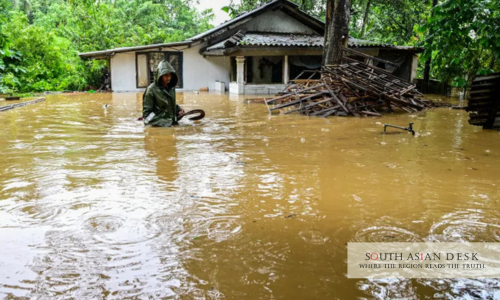
COLOMBO, Sri Lanka — Torrential rains and flooding unleashed by Cyclone Ditwah have devastated large parts of Sri Lanka, leaving a trail of destruction that prompted the government to declare a state of emergency and appeal for international aid. The extreme weather system, which battered the island nation before heading towards neighboring India, triggered widespread landslides and river overflows, forcing nearly 44,000 people into evacuation shelters as the death toll climbed to 123 on Saturday.
Kelani River Flooding and Widespread Impact
The Disaster Management Centre reported that the cyclone’s residual effects continued to wreak havoc, with heavy downpours causing the Kelani River to burst its banks late Friday evening. This flooding, one of the worst in recent years, affected almost half a million people across the country, surpassing the scale of previous disasters like the 2016 floods that killed 71 and last year’s June toll of 26 deaths.
Landslides in Kandy and Regional Impacts
In the central district of Kandy, 115 kilometers east of Colombo, landslides Kandy buried homes and submerged main access roads under water at several locations. Kaduwela, on the outskirts of the capital Colombo, saw hundreds evacuated along the Kelani River flooding path as waters swelled dangerously close to record levels. Parts of the north remained under threat from ongoing showers, exacerbating the crisis.
Rescue Efforts Led by Armed Forces and DMC
Rescue efforts intensified as armed forces rescue teams from the army, navy, and air force deployed thousands of personnel to reach stranded residents. The Sri Lanka Red Cross played a key role in distributing essentials, but challenges persisted with rising waters hindering access. Nearly 15,000 homes lay destroyed or severely damaged, leaving families homeless amid the chaos.
At least 130 individuals remained missing, swept away by the floods or buried in debris from the landslides. The government’s Disaster Management Centre coordinated the response, issuing urgent evacuation orders and monitoring river levels that showed no signs of receding after two days of relentless rain.
Government Response and State of Emergency Sri Lanka
Prime Minister Harini Amarasuriya addressed the severity of the situation during a meeting with Colombo-based diplomats, briefing them on the unfolding disaster and urging swift support. The state of emergency Sri Lanka declaration unlocked additional resources for relief, but officials emphasized the need for external assistance to bridge gaps in local capacity. “Relief operations with the help of the armed forces are under way,” said DMC Director-General Sampath Kotuwegoda, highlighting the scale of military involvement in pulling survivors from floodwaters and clearing landslide rubble.
International Aid Mobilization for Cyclone Ditwah
International aid began flowing in response to the government’s call, with India leading the effort. Two planeloads of relief supplies arrived promptly, including food, medicine, and shelter materials, while an Indian warship docked in Colombo donated its onboard rations to bolster local stocks. Indian Prime Minister Narendra Modi expressed solidarity, stating on social media that his nation stood ready to extend further help as the crisis evolved.
The Sri Lanka Red Cross Society, working alongside state agencies, warned that relief needs were mounting daily. Secretary-General Mahesh Gunasekara described scenes of desperation, noting people still stranded in remote areas. “Relief needs have been increasing. After two days, water has still been swelling,” he said, underscoring the prolonged threat from the cyclone’s aftermath.
Recovery Challenges After Cyclone Ditwah
As Cyclone Ditwah moved away from Sri Lankan shores towards India on Saturday, the focus shifted to recovery and preventing further losses. The Disaster Management Centre urged residents near vulnerable rivers and hillsides to heed evacuation orders, with temporary shelters expanding to accommodate the displaced.
Economic fallout loomed large, with agriculture and infrastructure hit hardest; flooded farmlands threatened food supplies, and damaged roads isolated communities in Kandy and beyond. The armed forces rescue operations extended into the night, using boats and helicopters to airlift those in peril, while volunteers from the Sri Lanka Red Cross set up medical outposts in evacuation shelters to treat the injured and prevent disease outbreaks.
Disaster Management Centre Warnings and Future Preparedness
The crisis, fueled by torrential rains 2025 patterns linked to the cyclone, highlighted vulnerabilities in Sri Lanka’s disaster preparedness, especially following similar events in December last year that claimed 17 lives. Officials at the Disaster Management Centre projected that without sustained international aid, rebuilding could stretch resources thin.
Prime Minister Amarasuriya’s diplomatic outreach aimed to secure commitments for long-term support, including reconstruction funds and expertise in flood mitigation. Meanwhile, the government appealed directly to Sri Lankans abroad for cash donations, channeling funds through verified channels to speed up relief distribution.
Escalating Concerns Over Kelani River Flooding and Landslides Kandy
In Colombo, the Kelani River’s overflow turned urban areas into makeshift lakes, stranding commuters and closing key routes. Further inland, the landslides Kandy region grappled with unstable soil, prompting warnings against returning to high-risk zones prematurely.
The missing persons 130 tally included many from fishing communities along the river, where sudden surges caught families off guard. Despite the grim statistics, glimmers of coordination emerged, with the state of emergency Sri Lanka enabling faster deployment of resources. The Sri Lanka Red Cross reported distributing thousands of meal kits and hygiene packs, though demand far outpaced supply in the hardest-hit areas.
Ongoing Rescue Operations and Updated Death Toll
As night fell, the hum of rescue helicopters echoed over flooded landscapes, a stark reminder of the cyclone’s lingering grip. The Disaster Management Centre vowed to update the death toll 123 figure as searches continued, while international aid pledges offered hope for the weary. India’s rapid response set a precedent, with more shipments expected soon. For the thousands in evacuation shelters, the immediate battle was against the elements, but the road to normalcy promised to be long and arduous.
Published in SouthAsianDesk, November 29th, 2025
Follow SouthAsianDesk on X, Instagram, and Facebook for insights on business and current affairs from across South Asia.