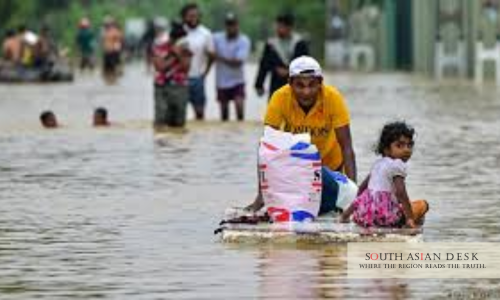
Sri Lanka floods 2025 have claimed 334 lives after Cyclone Ditwah unleashed torrential rains and landslides across the island. The Disaster Management Centre reported the deaths on Sunday, with nearly 400 people missing. Over 200,000 residents fled to 1,275 shelters as waters rose in Colombo and beyond. President Anura Kumara Dissanayake declared a state of emergency on Saturday to speed relief efforts.
The crisis, triggered by Cyclone Ditwah on November 27, has displaced nearly a million people nationwide. Heavy monsoon rains swelled the Kelani River, flooding low-lying areas in the capital. Rescue teams worked through the weekend to reach stranded families. The government appealed for international aid, citing the disaster as the deadliest since 2017.
This catastrophe underscores the growing vulnerability of South Asia to extreme weather. Sri Lanka’s floods 2025 strain resources already stretched by economic woes, prompting aid pledges from neighbours like India and Pakistan. The event highlights the need for regional cooperation on climate resilience, as similar cyclones threaten coastal nations from Bangladesh to the Maldives. With reconstruction costs projected in billions, the floods could deepen poverty and migration in the subcontinent.
Cyclone Ditwah Floods Devastate Colombo and Eastern Districts
Cyclone Ditwah floods battered Sri Lanka’s south and east starting November 27. Winds up to 120 km/h dumped over 500 mm of rain in 48 hours, according to the Irrigation Department. The storm made landfall near Trincomalee, then veered south, saturating soil and triggering landslides.
In Colombo, floodwaters submerged entire neighbourhoods in Wellampitiya and Malwana. Residents waded through chest-high water to reach higher ground. The Kelani River, which bisects the capital, overflowed its banks, breaching a dam near Kelaniya on Sunday morning. Evacuation orders covered 50,000 people along the river by midday.
The Disaster Management Centre (DMC) issued a major flood warning on November 27, labelling it a “red notice” for the Mahaweli and Kelani basins. “Heavy upstream rains continue to feed the floods,” a DMC spokesperson stated in a press release. Over 20,000 homes collapsed under mudslides, with another 50,000 partially damaged. Power outages affected 300,000 households, and mobile networks failed in remote areas.
South Asian nations watched closely as the cyclone’s remnants pushed moisture towards India. Pakistan dispatched rescue teams via the Sri Lankan Air Force, while Indian Prime Minister Narendra Modi pledged USD 10 million in immediate aid. These gestures reflect longstanding ties, but experts warn that unchecked deforestation and urban sprawl exacerbate such events.
Colombo Flood Emergency Prompts Mass Evacuations
The Colombo flood emergency unfolded rapidly on Saturday. At 6:00 AM, sirens blared as waters rose 2 metres in hours. Navy divers rescued 500 people from rooftops in Dehiwala, using boats to navigate debris-choked streets. Schools and temples converted into shelters housed 78,000 by evening, up from 44,000 the previous day.
President Dissanayake activated emergency powers under the 1983 Prevention of Terrorism Act amendments, allowing troop deployments without parliamentary approval. “This is Sri Lanka’s most challenging natural disaster,” he said in a televised address. Troops distributed 100,000 dry rations and medical kits, prioritising children and the elderly.
In Wellampitiya, a suburb 10 km from central Colombo, families lost livestock and crops worth millions. One resident, speaking to reporters, described the scene: “Mud buried our homes overnight. We climbed trees to wait for help.” The Red Cross reported 15,000 stranded in flood-hit zones, with helicopters airlifting supplies to cut-off villages.
The emergency declaration unlocked LKR 5 billion (about USD 17 million) from contingency funds. However, logistics strained as roads buckled under landslides. The DMC coordinated with the Irrigation Department to monitor 15 reservoirs at spill level, averting further breaches.
Sri Lanka Flood Death Toll Climbs Amid Rescue Efforts
The Sri Lanka flood death toll stood at 46 on Friday, November 28, per initial DMC reports. By Sunday, it surged to 334, with 218 missing in eastern districts like Batticaloa and Ampara. Landslides claimed most lives, burying villages under boulders. In Sammanthurai, 15 houses vanished under mud, killing 50.
DMC data showed 191 missing early Saturday, rising as searches uncovered mass graves. Autopsies confirmed drowning and crush injuries as primary causes. “Rescue operations face delays from ongoing rains,” the centre noted in its November 30 update. Over 1,000 personnel, including army engineers, combed debris fields.
Nearly a million people felt the impact, with 200,000 in shelters by Monday. The worst-hit districts included Colombo (78 deaths), Gampaha (65), and Kalutara (52). Women and children comprised 60% of casualties, highlighting gaps in early warning systems.
International observers compared the toll to 2017’s floods, which killed 211. Then, 1.7 million sought aid; today, numbers rival that scale. The UN Office for Coordination of Humanitarian Affairs activated its emergency response cluster, dispatching experts to assess needs.
Background: A Pattern of Monsoon Fury in South Asia
Sri Lanka floods 2025 fit a grim regional trend. Monsoons, vital for agriculture, turn deadly with climate change. In 2024, Bangladesh floods displaced 5 million; Pakistan’s 2022 deluge killed 1,700. Cyclone Ditwah, the season’s first major storm, intensified over the Bay of Bengal due to warmer seas.
Sri Lanka’s vulnerability stems from its topography. The central highlands funnel rain to coastal plains, where 70% of the 22 million population lives. Deforestation for tea plantations has eroded soil, worsening landslides. The 2004 tsunami killed 35,000; post-disaster reforms built better seawalls, but river management lags.
Economically, the floods threaten USD 2 billion in damages, per preliminary government estimates. Rice paddies under water could spike food prices across South Asia. Neighbours like India, with its own cyclone risks, share forecasting data via the Indian Ocean Tsunami Warning System.
What’s Next: Rebuilding Amid Rain Warnings
Relief teams plan to distribute LKR 50,000 (USD 170) per affected family once waters recede. The DMC forecasts more showers through mid-December, urging vigilance along the Kelani. International donors pledged USD 100 million, with assessments due Tuesday.
President Dissanayake called for unity, vowing probes into preparedness failures. Engineers will reinforce 200 km of riverbanks. For South Asia, the floods signal urgency for shared early-warning networks. As Cyclone Ditwah floods subside, Sri Lanka turns to recovery, but experts predict fiercer storms ahead. Sri Lanka floods 2025 leave scars, yet resilience defines the island’s spirit.
Published in SouthAsianDesk, December 1st, 2025
Follow SouthAsianDesk on X, Instagram, and Facebook for insights on business and current affairs from across South Asia.