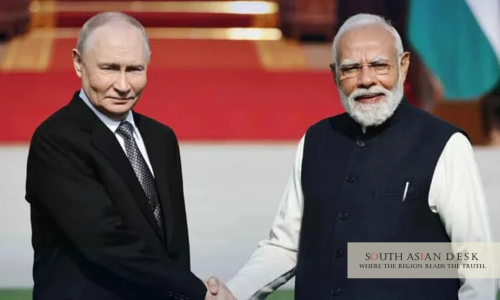
New Delhi, Monday, December 8, 2025 – Russian President Vladimir Putin and Indian Prime Minister Narendra Modi sealed a pact on Friday to push Russia-India trade to $100 billion by 2030, focusing on energy and defense amid US sanctions. The deal emerged from the 23rd Annual India-Russia Summit in New Delhi, where both leaders signed multiple agreements aimed at diversifying ties.
This summit marks Putin’s first visit to India since Russia’s 2022 invasion of Ukraine. Bilateral trade hit USD 68.7 billion in FY 2024-25, up from USD 1 billion in 2021, driven by discounted Russian oil. The new programme targets balanced growth, with India aiming to boost exports to reduce its USD 57.2 billion deficit.
Putin Modi Trade Summit 2025: Key Agreements Signed
The Putin Modi trade summit 2025 unfolded over two days, starting with Putin’s arrival on Thursday. Modi greeted him with a bear hug at the airport. On Friday, Putin received a 21-gun salute at Rashtrapati Bhavan before talks at Hyderabad House.
Both leaders reaffirmed their “special and privileged strategic partnership.” They adopted the Programme for the Development of Strategic Areas of India-Russia Economic Cooperation till 2030. This document outlines steps to address tariff barriers, logistics issues, and payment systems using national currencies.
“We have agreed on an economic cooperation programme for the period up to 2030. This will make our trade and investment more diversified, balanced, and sustainable,” Modi told reporters, with Putin beside him.
Putin echoed the commitment. “To achieve this significant goal, a programme for the development of Russian-Indian economic cooperation until 2030 has been agreed upon,” he said.
Nine memoranda of understanding covered trade, migration, maritime cooperation, health, food safety, fertilisers, academic exchanges, media, and people-to-people ties. A joint fertiliser venture and eased mobility for Indian workers in Russia feature prominently.
India announced 30-day e-tourist visas for Russians to enhance exchanges. The leaders also discussed Ukraine, with Modi emphasizing the need for a peaceful resolution. “India has stood for peace since the beginning,” he said.
Defence ties, a cornerstone since the Cold War, saw pledges for joint production of components in India. Russia remains India’s top arms supplier, with deals for spares and maintenance of Russian-origin equipment.
The summit highlighted the importance of resilience in the face of external pressures. A joint statement noted: “In the current complex, tense, and uncertain geopolitical situation, Russian-Indian ties remain resilient to external pressure.”
India Russia Energy Cooperation: Fuel for Growth
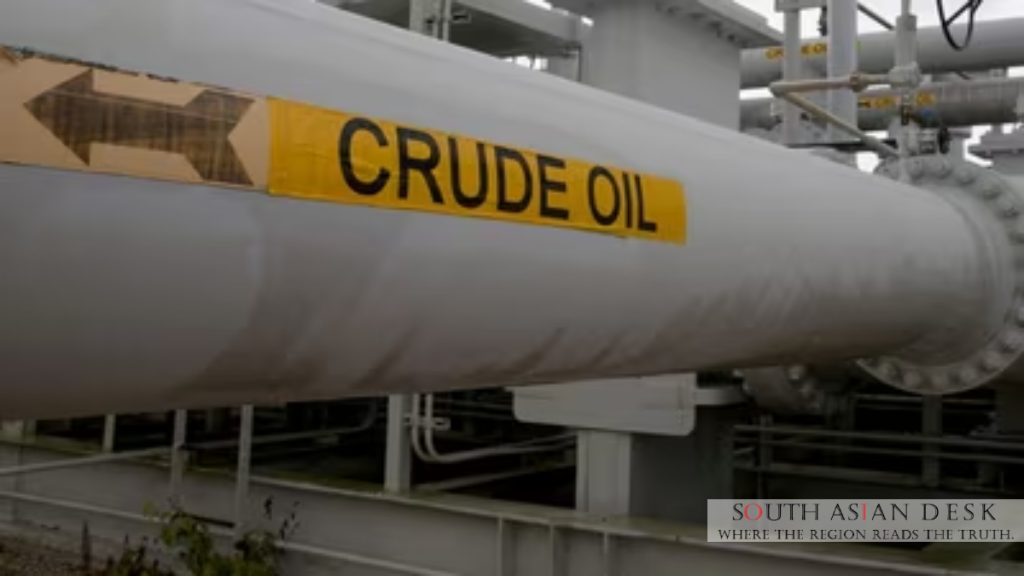
India Russia energy cooperation forms the backbone of the bilateral trade target that India and Russia seek. Russia supplied 40% of India’s crude oil imports in 2024, at discounts up to USD 20 per barrel below global prices. This saved India USD 5 billion annually, per government estimates.
Putin offered uninterrupted fuel supplies. Russia is a reliable supplier of energy resources and all the necessary components for India’s energy sector development. We are ready to continue ensuring the uninterrupted supply of fuel for the rapidly growing Indian economy,” he stated.
Modi responded cautiously, guided by commercial decisions. “Energy cooperation continues despite US sanctions and market pressures,” he said. State refiners placed orders from non-sanctioned Russian suppliers to comply with G7 price caps.
Bilateral trade targets between India and Russia include long-term contracts for oil, gas, and nuclear energy. Plans are advancing for Russia’s assistance in India’s goal of achieving a 100 GW atomic capacity by 2047. A flagship project builds India’s largest nuclear plant.
In FY 2024-25, petroleum products accounted for 88% of India’s USD 63.8 billion in imports from Russia. Exports to Russia increased by 59% to USD 4.9 billion since FY 2021, encompassing pharmaceuticals, machinery, and agricultural products.
Both sides pushed for rupee-ruble settlements via Special Rupee Vostro Accounts. This reduces dollar reliance amid sanctions. Negotiations resume on a Bilateral Investment Treaty to protect flows.
The May 2024 agreement on Authorized Economic Operators streamlined customs procedures, thereby boosting trade facilitation.
Bilateral Trade Target India Russia: Pathways to Balance
Achieving the bilateral trade target requires India and Russia to focus on non-energy sectors. The current trade balance skews towards Russia, with India’s exports accounting for only 7% of the total volume.
Modi prioritised increasing exports and resilient supply chains. “Expanding bilateral trade, particularly India’s exports, will create new opportunities, especially for the youth,” he said at the India-Russia Trade Forum in Bharat Mandapam.
The forum drew business leaders from both nations. Discussions focused on industrial cooperation in transportation, metallurgy, and high-tech sectors. Putin welcomed “Make in India” for deeper ties.
Key enablers include the India-Eurasian Economic Union Free Trade Agreement, targeted for early conclusion. This could add USD 10-15 billion in trade, per think tanks.
The Programme 2030 instructs agencies to monitor progress. Working groups will tackle non-tariff barriers and reinsurance issues.
India’s External Affairs Minister, S. Jaishankar, reaffirmed the target during a recent visit to Moscow. “Our bilateral trade is today at USD 66 billion. This makes the goal of reaching USD 100 billion by 2030 more than realistic,” he said at an India-Russia Business Forum.
Both sides aim for USD 50 billion in mutual investments by 2025, already surpassing the USD 30 billion mark.
Implications for South Asia: Ripple Effects on Regional Dynamics
This Russia-India trade push of $100 billion carries weight across South Asia. India’s energy security buffers regional oil price volatility, stabilizing costs for neighbors like Pakistan and Bangladesh, which import 80% of their fuel.
Enhanced India-Russia energy cooperation could lower South Asian import bills by USD 2-3 billion annually through diversified sources. The International North-South Transport Corridor, which involves Russia, reduces shipping times from India to Europe by 40%, benefiting trade hubs such as Mumbai and Karachi.
Defence pacts may shift regional balances, with India gaining local production capabilities. Pakistan, reliant on Chinese arms, faces indirect pressure to diversify its defense. The summit condemned terrorism, referencing attacks in Pahalgam and Moscow’s Crocus City Hall. Leaders called for “zero tolerance” without double standards, aligning with South Asian security concerns.
Economic spillovers include fertiliser supplies, vital for Pakistan’s USD 2.5 billion annual imports. Joint ventures could open markets for South Asian agriculture exports to Russia. As India balances its ties with the US—amid 50% tariffs on its goods—this pact underscores its multipolar strategies. South Asia benefits from stable energy flows but must navigate the risks of US secondary sanctions.
Background: From Cold War to Strategic Heights
India-Russia ties date to 1971, when the USSR vetoed UN resolutions on Bangladesh. The 2000 Strategic Partnership was elevated to “Special and Privileged” in 2010.
Trade grew from USD 10 billion in 2019 to USD 68.7 billion now, propelled by post-Ukraine war oil deals. Annual summits, like the 22nd in Moscow last year, set the USD 100 billion goal. The 26th India-Russia Inter-Governmental Commission in August 2025 advanced the finalisation of Programme 2030. Cultural links thrive: 25,000 Indian students study in Russia, with new academic MoUs.
What’s Next: Milestones on the Horizon
Implementation is scheduled to begin with IRIGC-TEC sessions in 2026. Officials aim to execute Programme 2030 by mid-year. Free trade talks with the Eurasian Economic Union are aimed at a 2027 signing. Investment treaty negotiations accelerate.
Business forums will track export growth on a quarterly basis. Modi and Putin plan a meeting in Moscow in 2026. Russia-India trade eyes $100 billion and remains on course, with energy and diversification as key drivers.
Published in SouthAsianDesk, December 6th, 2025
Follow SouthAsianDesk on X, Instagram, and Facebook for insights on business and current affairs from across South Asia.