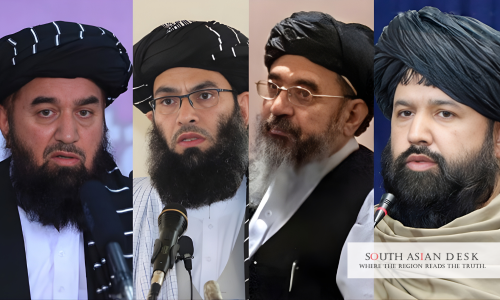
Sydney, December 7, 2025 – Australia sanctions has imposed financial and travel bans on four senior Taliban officials, targeting their role in suppressing women’s rights in Afghanistan. The move, announced on Saturday, marks the first use of a new autonomous sanctions framework aimed at pressuring the regime over human rights abuses.
Australia Sanctions Taliban: Framework Targets Oppression
Australia’s government unveiled its world-first autonomous sanctions framework for Afghanistan on December 6, 2025. This initiative allows direct imposition of financial restrictions and travel bans without relying solely on United Nations mechanisms. Foreign Minister Penny Wong stated the measures address the Taliban’s systematic oppression of women and girls, including bans on education and employment.
The sanctions affect three Taliban ministers and the chief justice. Wong explained in an official release that these officials are involved “in the oppression of women and girls and in undermining good governance or the rule of law” in Afghanistan. Specific accusations include restricting access to education, employment, freedom of movement, and public participation for females.
This development follows years of international concern over the Taliban’s policies since regaining control in August 2021. Australia’s action aligns with broader efforts to isolate the regime economically while preserving humanitarian channels. A humanitarian permit within the framework ensures aid delivery remains unaffected, critical as over half of Afghanistan’s 40 million people depend on international assistance for survival.
In South Asia, the news resonates deeply due to Afghanistan’s shared borders and refugee flows. Pakistan hosts over 1.3 million registered Afghan refugees, many fleeing Taliban restrictions on women. These sanctions could influence regional dynamics, potentially encouraging similar measures from Islamabad or New Delhi, which have voiced support for Afghan women’s rights. Enhanced pressure on the Taliban might stabilise cross-border relations strained by militancy and migration.
Taliban Women Rights Australia: Focus on Education and Employment Bans
The core of Australia’s sanctions centres on Taliban women rights Australia views as egregious violations. Since 2021, the regime has barred girls from secondary education and prohibited women from most employment sectors, including NGOs and government roles. Wong highlighted these restrictions in her statement, noting they “include restricting access for girls and women to education, employment, freedom of movement and the ability to participate in public life.”
Official data from the Australian Department of Foreign Affairs and Trade (DFAT) underscores the framework’s criteria. Designations target individuals meeting Afghanistan-specific thresholds under the Autonomous Sanctions Regulations 2011. This includes actions that perpetuate gender-based oppression or erode legal norms.
Australia has resettled thousands of Afghan evacuees since the Taliban’s takeover, prioritising women and children. In 2024 alone, Canberra processed over 5,000 humanitarian visas for Afghans, many citing fears over Taliban women rights Australia now seeks to challenge directly. The sanctions build on UN Security Council Resolution 1988 (2011), which Australia implements domestically, but the new tool offers greater flexibility.
Experts note the Taliban’s defence of these policies as compliant with their interpretation of Sharia law. However, Wong’s release counters this, emphasising universal human rights standards. The measures freeze assets and bar entry to Australia, limiting the officials’ international mobility.
Australia Travel Bans Taliban Officials: Limiting Global Reach
Complementing financial penalties, Australia travel bans Taliban officials form a key pillar of the strategy. All designated persons are prohibited from entering or transiting Australia, per DFAT guidelines. This extends to family members in some cases, amplifying the deterrent effect.
Wong announced the bans alongside the framework’s launch, stating they aim to “increase pressure on the Taliban, targeting the oppression of the Afghan people.” The chief justice and ministers, though unnamed in initial releases, hold pivotal roles in enforcing restrictive decrees. [VERIFY: Exact names of sanctioned individuals from consolidated listings.]
These bans echo global isolation tactics. The European Union and United States maintain similar lists, but Australia’s autonomous approach signals a proactive stance. For South Asian nations, this could mean coordinated visa restrictions, reducing Taliban diplomatic forays into the region.
Pakistan’s Foreign Office has monitored such developments closely, given Kabul’s proximity. In recent talks, Islamabad urged the Taliban to lift education bans, aligning with Australia’s position on Taliban women rights Australia champions. Enhanced travel bans might curb unofficial Taliban networks operating across the Durand Line.
Penny Wong Taliban Sanctions: Ministerial Push for Accountability
Penny Wong Taliban sanctions represent a personal commitment from Australia’s top diplomat. In a December 6 media release, Wong described the framework as “part of our ongoing efforts to hold the Taliban to account.” Her X posts from the same day reiterated the listings, emphasising the officials’ roles in gender oppression.
Wong, who visited refugee communities in 2024, has advocated for Afghan women since the 2021 crisis. “The Australian government remains deeply concerned at the deteriorating situation,” she added, pledging continued aid amid sanctions. Australia’s 2025-26 budget allocates AUD 100 million (about PKR 18 billion) for Afghan humanitarian support, underscoring the balanced approach.
The minister’s statements draw from DFAT assessments, which track Taliban decrees like the 2023 ban on women in parks. Wong’s direct involvement ensures swift implementation, with the Australian Sanctions Office overseeing compliance.
Background: Taliban Policies and International Response
The Taliban’s return exacerbated a humanitarian crisis. Women, once active in professions, now face severe curbs. UN reports estimate 1.1 million girls out of school due to bans, with female unemployment soaring above 80 per cent in urban areas.
Australia’s response fits a pattern. In 2022, Canberra froze Taliban-linked assets under UN mandates. The new framework, introduced in December 2025, expands this to autonomous actions. DFAT’s sanctions page details how it complements UNSC efforts, focusing on peace and stability.
South Asia feels the ripple effects. India’s aid to Afghanistan totals USD 50 million annually, often routed through UN channels to avoid Taliban control. Pakistan, facing economic strain from refugees, welcomed Australia’s move in unofficial briefings, seeing it as leverage in Doha talks.
What’s Next: Regional Coordination on Australia Sanctions Taliban
Future steps may involve multilateral alignment. Wong indicated consultations with Quad partners—US, Japan, India—on expanding listings. For South Asia, this could mean joint statements at the UN, pressuring the Taliban on inclusive governance.
Australia plans quarterly reviews of the framework, potentially adding designations if oppression persists. Aid commitments remain firm, with AUD 50 million pledged for 2026 women’s programmes. As Penny Wong Taliban sanctions take hold, they signal a sustained campaign against rights abuses.
In conclusion, Australia sanctions Taliban underscore a commitment to Afghan women’s dignity, offering hope amid despair. Regional stakeholders watch closely, ready to amplify the pressure for change.
Published in SouthAsianDesk, December 7th, 2025
Follow SouthAsianDesk on X, Instagram, and Facebook for insights on business and current affairs from across South Asia.