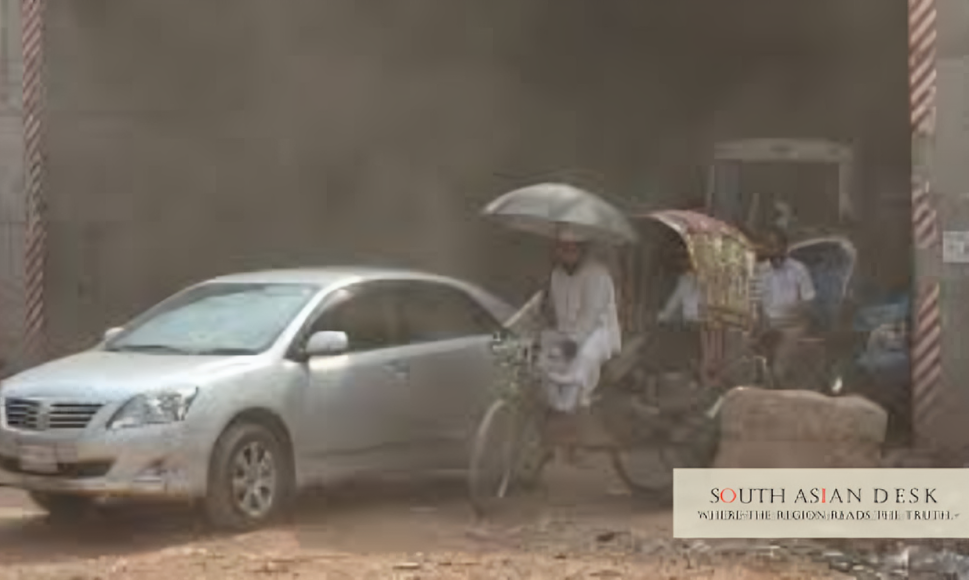
Dhaka air quality index climbed to 266 on Monday, December 8, 2025, marking it very unhealthy and placing the city second globally behind Lahore. Fine particulate matter drove the surge, with levels 30 times above World Health Organization guidelines. Local authorities issued warnings for vulnerable groups to stay indoors, citing rising hospital visits for respiratory issues. The episode highlights persistent challenges in managing urban emissions during dry months.
This crisis extends beyond Dhaka, affecting South Asia’s densely populated hubs where seasonal inversions trap pollutants, exacerbating cross-border haze from India and Pakistan. With over 200,000 annual deaths linked to air pollution in Bangladesh alone, the event demands coordinated action to safeguard public health and economic productivity in the region.
AQI Dhaka Surges to Very Unhealthy Threshold
Monitors recorded Dhaka’s AQI at 266 by mid-morning, a level that signals emergency conditions for all residents. The index, calculated from PM2.5, PM10, nitrogen dioxide, sulphur dioxide, carbon monoxide, and ozone, crossed into the 201-300 band, where health alerts activate. Data from the Department of Environment’s network showed PM2.5 concentrations at 150 micrograms per cubic metre, far exceeding safe limits.
Independent trackers like IQAir corroborated the reading, noting Dhaka’s rank at number two worldwide, trailing Lahore’s 408 but edging Delhi’s 261. The spike followed a pattern seen in prior days, with AQI hovering above 200 since early December. Officials at the Department of Environment released preliminary figures via their daily report portal, emphasising the role of stagnant weather in trapping emissions.
Winter air quality in Dhaka typically deteriorates as cooler temperatures curb dispersion. Historical records from the same agency indicate January peaks averaging 318 AQI in 2025, a nine-year high. This year’s escalation aligns with those trends, underscoring the need for real-time monitoring enhancements.
Drivers of Dhaka Air Pollution Intensify in Dry Season
Vehicle exhaust accounts for 40 per cent of Dhaka’s emissions, according to Department of Environment assessments. The capital’s 1.5 million registered vehicles, many running on low-grade diesel, release unchecked particulates during peak traffic hours. Brick kilns on the outskirts compound the issue, firing up for construction demands and spewing coal-derived smoke that drifts inward.
Construction dust from ongoing megaprojects adds another layer, with open sites covering thousands of acres lacking basic suppression measures. Waste burning in slums and low-lying areas releases toxic fumes, while industrial clusters in Tejgaon and Hazaribagh operate without full scrubbers. These sources converge in winter, when reduced rainfall fails to wash away accumulations.
The Department of Environment’s 2024-2030 National Air Quality Management Plan identifies these as priority targets. Enforcement raids closed 50 illegal kilns last month, but experts call for broader reforms like cleaner fuel mandates. Transboundary flows from neighbouring regions amplify local efforts’ limits, as winds carry particles across borders.
Health Risks from Winter Air Quality in Dhaka Mount
Exposure to current levels heightens risks of stroke, heart disease, and lung cancer, per World Health Organization data. Globally, air pollution claims seven million lives yearly, with Bangladesh bearing 200,000 such fatalities. In Dhaka, fine particles penetrate deep into lungs, triggering acute infections and chronic conditions like asthma.
Children face outsized threats, with studies linking prenatal exposure to low birth weights and stunted growth. A 2025 UNICEF report detailed how January’s high AQI correlated with a 20 per cent rise in paediatric respiratory cases. Elderly residents report exacerbated chronic obstructive pulmonary disease, while workers in polluted zones suffer reduced lung capacity over time.
Hospital admissions in Dhaka surged 15 per cent last week, per preliminary health ministry logs. The Lancet’s January analysis warned of Dhaka’s AQI 323 episodes fostering cardiovascular disorders. Vulnerable populations, including outdoor labourers, endure the brunt, with no widespread access to purifiers or masks.
Authorities recommend N95 masks for essential outings and indoor ventilation limits. Schools in high-exposure zones shifted to hybrid modes, a first for the season.
Background: Decades of Struggle with Dhaka Air Pollution
Dhaka’s woes trace to rapid urbanisation since the 1990s, when population tripled to 20 million. Early Department of Environment surveys in 2000 flagged PM2.5 as a killer, yet enforcement lagged amid economic growth. The 2010 Clean Air Act set standards, but compliance remains spotty, with only 30 monitoring stations operational.
Winter inversions, where cold air layers trap heat-trapped pollutants, have defined seasonal crises. Monsoon rains offer relief, dropping AQI below 100, but dry spells reverse gains. Regional pacts like the South Asian Association for Regional Cooperation’s environment wing push joint monitoring, though implementation stalls on funding.
International aid, including World Bank loans for green transport, funded bus rapid transit lines that cut emissions by 10 per cent in pilot areas. Still, Dhaka’s 2024 average AQI of 162, unhealthy year-round ranks it among the world’s worst, per IQAir archives.
What’s Next: Steps to Reclaim Dhaka Air Quality
The government plans roadside sensors at 50 new sites by mid-2026, per the National Air Quality Management Plan. Phasing out old vehicles through scrappage incentives targets 200,000 units annually. Brick kiln relocations to rural zones aim to slash urban soot by 25 per cent.
Collaboration with India and Pakistan on haze forecasting could mitigate cross-border spikes. Public campaigns promote tree planting, with 1 million saplings slated for city parks. Success hinges on sustained funding and compliance checks.
As enforcement ramps up, Dhaka air quality stands at a crossroads, with timely action poised to avert deeper health and economic tolls.
Dhaka’s fight against toxic skies continues, but improved governance offers hope for breathable winters ahead.
Published in SouthAsianDesk, December 8th, 2025
Follow SouthAsianDesk on X, Instagram, and Facebook for insights on business and current affairs from across South Asia.