Polio outbreak Sindh escalates with nine confirmed cases in 2025. The province accounts for 29 of Pakistan’s total infections. Wild poliovirus type 1 drives the rise. Environmental surveillance has shown a positivity rate of over 75 percent since mid-year. Chief Minister Syed Murad Ali Shah formed a task force. A seven-day immunization campaign is scheduled to start on December 15, 2025. The crisis hits districts like Badin and Karachi. Families face paralysis risks without vaccines. This outbreak threatens child health across Pakistan’s southern hub.
The polio outbreak in Sindh signals deeper challenges in eradication efforts. Pakistan and Afghanistan remain the world’s only endemic countries. Virus circulation in sewage points to low immunity gaps. Refusals have reached 35,000 parents province-wide, mostly in urban areas. South Asia’s dense populations amplify the risks of disease spread. Neighbouring India eyes cross-border threats, while Bangladesh bolsters routines. Sustained drives could interrupt transmission by 2026, but hesitancy erodes gains. Economic costs mount, with treatment burdens on families exceeding PKR 500,000 per case.
Sindh Polio Vaccination Campaign 2025: Targeting Millions
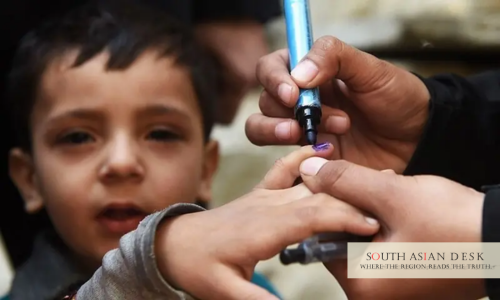
The Sindh polio vaccination campaign 2025 is ramping up with National Immunisation Days from 15 to 21 December. Teams aim to reach 10.6 million children under five across 1,345 union councils in 30 districts. Over 80,000 frontline workers deploy, backed by 21,000 law enforcement personnel. Female constables, numbering 400, aid access in sensitive areas.
The drive focuses on 12,000 zero-dose children and refusal hotspots. Morning assemblies motivate staff. Deputy commissioners enforce a zero-tolerance policy for absenteeism or data falsification. Community influencers join outreach. Mass media broadcasts reminders. Chief Minister Shah directed full focus. “Morning assemblies must be strong, frontline workers motivated, and every child reached during campaign days, not in extended catch-ups,” he said. Sindh’s infrastructure stands out as the strongest nationally, according to EOC data. Yet coverage lags in high-risk zones.
Prior rounds vaccinated 4.6 million in Sindh during November 2025. National totals topped 13.6 million children. Punjab led with 4.1 million, followed by Khyber Pakhtunkhwa at 3.1 million. Balochistan reached 1.2 million. The effort targets 19.4 million in 90 high-risk districts country-wide.
Polio Cases Sindh Pakistan: Nine Infections Detailed
Polio cases in Sindh, Pakistan, totaled nine in 2025. Badin reports three, Thatta two. Single cases emerge from Hyderabad, Qambar, Larkana, and Umerkot. Karachi’s East district logs the latest from the Gujro area.
Nationally, Pakistan counts 29 cases. Khyber Pakhtunkhwa holds 18. Punjab and Gilgit-Baltistan each have one. The surge follows 74 cases in 2024, up from six in 2023. Affected children range from months to years old, many of whom are unvaccinated. Virus genetics link strains to southern reservoirs. Paralysis strikes without cure. Routine doses build immunity. Supplementary oral polio vaccine fills gaps.
EOC officials call the rise unprecedented. Transmission hits 21 union councils. Early detection through acute flaccid paralysis surveillance facilitates a timely response. Non-polio rates hold at 11.6 per 100,000 children under 15.
Sindh Poliovirus Environmental Samples: 75% Positivity Rate
Sindh poliovirus environmental samples alarm with over 75 per cent positivity since mid-2025. November tests show 10 of 12 Karachi sites are positive. Other divisions yield 11 of 17. Sewage tracks a silent spread.
Nationally, 275 positive samples have been reported so far in 2025, compared to 741 for all of 2024. Pakistan has tested 942 samples year-to-date, with 22 percent positive. Circulation spans all provinces, with the heaviest in South Khyber Pakhtunkhwa. Karachi emerges as a hotspot despite not reporting any new cases this year. Environmental signals demand action. WHO notes ongoing detections despite drives.
The Provincial Task Force reviews data weekly. Health Minister Dr Azra Fazal Pechuho briefs on trends. UNICEF and Rotary support testing.
Background: Pakistan’s Long Fight Against Polio
Pakistan has battled polio since 1994, when it topped global cases. Eradication pledges date to 2012. Militant attacks killed workers, halting drives. Rumours sparked panics, similar to the 2019 hospital rushes.
Wild poliovirus type 1 persists. Types 2 and 3 have been eradicated globally. Bivalent oral vaccine targets remnants. Routine immunisation covers under-fives, but Sindh districts fall short of 80 per cent for the three doses. 2023 saw six cases, rebounding from the 20 cases in 2022. 2024’s 74 reflected gaps. The 29 early tallies for 2025 warn of a backslide. Balochistan, Khyber Pakhtunkhwa, and Sindh lag behind Punjab in terms of coverage.
International aid totals billions. GPEI coordinates. IHR Emergency Committees issue alerts, citing the spread of risks.
What’s Next in Polio Outbreak Sindh
The task force meets bi-weekly, following the review of the campaign outcomes. WHO’s 43rd committee urges intensified coordination. Refusal conversions aim for 100% access. Extensions loom if positivity persists. Digital tracking boosts monitoring. Parents hear calls: vaccinate now. The polio outbreak in Sindh demands a unified resolve to protect the next generation.
Published in SouthAsianDesk, December 10th, 2025
Follow SouthAsianDesk on X, Instagram, and Facebook for insights on business and current affairs from across South Asia.