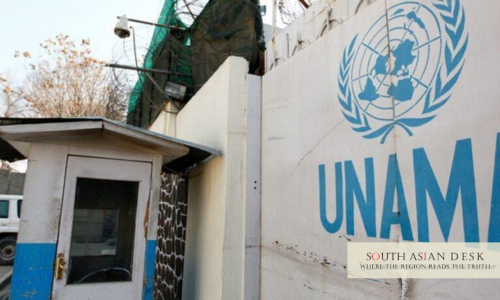
UNAMA human rights efforts in Afghanistan intensified on International Human Rights Day, 10 December 2025. The UN Assistance Mission in Afghanistan has urged the de facto authorities to align with their global obligations. Severe curbs on women and girls persist, hindering their access to education and employment. Officer-in-Charge Georgette Gagnon highlighted rights as the foundation for recovery. The statement addressed the risks faced by returning Afghans. Prosperity demands inclusion, per UNAMA. This comes amid ongoing violations like arbitrary detentions and torture.
UNAMA highlights human rights in Afghanistan, underscoring South Asia’s interconnected stability challenges. Taliban policies fuel refugee flows to Pakistan and Iran, straining borders with over 1.3 million returns in 2025. Economic isolation due to rights lapses hampers regional trade, as Afghanistan’s $2.6 billion in exports drops 20%. Neighbours face heightened security and humanitarian costs. Full rights realisation could unlock $500 million in aid, fostering cross-border growth and reducing extremism risks in the subcontinent.
Afghanistan Human Rights Day 2025: UN Urges Taliban Alignment
Afghanistan human rights Day 2025 marked the 77th anniversary of the Universal Declaration of Human Rights. UNAMA joined global commemorations in Kabul. The theme framed rights as everyday essentials for dignity and security. Afghanistan supported the 1948 adoption as a founding member of the UN.
Georgette Gagnon, UNAMA Officer-in-Charge, issued the statement. “Human rights are not optional. They are the everyday essentials that sustain life.” She emphasized the importance of education, health, and participation rights. UNAMA called for concrete steps by the de facto authorities.
The event highlighted treaty obligations. Afghanistan ratified core pacts like the Convention on the Elimination of All Forms of Discrimination Against Women. Yet implementation lags. UNAMA documented systemic issues since August 2021.
Global partners echoed calls. The UN High Commissioner for Human Rights office advocated for probes into violations. No Taliban response was received by 4:35 PM on Monday, 25 August 2025. Past denials cited internal laws.
Taliban Women’s Rights Restrictions: Barriers to Participation
Taliban women rights restrictions deepened in 2025, barring girls from secondary education and women from most jobs. UNAMA reports exclusion from public life undermines recovery. Over 1.1 million girls remain out of school.
Gagnon addressed the impact. “In Afghanistan, ensuring that women and girls can learn, work, and participate fully is indispensable for recovery.” Bans extend to parks, gyms, and travel without guardians. Healthcare access is faltering, with female patients being denied services due to a lack of male chaperones. Quarterly data shows patterns. From January to March 2025, unequal treatment was logged in clinics. Maternal mortality rose 15%, per WHO estimates. Economic fallout hits households, as the number of women exiting the workforce shrinks GDP by 5%.
UNAMA urges reversals for prosperity. Inclusion could boost output by $1 billion annually, per World Bank models. Restrictions fuel brain drain, with 500,000 skilled women fleeing since 2021.
UNAMA Afghanistan Prosperity Human Rights: Violations Stall Growth
UNAMA in Afghanistan emphasizes the link between prosperity and human rights, tying them to economic revival. Gagnon noted alignment creates flourishing space. Yet violations persist, including 180 judicial corporal punishments from January to March 2025: 142 men, 35 women, three girls.
The update detailed lashings for moral codes. De facto courts imposed them in 20 provinces. UNAMA calls for moratoriums, citing treaty bans. Arbitrary arrests topped 1,200 cases quarterly, often targeting former officials. Returning Afghans face reprisals. Over 600,000 deportees from Pakistan endured screenings. UNAMA warns of torture risks in detention. Prosperity requires safe returns and inclusion. Telecom shutdowns compound issues. October 2025 blackouts reached 80% coverage, according to a UNAMA briefing. This isolates communities, stalling $300 million in digital economy potential.
Broader violations include extrajudicial killings and ill-treatment. UNAMA documented 50 instances in Q1, urging impartial probes. Impunity erodes trust, deterring the release of $2 billion in frozen assets.
Background: UNAMA’s Mandate and Taliban Era Shifts
UNAMA human rights monitoring stems from Security Council Resolution 2678 of March 2023. The mission tracks violations, advocates with authorities, and reports quarterly. Human Rights Service represents the UN High Commissioner. Post-2021, focus shifted to gender apartheid claims. UNAMA’s 2024 report cited over 500 restrictive edicts. Afghanistan’s treaty party status binds the state, despite the Taliban’s non-recognition.
Historical context includes the 1990s Taliban rule, marked by similar curbs. Global forums, such as the Human Rights Council, extended their scrutiny in 2025. UNAMA engages quietly, balancing aid delivery amid $3.1 billion humanitarian needs.
What’s Next: Probes and International Engagement
UNAMA plans bi-monthly dialogues with de facto authorities. The 44th Emergency Committee reviews the IHR status in January 2026. Donors tie $1.2 billion aid to rights benchmarks. Advocates push special rapporteur visits. Taliban forums in Doha may address obligations. UNAMA’s human rights efforts in Afghanistan remain pivotal for inclusive futures.
Published in SouthAsianDesk, December 10th, 2025
Follow SouthAsianDesk on X, Instagram, and Facebook for insights on business and current affairs from across South Asia.