

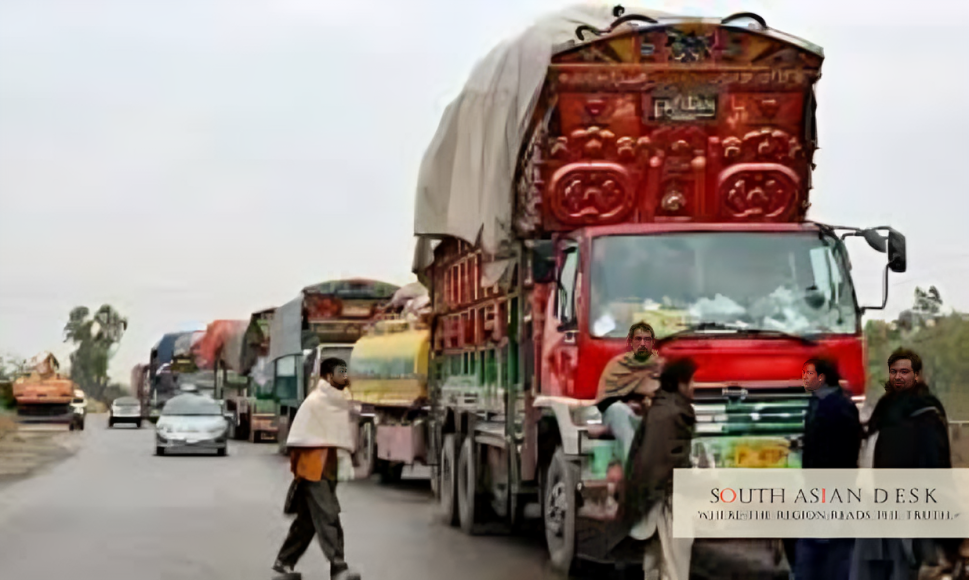
The transporters strike Pakistan has paralysed supply chains in Sindh province, entering its ninth day on Monday, December 16, 2025. Cargo transporters halted operations, stranding raw materials and finished goods on highways. Industries face imminent shutdowns.
Business leaders have raised urgent concerns. Imported consignments remain stuck at ports. Demurrage and detention charges accumulate. Essential commodities like edible oil and ghee face shortages.
Impact of Transporters Strike Supply Chains Pakistan
The Overseas Investors Chamber of Commerce and Industry (OICCI) highlighted severe constraints. Secretary General Abdul Aleem wrote to the Sindh chief minister. He reported trucks from Punjab unable to enter Karachi. Port operations remain hampered.
“Many of our members have reported that trucks from Punjab are still unable to enter Karachi and port operations have also been severely constrained, and several major manufacturing facilities are now at imminent risk of shutdown,” Abdul Aleem stated.
One OICCI member shut production lines on Monday. Others expect closures soon. Essential raw materials and finished goods strand across highways.
Pakistan Vanaspati Manufacturers Association (PVMA) chairman Sheikh Umer Rehan described the standstill. Supplies of edible oil, ghee, and daily-use items halted. Industrial raw materials stopped moving.
“The supply of edible oil, ghee and essential daily-use commodities has been affected, while the transportation of industrial raw materials has come to a halt,” Rehan said. He warned prolonged suspension could paralyse production and damage the economy.
Pakistan Association of Large Steel Producers general secretary Wajid Bukhari noted crippling effects. Prolonged disruption risks layoffs and wage losses. It threatens Pakistan’s industrial reputation.
Federal Bin Ahsan Tawfiq Industrialists and Traders Association (FBATI) president Sheikh Muhammad Tahseen added concerns. The goods transporters strike Pakistan disrupted raw materials and finished goods transport nationwide.
“The strike has severely disrupted the transportation of both raw materials and finished goods, leaving exporters and manufacturers unable to deliver consignments to Karachi Port on time,” Tahseen said. He urged immediate dialogue to prevent export order cancellations.
Government Efforts to End Goods Transporters Strike Pakistan
Federal authorities intensified negotiations on Monday. A high-level delegation travelled to Karachi. They met transport unions.
Federal Minister for Communications Abdul Aleem Khan emphasised dialogue. “Prolonged strikes cause losses to all stakeholders, particularly those in the transport sector,” he said. The government prioritises driving licences, road safety, and accident prevention.
Pakistan Goods Transport Alliance representatives briefed officials. They expressed satisfaction with progress. Both sides prefer constructive engagement.
A five-member committee formed earlier seeks solutions. Axle-load rules aim to protect highways.
Background: Origins of the Transporters Strike Pakistan
The action began after December 8 enforcement of the Motor Vehicle Ordinance 2025. Authorities cracked down on unfit vehicles in Karachi. Higher fines, penalties, impoundments, and FIRs followed.
Transporters called measures financially unviable without consultation. All Pakistan Transport Federation and allies joined.
Partial easing occurred in Punjab after December 13 talks. Sindh and Karachi remain affected. Goods transporters strike Pakistan persists there.
What’s Next: Threat of Wheel Jam Strike Pakistan
Transporters announced a nationwide wheel-jam strike for December 19. They demand withdrawal or revision of ordinance clauses.
Goods and passenger transport would suspend completely. Ongoing federal talks may avert escalation.
The transporters strike Pakistan underscores road safety versus operational viability tensions. Pakistan relies heavily on road transport for trade. Disruptions risk broader shortages and higher costs. Resolution through dialogue remains critical. Businesses await outcome to resume normal supply chains.
Published in SouthAsianDesk, December 16th, 2025
Follow SouthAsianDesk on X, Instagram, and Facebook for insights on business and current affairs from across South Asia.
