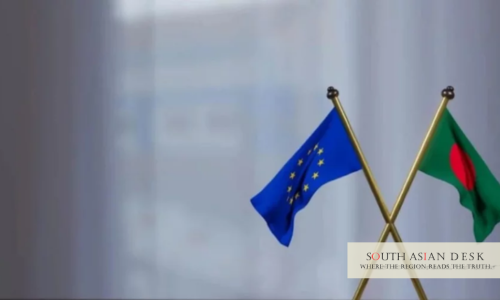
The European Union announced on Tuesday, 16 December 2025, the deployment of EU election observers to Bangladesh to monitor the parliamentary elections scheduled for 12 February 2026. High Representative Kaja Kallas has appointed Latvian MEP Ivars Ijabs as Chief Observer, following a formal invitation from the Bangladeshi authorities.
This marks the first full EU Election Observation Mission to Bangladesh since 2008. The mission will provide an independent assessment of the electoral process.
Chief Observer Ijabs stated he felt honoured to lead the effort. He described it as a tangible example of EU support for stronger democratic institutions, the rule of law, and human rights in Bangladesh.
EU EOM Bangladesh 2026
The EU EOM Bangladesh 2026 is based on a signed agreement between the EU Delegation, the Bangladesh Election Commission, and the Ministry of Foreign Affairs. The mission will assess compliance with international standards. Observers will engage stakeholders throughout the process.
Bangladeshi authorities extended the invitation amid preparations under the interim government. The polls represent a key step in the democratic transition after the 2024 upheaval. The EU highlighted support for free, fair, and participatory elections. It views the vote as the largest democratic exercise globally in 2026.
Bangladesh Election EU Mission
The EU mission for the Bangladesh election builds on earlier exploratory assessments. It signals international confidence in the electoral roadmap. Ambassador Michael Miller previously noted that the EU had prepared a significant observer presence. He praised the Election Commission’s professionalism.
The mission includes core team experts, long-term and short-term observers. Deployment timing aligns with pre-poll phases. The EU mission in Bangladesh’s election underscores the EU’s commitment to democratic consolidation in the region.
EU Election Observers February Polls
EU observers arrive in February for polls as Bangladesh addresses reforms. Political parties seek inclusive participation. The interim administration led by Muhammad Yunus advances preparations. Reforms target credible outcomes.
International monitoring enhances transparency. Past EU missions in 2001 and 2008 provided detailed recommendations. EU observers will cover the February polls, including campaigning, voting, and counting. They issue preliminary statements and final reports.
Background
Bangladesh experienced political change in August 2024, when protests led to the resignation of Sheikh Hasina. She fled to India. An interim government took charge. It is committed to holding elections after the necessary reforms are implemented.
The Election Commission updated voter lists and planned the timetable. The February 12 date gained consensus. EU-Bangladesh ties remain strong in trade and development. Everything But Arms scheme supports exports.
What’s Next
The core team will arrive soon. Full deployment follows closer to polling day. Stakeholders anticipate recommendations to strengthen processes. The mission maintains neutrality. Outcomes influence post-election governance and international relations.
The deployment of EU election observers in Bangladesh reinforces global support for peaceful and credible polls ahead.
Published in SouthAsianDesk, December 17th, 2025
Follow SouthAsianDesk on X, Instagram, and Facebook for insights on business and current affairs from across South Asia.