

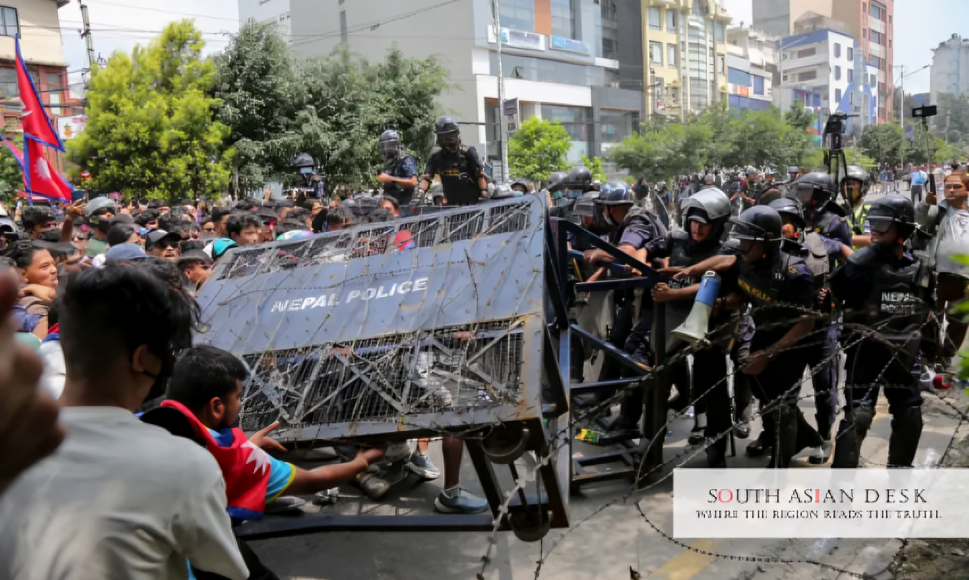
The commission probing the Nepal Gen Z protest crackdown has sought a one-month extension to finish recording statements and finalise its report. Chair Gauri Bahadur Karki made the request during a meeting with Prime Minister Sushila Karki at Singha Durbar on Wednesday.
Formed on September 21, 2025, the panel received a three-month mandate to examine the violent suppression of youth-led demonstrations on September 8-9. Those protests resulted in 77 deaths, including many unarmed youths killed by security forces.
Nepal Inquiry Commission Extension Amid Ongoing Probe
Commission officials told Prime Minister Karki that the original deadline proves insufficient as statement recordings continue. The prime minister responded positively to the Nepal inquiry commission extension request.
The panel has questioned numerous officials, including Army Chief General Ashok Raj Sigdel, former home secretary Gokarna Mani Duwadi, and several police inspectors general. Investigators also interviewed injured protesters, Gen Z leaders, and families of the deceased.
Recent Cabinet decisions expanded the commission’s terms of reference following an agreement between government representatives and Gen Z groups. The updated mandate authorises investigations into human rights violations, including alleged extrajudicial killings during the Nepal Gen Z protest crackdown. It also tasks the panel with recommending criminal accountability and screening cases of detained protesters.
Nepal Gen Z Protests Probe Targets Former Leaders
The commission prepares to summon former prime minister KP Sharma Oli and former home minister Ramesh Lekhak for questioning. Both served during the September events when police firing killed dozens.
Sources indicate the panel has informally contacted Lekhak, who may appear next week. Oli, however, has publicly refused to accept moral responsibility for the casualties and labelled the commission unconstitutional.
The body imposed movement restrictions on Oli, Lekhak, and several others, barring them from leaving Kathmandu Valley without permission. Commission spokesperson Bigyanraj Sharma expressed confidence that both former leaders will provide statements soon.
Separately, the National Human Rights Commission recorded Lekhak’s statement. He denied ordering police to fire on protesters on September 8, when 19 died. The constitutional watchdog’s preliminary report, released on September 26, noted that protests began peacefully before arson incidents triggered police shootings, leading to escalation.
Background on the Nepal Gen Z Protest Crackdown
The Nepal Gen Z protests erupted on September 8, 2025, after the then-government imposed a blanket ban on multiple social media platforms. Youth demonstrators also demanded an end to widespread corruption and better governance.
Initial gatherings remained largely peaceful until violence flared near the federal parliament. Security forces opened fire, killing 17 unarmed youths on the first day. Reports indicate 21 people, including school students, died at New Baneshwar.
The second day saw widespread arson and vandalism targeting public buildings such as Singha Durbar, the federal parliament, the Supreme Court, and police stations. Private properties, including hotels, supermarkets, banks, and media houses, suffered extensive damage.
Protests spread nationwide as demonstrators surrounded the prime minister’s residence. Oli resigned amid the chaos and received airlift evacuation by the Nepali Army. The events caused significant economic losses and disrupted daily life across Nepal.
The government formed the judicial inquiry commission shortly after to address allegations of excessive force in the Nepal Gen Z protest crackdown. Recent expansions reflect agreements aimed at broader accountability.
What’s Next for the Nepal Gen Z Protests Probe
The commission enters its final investigation phase. Member Lily Thapa stated that statements from most stakeholders are complete, with the report expected soon after any extension.
Potential refusals by summoned officials could lead to formal notices, public announcements, or further measures. Investigators emphasise that no authority figures have accepted responsibility for casualties during the Nepal Gen Z protest crackdown.
The probe’s findings may influence recommendations for prosecutions, releases of detained protesters, and measures to prevent future violations. Regional observers watch closely as youth movements challenge governance across South Asia.
The extended Nepal Gen Z protest crackdown inquiry underscores demands for transparency following one of the deadliest protest responses in recent Nepali history.
Published in SouthAsianDesk, December 18th, 2025
Follow SouthAsianDesk on X, Instagram, and Facebook for insights on business and current affairs from across South Asia.
