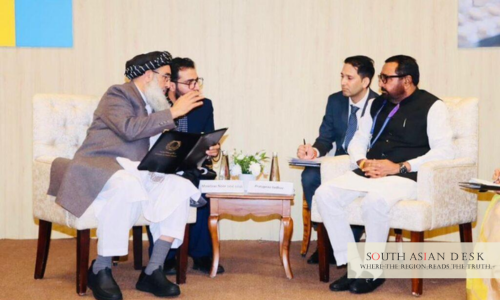
New Delhi, Thursday, December 18, 2025 – India-Afghanistan traditional medicine ties strengthened through high-level discussions. Afghanistan‘s Public Health Minister, Mawlawi Noor Jalal Jalali, held talks with India’s Minister of State for AYUSH, Prataprao Jadhav. The focus centred on establishing a dedicated traditional medicine institute in Kabul.
The bilateral meeting took place on December 17. It coincided with the second WHO Global Summit on Traditional Medicine hosted in New Delhi. Both sides expressed strong interest in expanding collaboration across education, training, research, and regulatory frameworks.
Jalalali highlighted Afghanistan’s commitment to developing its traditional medicine sector. He sought Indian expertise to build institutional capacity.
Traditional Medicine Institute Kabul: Core of Discussions
Minister Jalali formally requested assistance in setting up a specialized institute in Kabul. The proposed facility would focus on research, standardisation, and professional training in traditional systems.
He emphasised the need for structured programmes to train Afghan practitioners. A draft memorandum of understanding was suggested to formalise cooperation. Minister Jadhav responded positively. He assured full support from India’s Ministry of AYUSH.
India offered help in designing curricula, providing faculty expertise, and sharing best practices. Systems such as Ayurveda, Yoga, Unani, Siddha, and Homeopathy featured prominently. The ministry described the exchange as highly constructive. Both nations share historical links in traditional healing practices.
Unani medicine, in particular, enjoys deep roots in Afghanistan. Indian institutions could play a key role in modernising and regulating the field.
Afghanistan India AYUSH Cooperation: Shared Priorities
The talks aligned with global efforts to integrate traditional medicine into mainstream healthcare. The WHO summit provided an ideal platform.
Afghanistan aims to standardise practices and ensure quality control. India’s established AYUSH infrastructure serves as a model. Collaboration could extend to joint research initiatives. The exchange of medicinal plants and formulations also emerged as an area of interest.
Jalalali thanked India for the ongoing health support. He noted the positive impact of previous assistance on Afghan communities.
Kabul New Delhi Traditional Medicine Talks: Humanitarian Context
Beyond traditional medicine, Minister Jalalali met India’s Union Health Minister Jagat Prakash Nadda. They reviewed broader bilateral health cooperation.
India has supplied substantial humanitarian aid since 2021. This includes hundreds of tonnes of essential medicines, vaccines, and medical equipment. Recent shipments featured advanced diagnostic tools like CT scanners. Discussions covered long-term supply mechanisms.
Cancer treatment facilities and medical visa facilitation formed part of the agenda. Capacity building for Afghan healthcare professionals remains a priority. India maintains its policy of people-centric assistance. Health diplomacy continues irrespective of political changes in Kabul.
Background India-Afghanistan Traditional Medicine
Traditional medicine holds significant cultural importance in both India and Afghanistan. Systems like Unani trace their origins to Greco-Arabic traditions that were shared across various regions.
India’s Ministry of AYUSH promotes global integration. It operates dedicated institutes, hospitals, and research councils.
Afghanistan regulates traditional practices through its public health framework. Demand is growing for formal education and high-quality standards. Bilateral relations emphasise a development partnership. Health and education feature as key pillars. Previous engagements include telemedicine support and specialist visits. Traditional medicine opens a new chapter.
What’s Next
Technical teams will prepare detailed proposals. Curriculum frameworks and training modules will take shape in the coming months.
A memorandum of understanding may be signed soon. It would outline timelines and responsibilities.
Institute construction or adaptation could follow initial planning. Faculty exchanges and student programmes likely start early. Ongoing WHO initiatives provide additional momentum. Sustained dialogue promises lasting benefits for India-Afghanistan traditional medicine cooperation.
Published in SouthAsianDesk, December 18th, 2025
Follow SouthAsianDesk on X, Instagram, and Facebook for insights on business and current affairs from across South Asia.