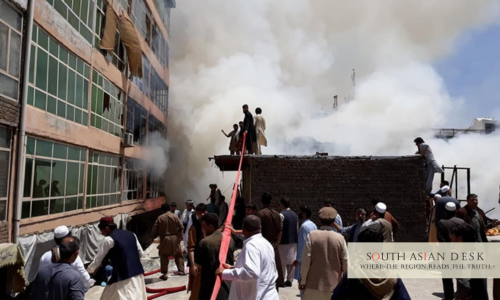
A massive fire broke out in Kabul’s iconic Mandawi market early Sunday morning, December 21, 2025. The Kabul Mandawi fire caused estimated losses of $700,000 after destroying eight shops and 10 warehouses in the Mir Alam subsection.
Authorities attributed the incident to an electrical short circuit. Firefighters contained the blaze quickly. No injuries or deaths occurred. The market, one of Afghanistan’s largest wholesale hubs, supplies goods to the nation.
Details of the Kabul Mandawi Fire Incident
The Kabul Mandawi fire ignited around 5:30 a.m. in the Mir Alam area, known for its trade in plastic sandals and shoes. Highly flammable materials fuelled the rapid spread. Taliban Ministry of Interior spokesperson Abdul Mateen Qani confirmed the damage scope. He stated that 10 storage facilities and eight shops suffered direct impact.
Preliminary loss estimates reached nearly $700,000. Firefighting teams saved property valued at approximately $2.2 million through prompt intervention. Shah Wali Sahib, police chief for Kabul’s 1st municipal district, verified the electrical short circuit as the cause. He commended coordinated efforts between police and emergency services.
Farshid Ahmadzai, operations director at Kabul’s Firefighting Department, described challenges posed by combustible stock. Teams battled intense flames before they were completely extinguished.
Rohullah Razaei, president of Kabul’s Shoemakers Association, noted the market comprises around 300 shops and warehouses. Only 18 structures were directly affected by the Mandawi market fire in Kabul. He emphasised the critical role of rapid response in preventing catastrophe.
Mandawi Market Fire Kabul: Economic Consequences
The Mandawi market fire in Kabul disrupts a vital commercial artery. The historic bazaar serves as a hub for traders from across Afghanistan, supporting thousands of livelihoods. Narrow passages and dense construction characterise the area. Such a layout hinders emergency vehicle access during crises.
Overloaded electrical systems remain common. Winter demands increase risks from heating appliances and wiring faults. Affected merchants began damage assessments immediately. One trader, Hamidullah, reported personal losses of 600,000 Afghanis due to destroyed inventory.
Footwear distribution chains face temporary interruptions. Retailers in provinces await restocking. The incident underscores infrastructure vulnerabilities in post-conflict urban centres. Reconstruction efforts continue amid economic constraints.
Kabul Market Blaze 700000 Losses: Official Response
The Kabul market blaze caused 700000 losses, according to initial calculations from security officials. Detailed surveys may adjust figures. Saved assets highlight improved emergency capabilities under the current administration. Officials stress citizen service as a priority.
Police secured the perimeter during operations. No reports of looting or secondary disturbances emerged. Firefighting units deployed multiple vehicles. Water supplies and specialised equipment aided containment.
Coordination between municipal authorities and Taliban forces proved effective. Leaders praised ground teams publicly.
Mir Alam Market Fire: Specific Impact
The Mir Alam market fire targeted a specialised footwear wholesale zone. Plastic goods accelerated flame propagation.
Warehouses stored seasonal stock ahead of peak demand. Losses affect supply for the upcoming months.
Shopkeepers’ union representatives advocate upgrades. Proposals include modern wiring standards and fire suppression systems.
The subsection forms part of Mandawi’s broader ecosystem. Interconnected trade means ripple effects extend beyond direct victims.
Merchants expressed gratitude for the injury-free outcome. Community solidarity is evident as neighbours assist in salvage efforts.
Background on Market Safety Challenges
Market fires recur periodically in Kabul. Previous blazes in Mandawi and Sarai Shahzada caused millions in damage.
Congested designs from older eras clash with modern commercial volumes. Electrical grids strain under increased loads. Awareness campaigns promote safety practices. Enforcement varies across districts.
Taliban governance focuses on public services. Fire department expansions and training programmes continue.
International aid once supported infrastructure. Current isolation limits external assistance. Traders often bear rebuilding costs independently. Insurance penetration remains low.
What’s Next Following Kabul Mandawi Fire
Authorities launch formal investigations into wiring conditions. Findings may inform preventive regulations.
Affected owners compile loss documentation. Compensation discussions are possible through local councils. Market sections reopen progressively. Full operations resume after safety clearances.
Municipal plans address long-term risks. Widening access routes and electrical audits are proposed. The Kabul Mandawi fire reinforces the need for sustained safety investments. Stakeholders commit to resilience measures.
Economic recovery depends on swift restoration. Traders anticipate returning to normal trade soon.
Published in SouthAsianDesk, December 21st, 2025
Follow SouthAsianDesk on X, Instagram, and Facebook for insights on business and current affairs from across South Asia.