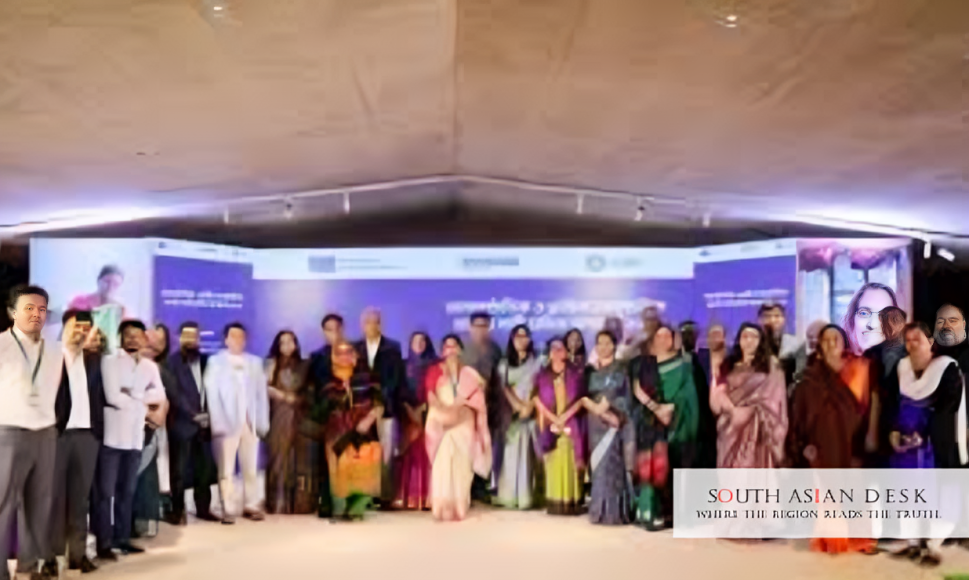
Dhaka: Informal women workers from tea gardens, fisheries, domestic work and home-based garment sectors convened in Dhaka on December 9, 2025, announcing the formation of the National Women Workers Forum. The new platform seeks to advance women workers rights Bangladesh by addressing exclusions from labour laws and social protections.
This initiative addresses a key issue in South Asia’s labour dynamics, where Bangladesh relies heavily on informal female labour yet provides limited rights. The forum’s emergence could shape broader regional efforts toward gender-equitable policies.
Informal Women Workers Bangladesh Form Unified Front
More than 45,000 women workers across 20 districts gained empowerment through the Empowering Women through Civil Society Actors Project. The European Union co-funds this project, which Oxfam in Bangladesh implements with 33 partners. It supported networks including the Bangladesh Nari Cha Shromik Jot, Domestic Workers National Forum, Women Home-Based RMG Workers Network and Women Fisherfolk Network.
These networks achieved progress. Domestic workers obtained compensation in abuse cases. Tea-garden women took leadership positions. Fisherwomen pushed for formal identification. Home-based garment workers advanced wage and safety discussions.
Farida Akter, adviser at the Ministry of Fisheries and Livestock, declared: “Women have always been a positive force in our society. Yet women workers remain deprived, both as humans and as women. In a patriarchal system, they face constant obstacles, and even our major economic assessments fail to recognize their contribution. When a person’s work remains invisible, it becomes a deep violation of human rights.”
Syed Sultan Uddin Ahmed, former head of the Labour Reform Commission, noted: “From the tea gardens to the fisheries, our collective strength is our only path to recognition and justice. Women workers must be present where decisions are made, and the nation must acknowledge their labour as the backbone of our economy.”
National Women Workers Forum: Core Demands for Reform
The convention outlined priorities for women workers rights Bangladesh. These include:
- Legal recognition under the Bangladesh Labour Act
- A national living wage
- Occupational health and safety standards
- Social protection inclusion
- Zero tolerance for gender-based violence
- Recognition of unpaid care work with childcare support
Strategic proposals feature a government-recognized national network, digital database with work-based IDs, 33% women representation in labour forums, a specialized legal aid cell under the Ministry of Labour and leadership development investments.
Ashish Damle, country director of Oxfam in Bangladesh, remarked: “This convention shows what becomes possible when women organize, speak, and lead. Bangladesh’s development journey must recognize and protect the rights, dignity, and leadership of informal women workers.”
Laila Jesmin Banu, program manager for governance and human rights at the European Union Delegation in Bangladesh, observed: “The EWCSA initiative is powerful because it transforms both systems and lives. Its impact is visible in the leadership, confidence, and collective organizing of women workers. We hope this momentum continues to shape inclusive, evidence-based policy reforms in Bangladesh.”
Dr. Rejwana Snigdha, professor at Jahangirnagar University, stressed: “We need to revise social and institutional norms that influence labour identities. Bangladesh requires a centralized database of informal women workers to support planning, service delivery, and legal reforms.”
Mahmuda Sultana, program director at Oxfam in Bangladesh, stated: “Women workers’ capacity were strengthened to recognize and claim their rights as well as to support each other. Raising their voice will enhance their collective bargaining capacities. Though legal and policy framework recognize some rights of women workers, implementation of those still remain inadequate.”
Background
Bangladesh’s informal sector provides 85% of employment, with women forming a major share. The International Labour Organization reports that 96.6% of employed women in Bangladesh operate informally. They face low wages, no contracts and harassment risks.
The National Women Development Policy 2011 seeks to acknowledge women’s economic roles, but gaps persist in implementation. Ministry of Women and Children Affairs data indicates 66.7% of legal frameworks promote gender equality under SDG indicators. Yet female labour participation reaches only 43%, according to UN Women.
Of 75-80 million workers nationally, just 15 million hold formal positions. This leaves most informal women workers Bangladesh without protections. The Asian Development Bank confirms informal employment’s dominance, often leaving women unrecognized.
Taslima Akter, president of the Trade Union Federation, pointed out: “Out of 75-80 million workers in the country, only 15 million were formal workers, while the others were informal and out of the government’s support system. But recognizing domestic workers as informal workers has been a step in the right direction.”
Anni Akter, a home-based RMG worker from Karmojibi Nari, explained: “Despite being an informal worker, we don’t even have work-based ID cards despite being an RMG worker. This lack of professional identity often causes us to suffer from social stigma.”
Farhin Akter Khushi, a domestic worker leader from AVAS, said: “We can’t take leave of absences, while our employers even cut our salaries if we take any leaves. This is because we are unaware of our rights as workers. We demand contracts/appointment letters to recognize our work, like other male workers.”
Sharmin Sultana Moushumi, advocate at the Supreme Court of Bangladesh and vice president of the Labour Court Bar Association, affirmed: “Women workers, especially informal and marginalized ones, do not know that legal aid is free for them at labour courts. We will continue to fight for their rights, and will try to expand their accessibility to legal support such as free hotline services.”
Sumaiya Islam, executive director of Bangladesh Nari Sramik Kendra, called for: “Our objective must be to address gaps persisting in policy advocacy. We must attain a common platform to continue fighting for the rights of informal and marginalized women workers.”
Sunzida Sultana, additional executive director of Kormojibi Nari, described: “Most women workers lack work-based ID cards, and suffer from low wages and labour rights. For tea workers, it expands to workplace harassments – mostly physical and sexual. There is no healthcare benefits, or even child daycares at tea gardens.”
The World Bank highlights support for over 200,000 returning migrant workers, many women, underscoring needs for wider informal sector safeguards.
Labour Rights Bangladesh Women: Building Collective Power
The National Women Workers Forum stands as a crucial alliance for labour rights Bangladesh women. It aims to boost national-level collective bargaining. Md. Abul Hossain, coordinator at the Domestic Workers Rights Network, supported: “There should be no discrimination between formal and informal workers. I support the formation of a women workers’ federation, which could elevate their collective bargaining at a national level.”
Rezekuzzaman Ratan, former member of the Labour Reform Commission, commended: “Women workers, especially informal workers, had worked very hard to break barriers and come this far. They have caused significant stir in society.”
Fowzia Khandker, executive director of Pragroshor, added: “Our achievements are not small, but more can be done collectively. While divisions are still there, we must raise our voices to demand our rights as workers. If we can unite, it would bolster accountability of policymakers.”
A.K.M Ashraf Uddin, executive director of the Bangladesh Labour Foundation, cautioned: “Support for informal workers needed to increase; otherwise, it would be difficult for Bangladesh on its path to LDC graduation.”
What’s Next
Participants expect policy engagements with government to incorporate demands into frameworks. The National Women Workers Forum intends advocacy drives in 2026, targeting labour rights Bangladesh women.
Campaigners advocate ongoing efforts on women workers rights Bangladesh for fairer growth.
Published in SouthAsianDesk, December 23rd, 2025
Follow SouthAsianDesk on X, Instagram and Facebook for insights on business and current affairs from across South Asia.