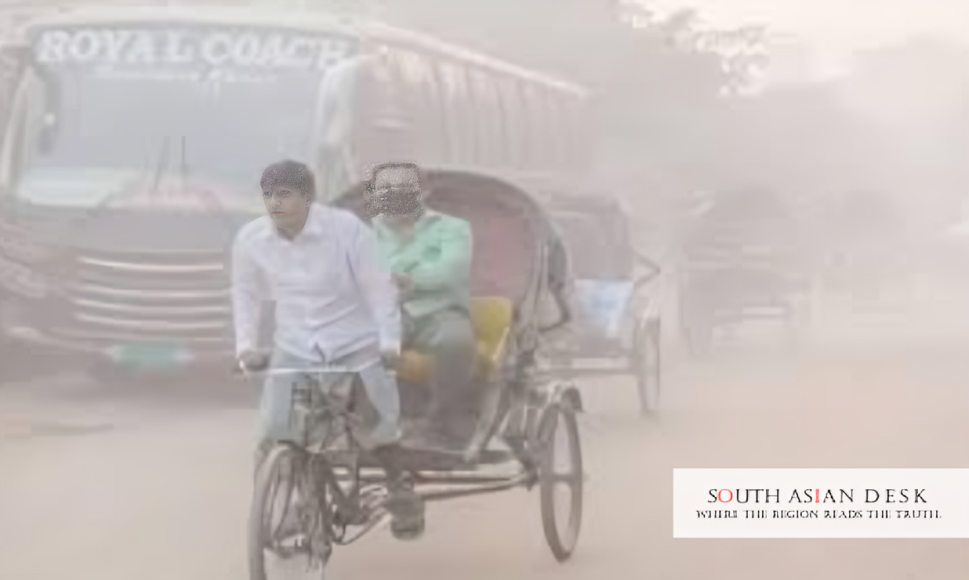
Dhaka air quality deteriorated sharply on Wednesday morning, ranking second worst in the world with an AQI of 236, classified as very unhealthy. Residents in the Bangladeshi capital faced heightened health risks from ongoing air pollution in Dhaka.
Dhaka‘s persistent poor air quality underscores a regional crisis in South Asia, where rapid urbanisation and industrial growth exacerbate Bangladesh air pollution, impacting public health and economic productivity across densely populated cities.
Dhaka AQI Hits Alarming Levels
On Wednesday, December 24, 2025, at 9:50 AM, Dhaka AQI reached 236, placing the city second on the global list of worst air quality. Kolkata led with an AQI of 247, followed by Cairo at 197 and Delhi at 190. The air was categorised as very unhealthy, meaning active children and adults, along with people with respiratory diseases, should avoid prolonged outdoor exertion.
The AQI measures daily air quality based on pollutants including particulate matter PM10 and PM2.5, nitrogen dioxide, carbon monoxide, sulphur dioxide, and ozone. In Dhaka, PM2.5 often dominates as the primary pollutant, fine particles that penetrate deep into lungs and bloodstream.
Recent data from the Department of Environment shows similar trends. On December 20, 2025, Dhaka AQI averaged 203, also very unhealthy, with Savar at 160 and Tongi at 181, both unhealthy. These figures align with seasonal patterns where Dhaka air quality worsens in winter due to low wind speeds and temperature inversions trapping pollutants.
Causes of Air Pollution in Dhaka
Air pollution in Dhaka stems from multiple sources. Vehicle emissions contribute significantly, with over 1 million vehicles on roads, many using outdated two-stroke engines. Industrial discharges from factories around the city add to the burden.
Brick kilns are a major culprit in Bangladesh air pollution. Dhaka produces over 1 billion bricks annually, and kilns release high levels of black carbon and particulate matter, especially during dry seasons. Construction dust from ongoing urban development further elevates PM levels.
Open burning of municipal waste accounts for 11 percent of population-weighted annual mean PM2.5 in Dhaka, according to official assessments. This practice releases toxic fumes, aggravating respiratory issues.
Transboundary pollution also plays a role, with winds carrying pollutants from neighbouring regions like India. Overpopulation intensifies the problem, as Dhaka’s 21 million residents generate substantial waste and demand for energy.
Health Impacts of Bangladesh Air Pollution
Poor Dhaka air quality poses severe health threats. The World Health Organization states air pollution kills 7 million people worldwide yearly, mainly from stroke, heart disease, chronic obstructive pulmonary disease, lung cancer, and acute respiratory infections.
In Bangladesh, air pollution caused over 159,000 premature deaths and 2.5 billion days of illness in recent years, with health costs equivalent to 8.3 percent of GDP. Vulnerable groups include children, elderly, and those with pre-existing conditions.
Residents report increased cases of asthma, bronchitis, and cardiovascular problems during high AQI periods. When Dhaka AQI exceeds 200, hospitals see spikes in admissions for respiratory distress.
Government Response to Air Pollution in Dhaka
The government has initiated measures to address Bangladesh air pollution. On Tuesday, December 23, 2025, the Ministry of Environment, Forest and Climate Change announced rewards for submitting photos of waste burning. Citizens can email images with name, mobile number, location, and time to a designated address. The top 10 verified photos monthly receive prizes.
Dipankar Bar, public relations officer, signed the press release, noting open waste burning as a key source of deteriorating air quality and rising respiratory diseases. The initiative aims to gather precise data for targeted actions.
Other efforts include expanding the Department of Environment’s monitoring network to 31 stations nationwide. Standards for ambient air quality guide enforcement, though implementation challenges persist.
Background
Dhaka has grappled with air pollution for decades. The city ranked among the world’s most polluted in 2021 with an annual AQI of 161. Winter months see Dhaka air quality plummet, while monsoon rains offer temporary relief by washing away pollutants.
Regional comparisons show South Asian cities facing similar issues. Delhi and Lahore often top global lists, driven by crop burning and vehicular fumes. Collaborative efforts under frameworks like the South Asian Association for Regional Cooperation could help mitigate transboundary effects.
Economic growth in Bangladesh, with GDP rising 6 percent annually, fuels industrial expansion but strains environmental resources. Brick kilns alone employ thousands but contribute disproportionately to air pollution in Dhaka.
Studies indicate inappropriate transportation accounts for 15 percent of emissions. Transitioning to cleaner fuels and electric vehicles remains a priority.
What’s Next
Authorities plan to enforce stricter regulations on brick kilns and waste management. Public awareness campaigns will promote reporting of pollution sources.
As winter persists, Dhaka air quality could decline further without immediate interventions. Sustained monitoring and policy enforcement are essential to reduce air pollution in Dhaka and improve livability.
Published in SouthAsianDesk, December 24th, 2025
Follow SouthAsianDesk on X, Instagram and Facebook for insights on business and current affairs from across South Asia.