

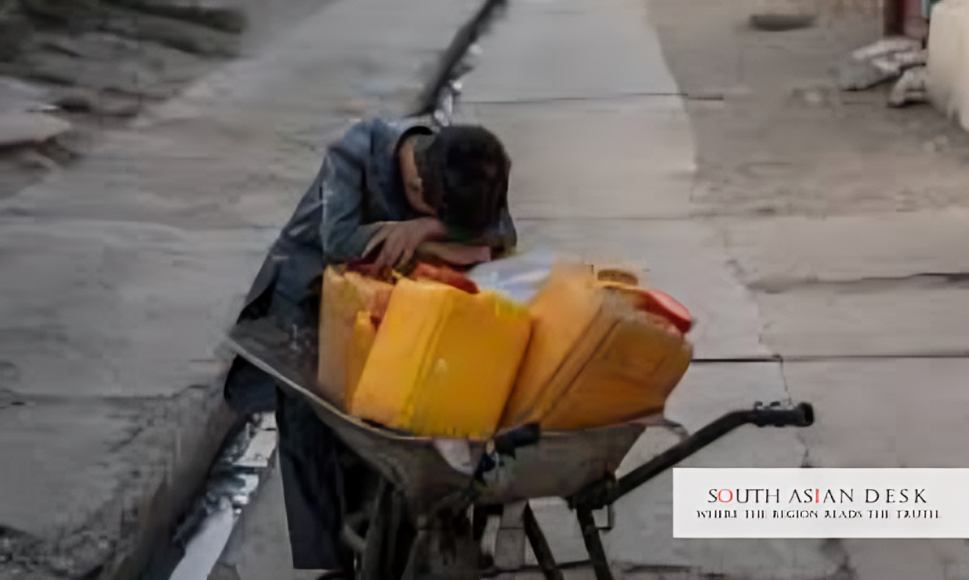
Kabul Water Crisis: residents face acute drinking water shortage as groundwater depletion in Kabul accelerates amid population growth and climate change. Experts project aquifers could exhaust by 2030, displacing millions in the Afghan capital.
Kabul’s escalating water woes underscore broader regional vulnerabilities in South Asia, where transboundary rivers like the Kabul River fuel tensions with neighbours such as Pakistan and Iran over shared resources.
Causes of Groundwater Depletion in Kabul
Rapid urban expansion has intensified the Kabul water crisis. The city’s population surged from under 1 million in 2001 to over 6 million in 2025, driving demand for water. Mercy Corps reports that groundwater extraction exceeds natural recharge by 44 million cubic metres annually. Aquifers have dropped 25 to 30 metres in the past decade.
Climate change compounds Afghanistan water scarcity. Precipitation fell 45 to 60 percent below average from October 2023 to January 2024. Reduced snowfall in the Hindu Kush mountains limits meltwater recharge for the three main aquifers serving Kabul. UN data shows repeated droughts affected 11 million Afghans between 2021 and 2024.
Unregulated borewells proliferate. Over 120,000 such wells operate in Kabul, many without licences. Solar pumps enable constant extraction, doubling the drain on resources. A 2023 UN report notes 49 percent of borewells are dry, with others at 60 percent efficiency.
Impacts of Drinking Water Shortage in Kabul
Households bear the brunt of the Kabul water crisis. Residents average 20 litres per capita daily, below the 80-litre minimum standard. Up to 80 percent of groundwater contains contaminants like sewage, arsenic, and nitrates, per USGS findings cited in Mercy Corps analysis.
Economic strain mounts. Families spend 15 to 30 percent of income on water, with tanker prices doubling to $5 per cubic metre. Over two-thirds incur debt at high interest rates. In Khair Khana neighbourhood, costs rose from 500 afghanis to 1,000 afghanis for the same volume every 10 days.
Health risks escalate amid Afghanistan water scarcity. Contaminated sources raise disease incidence, particularly among children. Schools and clinics close due to shortages. Private firms extract public groundwater and resell at premiums, exacerbating inequities.
Agriculture suffers. Salinity affects 400 greenhouses, while Qargha Dam’s low levels idle 12,000 hectares of farmland, threatening 500,000 jobs. Beverage companies extract billions of litres yearly, further depleting reserves.
Governance and Funding Challenges
The Taliban administration acknowledges the environmental crisis. On Friday, August 2, 2025, Matiulhaq Khalis, head of the National Environmental Protection Agency, described Afghanistan’s situation as “dire and alarming.” However, implementation lags due to capacity losses post-2021, with 40 percent of staff departing.
International funding freezes hinder response. OCHA reported just $8.4 million received of $264 million needed for water and sanitation in early 2025. $3 billion in aid remains frozen since August 2021. USAID cuts exceeded 80 percent, stalling projects.
Transboundary issues add complexity. Afghanistan controls headwaters for regional rivers, but lacks sharing agreements. Projects like Shah Toot Dam face opposition from Pakistan over potential 16 to 17 percent flow reductions.
Background
Decades of conflict eroded infrastructure. Pre-2021 aid focused on short-term fixes, leaving systems inadequate for growth. Post-2001 drilling boomed without regulation, leading to over-extraction. Taliban-era policies required licences, but enforcement remains inconsistent.
Climate vulnerability ranks high. Afghanistan stands sixth on the Notre Dame Global Adaptation Index. Temperatures rose 1.8 degrees Celsius from 1951 to 2010, twice the global average. GRACE satellite data confirms severe groundwater losses from 2003 to 2024.
UN-Habitat warned on Thursday, July 18, 2025, that 6 million Kabul residents risk severe shortages. UNICEF projects total aquifer depletion by 2030, potentially displacing 3 million.
What’s Next
Proposed infrastructure offers hope. The Panjshir pipeline, at $170 million, could supply 130 million cubic metres yearly to 2 million residents. Shah Toot Dam, budgeted at $236 million, aims for completion by 2027 to aid recharge.
Experts urge artificial recharge, check dams, and rainwater harvesting. Private sector engagement through public-private partnerships could regulate extraction. Lifting sanctions might unlock funds for these initiatives.
Without intervention, the Kabul water crisis could force mass migration, straining South Asian stability. Coordinated action remains critical to avert Afghanistan water scarcity turning catastrophic.
Published in SouthAsianDesk, December 25th, 2025
Follow SouthAsianDesk on X, Instagram and Facebook for insights on business and current affairs from across South Asia.
