Peshawar, Thursday, December 25, 2025 – The Khyber Pakhtunkhwa government officially launched the KP disaster management plan 2026 on Tuesday. The Provincial Disaster Management Authority hosted the ceremony in Peshawar. The plan spans 2026-30. It marks a significant shift from reactive emergency handling to proactive risk mitigation.
The document identifies 10 districts as highly vulnerable to floods. Two districts face elevated landslide risks. One district stands out for heavy snowfall and glacial lake outburst floods. Lower and Upper Chitral register the highest overall exposure due to multiple overlapping hazards.
Provincial Minister for Relief, Rehabilitation and Settlement Aqib Ullah Khan presided over the event. Secretary Relief Sohail Khan addressed participants. Officials described the framework as a roadmap for building long-term resilience.
Khyber Pakhtunkhwa Disaster Plan 2026-30: Strategic Pillars
The Khyber Pakhtunkhwa disaster plan 2026-30 rests on several interconnected pillars. Authorities prioritise operationalising the provincial disaster management system. They commit to digitalising comprehensive risk assessment databases.
Planners will formulate detailed strategies at provincial, district, and community levels. The approach integrates climate-smart principles into sustainable development projects across sectors.
A significant focus falls on strengthening multi-hazard early warning systems. These systems aim to provide timely alerts for floods, GLOFs, landslides, and extreme weather. Investments target technology upgrades and expanded coverage.
Capacity building forms another cornerstone. Training programmes will reach government officials, rescue workers, and local communities. Research initiatives are strengthened through partnerships with academic institutions.
Community-based disaster risk reduction gains prominence. Local groups participate in vulnerability mapping and preparedness drills. This bottom-up engagement ensures solutions fit specific geographic and social contexts.
Emergency response mechanisms receive substantial upgrades. The plan proposes establishing a dedicated provincial disaster response force. This specialised unit trains for rapid deployment in remote and mountainous terrain.
Disaster risk financing introduces innovative tools. Authorities explore insurance schemes and contingency funds. Compensation policies are streamlined to deliver swift aid to affected families.
Post-disaster recovery protocols emphasise build-back-better principles. Reconstruction guidelines mandate resilient infrastructure standards. Livelihood restoration programmes support economic rebound.
Heatwaves emerge as a growing concern. Rising temperatures disrupt urban centres like Peshawar. In northern valleys, intense heat accelerates glacier melt. This process heightens risks of GLOFs, flash floods, and debris flows during the summer months.
KP Vulnerable Districts Floods GLOFs: Detailed Hazard Profiling
In KP’s vulnerable districts, flood GLOFs dominate the risk analysis section. The plan categorises hazards systematically. Flood vulnerability affects 10 districts primarily along river basins and lowland areas.
Landslides threaten two districts with steep slopes and deforestation issues. Heavy snowfall isolates communities in one high-altitude district during winter. Glacial lake outburst floods pose an acute danger in another northern district, which hosts unstable lakes.
Lower Chitral and Upper Chitral score highest on composite risk indices. They confront snowfall, floods, landslides, GLOFs, and avalanche threats simultaneously. Such multi-hazard exposure demands integrated interventions.
The province’s topography explains these patterns. Southern districts border major rivers prone to monsoon overflow. Central zones experience flash floods from hill torrents. Northern mountainous regions are home to hundreds of glaciers and moraine-dammed lakes.
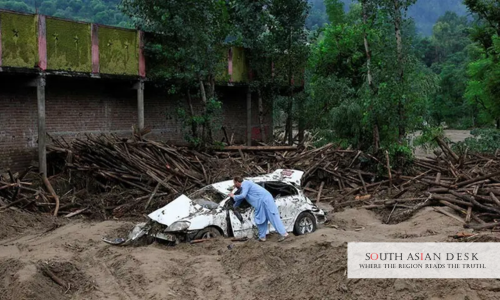
Historical data validates the classifications. The devastating 2022 floods submerged vast swathes of Khyber Pakhtunkhwa. Entire villages were washed away. Roads and bridges collapsed. Agricultural losses ran into billions of rupees.
Subsequent years brought repeated alerts. Heatwaves gripped urban areas in 2023 and 2024. Glacier monitoring stations recorded accelerated retreat. Communities downstream received evacuation notices multiple times.
South Asian regional dynamics amplify local impacts. Transboundary rivers, such as the Kabul and Indus, connect vulnerabilities across borders. Heavy rainfall in neighbouring areas triggers downstream flooding in Khyber Pakhtunkhwa. Coordinated basin management remains essential yet challenging.
PDMA KP Disaster Management Plan: Inclusive Development Process
The PDMA KP disaster management plan reflects broad stakeholder engagement. Development spanned months of consultations. The National Disaster Management Authority provided technical guidance.
Provincial line departments contributed sector-specific inputs. Irrigation, forestry, and public health officials shared data on exposure patterns.
District administrations conducted local assessments. They mapped community assets and evacuation routes. Civil society organisations advocated for gender-sensitive and inclusive approaches.
International development partners offered expertise. Agencies supported vulnerability studies and the transfer of early warning technologies. This collaborative model ensures ownership at all levels.
The framework evolves from earlier efforts. Annual monsoon contingency plans addressed seasonal risks. Winter preparedness focused on snowfall isolation. The new KP disaster management plan 2026 integrates these into a unified long-term vision.
PDMA maintains central coordination. It oversees prevention, mitigation, preparedness, response, recovery, and rehabilitation phases. Cross-departmental committees facilitate seamless operations.
Background: Evolving Disaster Landscape in Khyber Pakhtunkhwa
Khyber Pakhtunkhwa has long grappled with natural hazards. The 2005 earthquake exposed seismic vulnerabilities. Recurrent floods since 2010 have highlighted the threats of riverine and flash floods.
Climate change significantly reshapes the risk profile. Global warming drives glacier volume loss in the Hindu Kush-Himalayan range. Studies project an increase in GLOF frequency over the coming decades.
Precipitation patterns grow erratic. Intense short-duration rains trigger landslides and urban flooding. Prolonged dry spells strain water resources and agriculture.
Urban expansion compounds exposure. Informal settlements occupy floodplains. Encroachment on natural drainage channels worsens impacts. Infrastructure often lacks hazard-resistant design.
PDMA has built institutional memory over the years. It maintains warehouses with relief goods. Rescue 1122 integrates into disaster operations. Volunteer networks extend reach to remote valleys.
Resource mapping identifies equipment gaps. Boats, life jackets, and medical kits are prepositioned in high-risk districts. Communication systems upgrade for last-mile connectivity.
What’s Next: Implementation Roadmap
Implementation commences immediately following the launch. PDMA issues detailed guidelines to districts within weeks. Prioritisation matrices direct resources to the highest-risk areas.
Early warning infrastructure expansion is scheduled to begin in 2026. Additional automated weather stations are installed. River gauging improves. Satellite-based monitoring integrates with ground data.
Community-level activities scale up rapidly. Village disaster management committees are formed or revitalized. School safety programmes incorporate hazard education into curricula.
Drills and simulations test preparedness regularly. Tabletop exercises involve policymakers. Full-scale mock events engage response teams and the broader community.
Monitoring and evaluation frameworks track progress. Annual reviews assess effectiveness. Mid-term adjustments respond to emerging threats or implementation challenges.
Funding strategies diversify sources. Provincial budget allocations increase. Federal transfers supplement resources. International grants target specific components, such as early warning systems or capacity building.
Private sector partnerships explore risk financing options. Insurance products pilot in vulnerable districts. Corporate social responsibility funds support community projects.
The KP disaster management plan 2026 establishes a forward-looking foundation. It equips Khyber Pakhtunkhwa to confront intensifying climate hazards. Successful execution requires sustained political commitment, adequate financing, and active community participation.
The Khyber Pakhtunkhwa disaster plan 2026-30 signals proactive governance in action. It positions the province to protect lives, safeguard development gains, and adapt to an uncertain climatic future.
Published in SouthAsianDesk, December 25th, 2025
Follow SouthAsianDesk on X, Instagram and Facebook for insights on business and current affairs from across South Asia.