Kabul — Afghanistan’s Taliban-led government has signalled openness to negotiations with Pakistan to ease escalating security tensions, as Acting Interior Minister Sirajuddin Haqqani said Kabul remains willing to engage in dialogue to resolve bilateral disputes after border clashes started between these two countries.
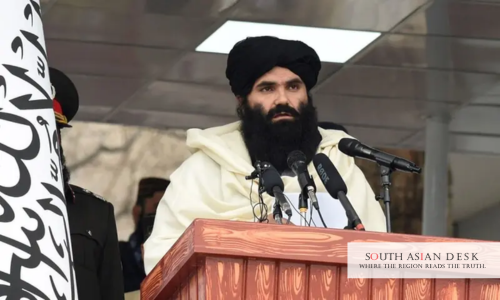
Speaking on Friday at a graduation ceremony for police recruits at the Kabul Police Academy, Haqqani said Afghanistan poses no threat to any country and remains committed to its obligations under the 2020 Doha Agreement, which prohibits the use of Afghan soil against other states. Nearly 900 police cadets completed their training at the event.
Although Haqqani did not mention Pakistan by name, his remarks come amid prolonged tensions between Kabul and Islamabad. Pakistan has repeatedly accused the Afghan Taliban of sheltering Tehreek-i-Taliban Pakistan (TTP) militants, who it says are responsible for cross-border attacks in Khyber Pakhtunkhwa and Balochistan.
Security Tensions and Border Closures
Relations between the two neighbours have sharply deteriorated over the past year. Border crossings along the 2,600-kilometre Durand Line have mainly remained closed since October 11, 2025, following intense skirmishes and airstrikes that reportedly left dozens dead.
Mediation efforts led by Türkiye, Qatar, and other regional actors produced temporary ceasefires, including one agreed upon on October 19, but failed to yield lasting arrangements. Talks in Doha and Istanbul stalled due to disagreements over verification mechanisms and responsibility for militant activity.
Pakistan continues to demand concrete action against TTP safe havens in Afghanistan. The issue is particularly sensitive due to the group’s ideological and operational ties with factions within the Taliban, including the Haqqani network.
TTP Issue at the Core of the Dispute
Islamabad reports a sharp rise in militant attacks since the Taliban returned to power in 2021. Security data indicates that 2025 has been among the deadliest years for terrorism in Pakistan since 2015, with hundreds of incidents involving ambushes and cross-border infiltration.
The Taliban, however, deny facilitating attacks on neighbouring states and argue that the TTP problem is an internal security challenge for Pakistan. Kabul also views demands for direct action against the group as interference in its sovereignty.
Haqqani reiterated that Taliban leadership seeks regional peace and “practical solutions” to misunderstandings, underscoring Afghanistan’s preference for diplomacy over confrontation.
Background of Negotiations with Pakistan
Tensions escalated dramatically in October 2025 when Pakistan launched airstrikes targeting alleged TTP leadership inside Afghan territory, prompting retaliatory clashes and border closures. The shutdown disrupted trade routes and severely affected border communities, refugees, and humanitarian movement.
Anas Haqqani, brother of the interior minister, previously participated in negotiation efforts, highlighting internal Taliban engagement with Pakistan on the issue.
Regional stakeholders continue to monitor developments closely, as instability along the Afghan-Pakistani border has broader implications for South Asian security, counter-terrorism cooperation, and economic integration. Long-standing disputes over the Durand Line and Pakistan’s border fencing efforts further complicate relations.
Prospects for Renewed Dialogue
While uncertainty surrounds the prospects of renewed talks, Haqqani’s remarks may provide an opening for de-escalation. Afghanistan emphasises mutual respect and non-interference, while Pakistan insists on verifiable measures against militant threats.
Both sides face internal pressures: the Taliban seek international legitimacy amid economic isolation, while Pakistan confronts rising militancy and financial strain. Analysts say that confidence-building measures, including improved border management and monitoring mechanisms, will be critical for progress.
Afghanistan’s stated openness to negotiations offers a foundation for renewed engagement. Whether this leads to meaningful outcomes will depend on sustained dialogue, compromise, and tangible steps to address the core security concerns that continue to strain bilateral relations.
Published in SouthAsianDesk, December 27th, 2025
Follow SouthAsianDesk on X, Instagram and Facebook for insights on business and current affairs from across South Asia.