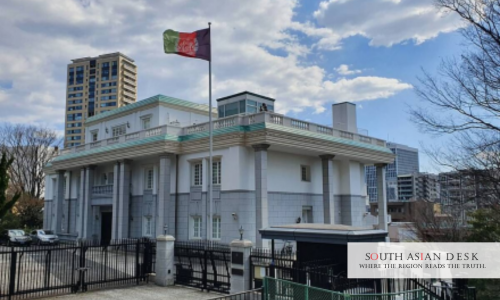
Tokyo — The Afghan embassy in Japan will officially close after January 31, 2026. The Embassy of the Islamic Republic of Afghanistan in Tokyo announced on Friday. The mission will suspend all political, economic, cultural, and consular activities indefinitely from February 1.
The decision came after detailed consultations with Japan’s Ministry of Foreign Affairs. Both sides ensured compliance with the 1961 Vienna Convention on Diplomatic Relations. Japanese authorities are committed to the continued protection of the embassy building, its property, and diplomatic archives.
Ambassador Shaida Mohammad Abdali leads the current mission. All staff members held appointments from Afghanistan’s government before August 2021.
The Afghanistan Embassy in Tokyo Suspends Impacts on the Afghan Community
The suspension of the Afghan embassy in Tokyo creates immediate challenges for Afghan nationals living in Japan. The embassy strongly advised residents to complete any required consular transactions before the deadline. Services such as passport renewals, document attestations, birth registrations, marriage certifications, and powers of attorney will no longer be available.
Japan hosts several hundred Afghan citizens and residents. Many arrived as students, professionals, or through resettlement programmes following the Taliban takeover. Afghan diplomats in Japan, 2026, now face an abrupt end to their operational base in Tokyo.
The mission has operated without financial support from Kabul since 2021. Severe budget constraints forced gradual staff reductions over the past four years. Remaining diplomats relied on limited resources and community contributions.
Taliban Afghanistan Embassy Japan Highlights Diplomatic Divide
The Taliban Afghanistan embassy Japan situation underscores the persistent split in international representation. The Taliban administration controls the majority of Afghan diplomatic missions worldwide. However, a handful, including Tokyo, continued under former Republic appointees.
Japan maintains a cautious approach toward the Taliban. Its embassy in Kabul reopened for limited humanitarian coordination. Tokyo provides aid through international organisations but withholds formal recognition.
Taliban Afghanistan embassy Japan reflects similar cases in other countries. Several missions faced pressure to transfer control. Host governments often delayed decisions due to recognition issues.
The Tokyo suspension marks another milestone in this gradual transition. Financial sustainability proved impossible without central government backing. Diplomatic privileges remained intact until the formal announcement was made.
Background: Four Years of Diplomatic Limbo
Afghan embassies entered a period of uncertainty immediately after August 2021. Many missions initially continued operations under pre-existing staff. Diplomats argued they represented the Afghan people rather than any specific government.
Frozen Afghan assets abroad compounded difficulties. Central bank reserves held in the United States remained inaccessible. Missions lost regular funding channels overnight.
Similar suspensions occurred globally. Embassies in Spain, Australia, and Canada were either closed or significantly scaled back. Some staff sought asylum in host countries.
Japan maintained diplomatic relations with the government before 2021. Ambassador Abdali presented credentials in 2018. Bilateral cooperation focused on development assistance, education exchanges, and cultural programmes.
Historical ties between Afghanistan and Japan date back over a century. Japanese archaeologists contributed to Afghan heritage preservation. Medical and infrastructure projects built goodwill.
The Vienna Convention provides clear guidelines for such situations. Host countries must protect premises even after mission closure. Japan reaffirmed this obligation in official communications.
Afghan diplomats in Japan, 2026, lose their primary platform for community engagement. Many staff members have families settled in Tokyo. Personal futures remain uncertain pending further guidance.
Community Response and Service Gaps
Afghan residents expressed concern over the sudden change. Students worry about document verification for university applications. Families need birth certificates for children’s schooling.
Community organisations stepped up efforts to assist members. Informal networks circulate information on deadlines and procedures. Some plan group visits to the consular section in the coming weeks.
Alternative options appear limited. The nearest former Republic missions are located in India or the United Arab Emirates. Travel costs and visa requirements pose barriers.
Digital services were never fully developed at the Tokyo embassy. Most procedures required in-person attendance with original documents.
What’s Next for Afghan Embassy in Japan
The future of Afghan representation in Japan remains unclear. The Afghan embassy in Japan’s closing may open discussions on alternative arrangements. Taliban officials previously expressed interest in establishing missions in recognised countries.
Japan continues to provide substantial humanitarian assistance to Afghanistan. Aid flows through United Nations agencies and non-governmental organisations. Direct government-to-government channels remain suspended.
Afghan diplomats in Japan may face individual decisions regarding their residency status. Some may apply for extensions through the Japanese immigration authorities.
Community leaders advocate for temporary solutions. Proposals include third-country consular access or limited Japanese facilitation. No formal responses have emerged yet.
Broader diplomatic trends suggest gradual normalisation. Several countries accepted Taliban-appointed chargés d’affaires. Japan maintains its non-recognition policy alongside major allies.
Taliban, Afghan embassy, and Japan dynamics evolve slowly. Recognition debates influence mission handovers worldwide. Economic pressures accelerate changes in holdout posts.
The Tokyo announcement follows patterns seen elsewhere. Financial realities override political loyalties for many missions. Sustained operations prove unsustainable without backing.
Afghan residents adapt to new circumstances. Community resilience becomes crucial during periods of transition. Informal support structures gain importance.
International organisations monitor developments. UNHCR and IOM track diaspora needs across Asia. Service disruptions disproportionately affect vulnerable groups.
The Afghan embassy in Japan’s closure concludes an era of dual representation. Former diplomats from the Republic maintained a presence for over four years. Changing realities force pragmatic adjustments.
The suspension takes effect in just over a month. Urgent action remains crucial for those affected. The Afghan embassy in Tokyo suspends operations, marking another chapter in Afghanistan’s complex international journey.
Taliban Afghanistan embassy Japan questions persist. Host country policies shape outcomes. Afghan diplomats in Japan navigate uncharted territory in 2026.
Ultimately, the Afghan embassy in Japan’s closing reflects broader challenges facing displaced diplomatic networks. Resolution depends on political developments far beyond Tokyo’s borders.
Published in SouthAsianDesk, December 27th, 2025
Follow SouthAsianDesk on X, Instagram and Facebook for insights on business and current affairs from across South Asia.