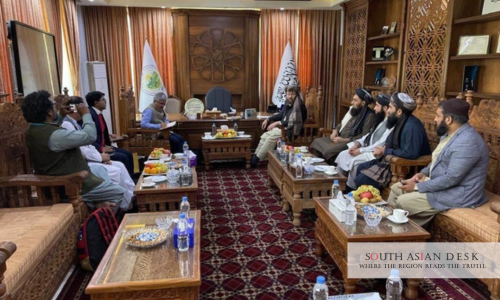
India plans to establish the Afghan-India agriculture research centre following a high-level meeting in Kabul between Afghan officials and Indian diplomats. The pledge was made on 7 November 2025 during talks led by Maulvi Attaullah Omari, Afghanistan’s Minister of Agriculture, Irrigation, and Livestock, and Kiran Yadav, India’s Charge d’Affaires. The centre aims to foster joint research on resilient farming in the face of drought and war scars. Yadav outlined implementation via new projects and training. This move builds on October commitments for agricultural support.
The development underscores India’s strategic pivot in South Asia. Afghanistan’s agriculture sector employs 60% of its workforce, yet yields falter under the impact of climate shocks and the legacy of conflict. A dedicated centre could stabilise food supplies, easing migration pressures on neighbours like Pakistan and Iran. For India, it counters the sway of rivals, bolsters its soft power through aid, and aligns with regional goals for sustainable growth. Such ties promote stability in a volatile belt prone to famine and unrest.
India Afghanistan Agricultural Cooperation Takes Root
India Afghanistan agricultural cooperation gained momentum in Kabul’s ministerial office. Omari urged Yadav to address the fallout from four decades of war, drought, and climate volatility, which had slashed crop quality and output. He called for labs to breed weather-hardy plants, check dams for irrigation, and upgrade livestock health facilities. Visa ease for Afghan exporters topped requests.
Yadav responded with firm assurances. India will establish the Afghan-India Agriculture Research Centre to harness expertise in crop innovation and sustainable practices. “His country, considering its capabilities, is working on a plan to establish a research centre in Afghanistan under the title of ‘Afghan-Indian’,” Yadav stated per the Afghan Ministry release: training programmes, both in-person and virtual, target ministry staff for skill upgrades.
The Afghan Ministry detailed broader scopes. Discussions covered livestock enhancement, mechanised equipment imports, and export channels for produce. Omari emphasized the importance of scientific probes into climate-resilient breeding. “Climate change and the forty-year war, drought, and agricultural disasters had severely affected Afghanistan and damaged the quality and quantity of the country’s agricultural products,” he noted.
This aligns with the India-Afghanistan Joint Statement of 10 October 2025. It pledged cooperation on hydroelectric ventures to meet energy demands and prop up agricultural development. India is committed to deepening its ties in capacity building and infrastructure. The statement highlighted ongoing aid like food grains and disaster relief, now extending to agri-tech.
Afghan officials hailed the step. The centre promises labs for soil analysis and seed trials, which are vital, as 80% of farmland relies on rain-fed systems, according to UN data. Yadav pledged to diplomatic efforts to facilitate trader visas, thereby easing cross-border flows.
Taliban India Research Centre Pledge Sparks Optimism
The Taliban India research centre pledge emerged from pragmatic diplomacy. Since 2021, India has avoided formal recognition, yet it has sustained aid worth $3 billion in projects, ranging from dams to clinics. The Afghan-India agriculture research centre fits this pattern, focusing on technical aid over politics.
Omari framed it as mutual gain. Afghanistan seeks Indian expertise in hybrid seeds and drip irrigation, as demonstrated in Punjab’s fields. Yadav echoed readiness, tying it to broader pacts. The joint statement from New Delhi noted India’s role in maintaining the upkeep of the Salma Dam, which irrigates 75,000 hectares in Herat.
Critics in Kabul question the depth. An anonymous scholar told The Kabul Tribune that the centre risks irony amid the bans on women’s education. Yet, officials push ahead, viewing it as a means to legitimacy without concessions. Regional experts in Islamabad see it as India’s hedge against China’s Belt and Road inroads.
Data bolsters the case. Afghanistan’s wheat production decreased by 20% in 2024 due to floods, according to FAO reports. The centre could introduce Indian varieties, such as drought-tolerant basmati, which could boost yields by 15-20%. Training slots for 500 specialists yearly from the core plans.
Yadav’s team coordinates with India’s Council of Scientific and Industrial Research for tech transfer. The Afghan side eyes an initial outlay of $50 million. Exports of fruits like pomegranates to India could double with the establishment of quality labs.
Afghan Hindu Agriculture Institute Plans Evolve
The Afghan Hindu Agriculture Institute, as named in some circles, nods to historical Silk Road links. The term “Afghan-Indian” reflects a shared heritage, with Hindu Kush farms echoing ancient trade routes. Modern twist: Focus on organic methods to tap global markets.
Omari requested animal health upgrades, including vaccine labs. India pledged support, drawing from its National Dairy Development Board model. Joint teams will scout sites near Kabul University, integrating with existing agri faculties.
The pledge caps a year of thaws. October’s launch of the air freight corridor eases perishables trade. Bilateral volumes reached $1.5 billion in 2025, representing a 10% increase from the prior year. Hydro projects under review could power 50,000 pumps, per joint estimates.
Stakeholders anticipate ripple effects. Pakistani farmers eye similar tech shares via trilateral talks. Iranian envoys joined the sidelines, probing extensions.
Background: From Aid to Institutional Ties
India’s Afghan footprint dates back to 2001, with investments of $2.5 billion in roads, power, and schools. Following the Taliban’s return, the focus shifted to humanitarian aid, with a yearly allocation of 40,000 tonnes of wheat. The 10 October statement marked the first FM-level meeting since 2021, upgrading Kabul’s technical mission to embassy status.
Challenges persist. Security curbs site visits; sanctions limit banking. Yet, in 2025, 200 Afghan students enrolled in Indian agricultural courses. The Afghan-India agriculture research centre builds on this, targeting the 2030 food security goals.
Evacuee Trust parallels? No direct connection, but India’s Salma Dam echoes Punjab’s canal networks, irrigating the borderlands.
What’s Next: Harvesting Deeper Gains
Implementation kicks off in Q1 2026, with blueprint workshops. Expansion to veterinary hubs and farmer exchanges looms. Both sides eye WTO entry aid for Afghan produce.
Taliban pledges non-interference in Indian projects. India eyes mining invites for reciprocity. Regional forums like SCO could host tripartite agri summits.
The India to establish Afghan-India agriculture research centre initiative cements India Afghanistan agricultural cooperation, paving paths for Taliban India research centre pledge fruition and Afghan Hindu agriculture institute plans amid enduring neighbourhood needs.
Published in SouthAsianDesk, November 8th, 2025
Follow SouthAsianDesk on X, Instagram, and Facebook for insights on business and current affairs from across South Asia.