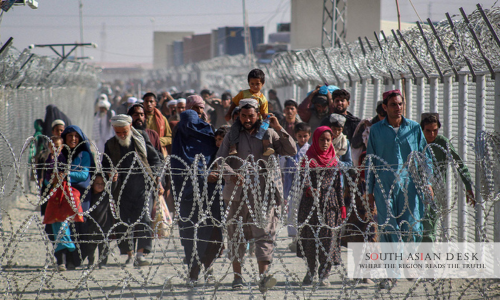
As thousands of Afghan families face forced expulsion from Pakistan amid escalating repatriation drives, personal accounts reveal profound hardships and losses. Amid ongoing forced deportation of Afghans from Pakistan, thousands of families are crossing back into Afghanistan, sharing afghan migrants deportation stories Pakistan that highlight property losses, extortion, and disrupted lives, as reported on Wednesday, 11 September, 2025, from the Torkham border.
Why It Matters
The forced deportation of Afghans from Pakistan exacerbates regional instability in South Asia, straining Afghanistan’s fragile economy and humanitarian resources while raising concerns over human rights violations, potentially affecting bilateral ties between Islamabad and Kabul.
Personal Accounts of Afghan Deportees Pakistan
In the afghan migrants deportation stories Pakistan emerging from the Torkham crossing, individuals like Habibullah, who had resided in Pakistan for decades, recount devastating experiences. Having owned a hotel in Rawalpindi, he described losing his business and dignity due to the sudden enforcement of deportation policies. “I had my own hotel and business, but the situation reached a point where dignity became the issue, and I lost everything. Both the hotel and the business are gone. We brought some of our belongings, but a lot was left behind,” Habibullah said, as per reports from Afghan media outlets.
Similarly, Khalid shared tales of police raids and extortion that made daily life untenable. “Sometimes they would detain us, and other times they demanded money. We couldn’t go out to the streets or the markets. They had made life miserable for us,” he stated. These personal accounts of Afghan deportees Pakistan underscore the human cost of the repatriation plan, with many facing abrupt detentions and financial exploitation before being compelled to leave.
Umar Gul, another returnee who lived in Pakistan for 45 years, echoed these sentiments, noting, “They forced us a lot. We lived there for 45 years, but we never truly enjoyed life.” Such narratives form a core part of the afghan migrants deportation stories Pakistan, illustrating how long-term residents are uprooted without adequate safeguards.
Impact of Pakistan Deportation on Afghan Families
The impact of Pakistan deportation on Afghan families has been profound, with reports indicating widespread property losses and separation anxieties. Families like Habibullah’s have left behind assets accumulated over years, leading to economic destitution upon return. As of 4 September 2025, official data shows 531,700 Afghans have returned from Pakistan this year alone, contributing to a total of 2.5 million returns from Pakistan and Iran combined.
Humanitarian organisations highlight how the forced deportation of Afghans from Pakistan disrupts education, healthcare, and livelihoods. For instance, many Afghan returnees at Torkham crossing arrive with minimal possessions, facing immediate challenges in reintegrating into Afghanistan’s strained infrastructure. The Norwegian Refugee Council noted in May 2025 that lack of employment opportunities severely hampers returning families’ ability to support themselves. This impact of Pakistan deportation on Afghan families extends to mental health, with deportees reporting trauma from evictions and border crossings.
In August 2025, scenes in Islamabad showed evicted Afghan families huddling in parks, dreading return amid fears of Taliban rule in Afghanistan. The International Organization for Migration warned in August 2025 that over 1.5 million Afghans have returned since 2023, with funding shortfalls exacerbating vulnerabilities for these families.
Afghan Returnees at Torkham Crossing: Challenges and Assistance
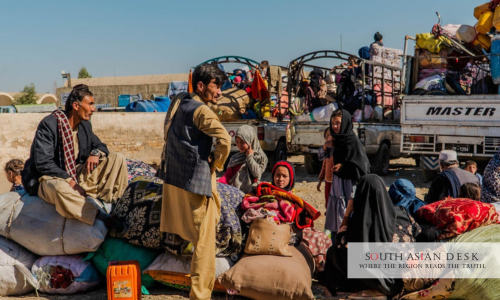
For many Afghan returnees at Torkham crossing, the journey marks the end of a life built in Pakistan but the beginning of uncertainty. Local officials in Nangarhar province reported an acceleration in deportations, with thousands of families processed daily through this key border point.
Bakht Jamal Gowhar, head of migrant repatriation at Torkham, stated that returnees receive assistance from the Islamic Emirate and are transferred to various Afghan provinces in coordination with partner organisations. However, the scale of arrivals strains resources, amplifying the impact of Pakistan deportation on Afghan families who often arrive destitute.
Despite calls from Pashtun nationalist parties and former Pakistani Prime Minister Imran Khan to halt the process, deportations have continued at a faster pace. UN experts in August 2025 urged Pakistan to halt deportations and respect non-refoulement, citing risks to refugees.
Official Responses and International Concerns
Pakistan’s ‘Illegal Foreigners Repatriation Plan’, extended to target documented Afghans, has drawn international criticism. On 31 July 2025, Pakistan confirmed deportations under this plan, prompting UNHCR to urge a halt to forced returns. By April 2025, over 80,000 Afghans were expelled, with the plan affecting up to 1.6 million.
Amnesty International in June 2025 highlighted that 1.4 million Afghan Proof of Registration cardholders face expiration on 30 June 2025, risking further deportations. Doctors Without Borders noted in July 2025 that fear of deportation deters Afghans from seeking medical care, worsening health outcomes for families.
The UN’s Office of the High Commissioner for Human Rights in July 2025 described returns as creating a multi-layered human rights crisis, with at least 485 Afghans deported from October 2024 to July 2025.
Background
Pakistan has hosted millions of Afghans since the 1979 Soviet invasion, but security concerns post-2021 Taliban takeover prompted the repatriation plan starting in 2023. By mid-2025, phases have targeted undocumented, then cardholders, leading to over 1 million returns. The policy, aimed at illegal foreigners, has disproportionately affected Afghans, with extensions to deadlines like 1 September 2025.
What’s Next
As deadlines loom and international pressure mounts, the trajectory of afghan migrants deportation stories Pakistan may hinge on diplomatic negotiations between Islamabad and Kabul, potentially influencing future repatriation phases and humanitarian aid flows.
Published in SouthAsianDesk, September 11th, 2025
Follow SouthAsianDesk on X, Instagram, and Facebook for insights on business and current affairs from across South Asia.