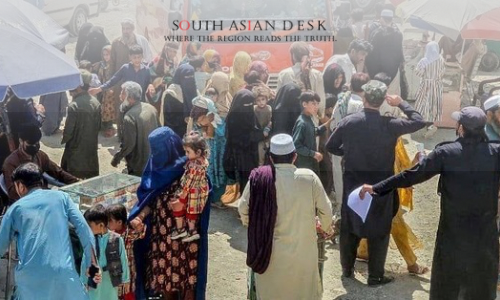
Forced deportations from Iran and Pakistan leave Afghan migrants grappling with fear, uncertainty, and livelihood crises. Over 106,000 Afghan migrants were forcibly deported from Iran and Pakistan between August 1 and August 15, 2025, causing widespread fear and uncertainty among families, the World Health Organization (WHO) reported. The deportations, primarily from Iran (83.7%) and Pakistan (16.3%), have left returnees struggling to reintegrate in a crisis-hit Afghanistan.
Why This Matters in South Asia
The mass deportation of Afghan migrants from Iran and Pakistan exacerbates the region’s humanitarian crisis, straining Afghanistan’s fragile infrastructure and escalating tensions with neighbouring countries. As millions face perilous returns to a Taliban-controlled nation, South Asia grapples with the broader implications of forced migration, human rights violations, and regional instability.
Scale of Forced Deportations
The WHO reported that 106,000 Afghans were returned from Iran and Pakistan in the first half of August 2025, with 83.7% expelled from Iran and 16.3% from Pakistan. This follows a larger trend, with over 1.9 million Afghans deported from both countries in the past seven months, according to UN High Commissioner for Human Rights Volker Türk. The deportations, often abrupt and without due process, violate international principles like non-refoulement, which prohibits returning individuals to places where they face serious risks.
Atiqullah Mansoor, an Afghan migrant in Pakistan, told TOLOnews: “The fear of arrest and forced deportation remains among migrants as the next month approaches.” He urged Pakistan to extend registration cards for at least one year to allow migrants time to organise their affairs.
Challenges for Afghan Migrants
Deportees face significant challenges reintegrating into Afghanistan, where economic collapse and Taliban restrictions exacerbate poverty. Shabana, an Afghan migrant in Pakistan, highlighted the difficulty of gathering belongings in a short timeframe: “The biggest problem Afghan migrants face in Pakistan is how to gather their belongings and assets in such a short time and return to Afghanistan.” She called on the Taliban-led government to support returnees.
Afghanistan’s infrastructure is ill-equipped to handle the influx. The UN notes that 23 million Afghans require humanitarian aid, with returnees facing food insecurity, lack of shelter, and limited job opportunities. Over 70% of returnees are children or women-headed households, increasing their vulnerability.
Neglect by International Agencies
Migrants in Islamabad with pending immigration cases expressed frustration with the United Nations and refugee agencies. Nargis, an Afghan migrant in Pakistan, stated: “Our request to the U.S. government is to resume and expedite the processing of our cases and provide educational opportunities for us and our children.” Many feel abandoned by international bodies meant to protect them.
Nazar Nazari, a migrant rights activist, emphasised the need for action: “Refugee support organizations must demand an immediate halt to deportations from host countries and facilitate tripartite dialogues between Afghanistan, host countries, and international institutions.”
Background
The forced deportation of Afghan migrants intensified after the Taliban’s 2021 takeover, which triggered economic collapse and heightened persecution risks, particularly for women and former government affiliates. Iran, hosting over six million Afghans, escalated deportations following a 12-day war with Israel in June 2025, citing baseless espionage claims. Pakistan’s Illegal Foreigners Repatriation Plan, launched in September 2023, targets undocumented migrants and those with Afghan Citizen Cards, with plans to deport three million by year-end. Both nations have faced criticism for violating international laws, including the 1951 Refugee Convention’s non-refoulement principle.
In 2024, 1.4 million Afghans were returned, with 1.2 million from Iran and 136,800 from Pakistan, per the UN Office for the Coordination of Humanitarian Affairs. The Norwegian Refugee Council projects an additional 600,000 deportations from Pakistan by the end of 2025.
What’s Next
International pressure is mounting on Iran and Pakistan to halt forced deportations and ensure humane treatment of Afghan migrants. The UN and human rights groups advocate for increased funding and resettlement pathways to support returnees. As Afghan migrants face uncertainty, global cooperation is crucial to address this humanitarian crisis and protect vulnerable populations.
Published in SouthAsianDesk, August 26th, 2025
Follow SouthAsianDesk on X, Instagram, and Facebook for insights on business and current affairs from across South Asia.