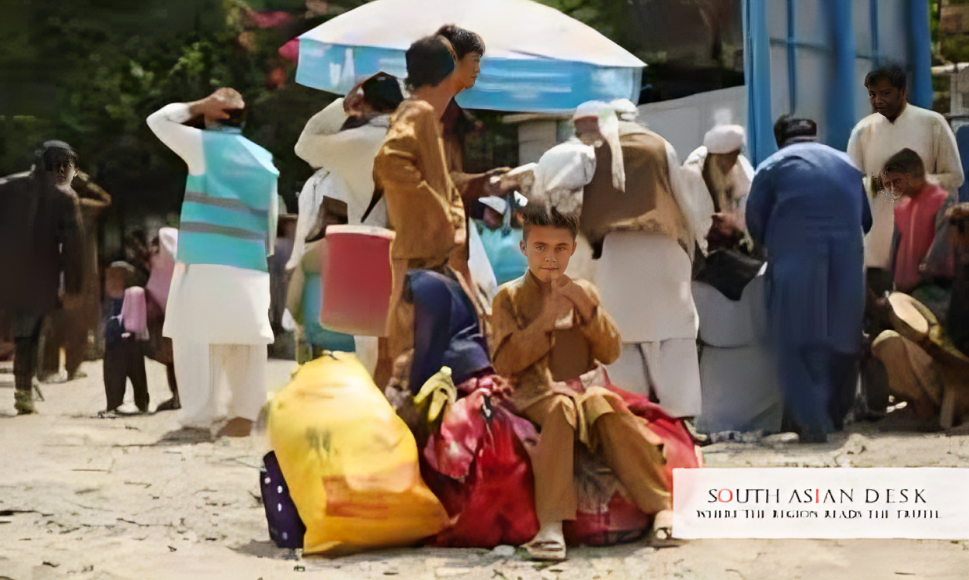
Islamabad: Over two million Afghan refugees in Pakistan remain in the country despite more than one million returns to Afghanistan in 2025. The figures come from the latest UNHCR report Afghans Pakistan, released on 26 December 2025, amid heightened border tensions and the implementation of Pakistan’s Illegal Foreigners’ Repatriation Plan (IFRP). The plan, which targets undocumented and registered Afghans, has accelerated deportations through key border points like Torkham and Chaman.
The ongoing Afghan repatriation Pakistan 2025 underscores the humanitarian strain in South Asia. Pakistan has hosted Afghans for over four decades, but recent policy shifts have intensified returns, affecting families long settled in the region. This development raises concerns about reintegration in Afghanistan, where economic and security issues persist.
UNHCR Report Afghans Pakistan Highlights Key Statistics
The UNHCR report Afghans Pakistan provides detailed data on the Afghan population in Pakistan. As of 30 November 2025, 1,061,447 Afghans hold valid Proof of Registration (PoR) cards. The breakdown by province shows 62.4 percent in Khyber Pakhtunkhwa (662,017 individuals), 20.8 percent in Balochistan (220,721), 10.4 percent in Punjab (110,350), 3.8 percent in Sindh (40,647), 2.4 percent in Islamabad (25,104), and 0.2 percent in Pakistan-administered Jammu and Kashmir (2,608).
In November 2025 alone, 171,055 Afghans returned, including 37,899 deportations via Chaman, Torkham, and Barabcha borders. Over 31,500 PoR card holders departed through UNHCR repatriation centres. The UNHCR report Afghans Pakistan notes that border tensions in November disrupted humanitarian operations, leading to temporary UN agency relocations from Chaman.
UNHCR has expressed concern over forced returns. In an October 2025 press release, UNHCR Representative Philippa Candler stated: “Return of refugees should be organized, phased, voluntary, in dignity and safety, with respect for rights and protection of those in need.” She added that Pakistan has hosted millions generously for 45 years, but many Afghans face persecution risks upon return. UNHCR urges exemptions for at-risk groups, including students, those with medical needs, and mixed marriages.
The agency continues to provide essential services amid Pakistan IFRP Afghans implementation. These include safe spaces for women and girls, child-friendly areas, legal aid, and mental health support. Handover of refugee health and education facilities to provincial authorities proceeds in Khyber Pakhtunkhwa and other districts.
Afghan Repatriation Pakistan 2025: Phase-by-Phase Breakdown
Afghan repatriation Pakistan 2025 has seen over one million returns, bringing the total since IFRP’s start to 1.82 million. The Pakistan IFRP Afghans, introduced in September 2023, unfolds in phases.
The first phase, from September 2023, targeted undocumented Afghans, resulting in over 1.1 million returns from urban areas and refugee villages by July 2025. The second phase, starting April 2025, focused on Afghan Citizenship Card holders. The third phase, begun in September 2025, addresses PoR holders, with nearly 166,000 returns to date.
As of 13 December 2025, ReliefWeb data showed 942,200 returns from Pakistan in 2025, with November recording 249,000 departures, including about 70,000 deportations, the highest monthly total.
Pakistan’s Ministry of Foreign Affairs, in a February 2025 statement, affirmed that the IFRP includes mechanisms to prevent mistreatment. Spokesperson Mumtaz Zahra Baloch said: “Pakistan has hosted millions of Afghans for decades with respect and dignity… We expect interim Afghan authorities to create conducive conditions in Afghanistan, so that these returnees are fully integrated.”
Background
Pakistan began hosting Afghan refugees in the late 1970s following the Soviet invasion of Afghanistan. At the start of 2025, the country sheltered about 1.6 million registered refugees and 1.5 million other Afghans. The Taliban’s 2021 takeover in Afghanistan prompted further inflows, but economic pressures and security concerns led to the IFRP.
All 54 refugee villages in Khyber Pakhtunkhwa, Balochistan, and Punjab have been de-notified, displacing over 397,000 residents. UNHCR’s October 2025 operational update reported 99,000 departures that month, with about two million Afghans still in Pakistan at the time.
Border tensions in November 2025 restricted movements and aid delivery. UNHCR advocates for voluntary returns, noting risks for women and girls in Afghanistan, where rights to education and work are limited.
What’s Next for Refugees in Pakistan
UNHCR calls for organized returns and international aid to support reintegration in Afghanistan. Pakistan’s government urges voluntary departures, with potential extensions for vulnerable groups. On 17 October 2025, Prime Minister Muhammad Shehbaz Sharif chaired a meeting on Afghan refugees’ repatriation, signalling continued focus.
As Afghan refugees in Pakistan navigate these developments, sustained regional cooperation is essential to address the humanitarian needs.
Published in SouthAsianDesk, December 26th, 2025
Follow SouthAsianDesk on X, Instagram and Facebook for insights on business and current affairs from across South Asia.