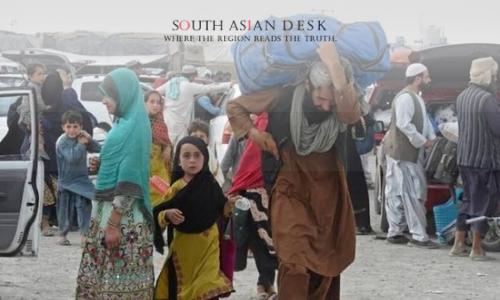
Afghan returnees, forcibly deported from Iran and Pakistan, face a worsening housing crisis as thousands struggle to find shelter in their homeland. The Ministry of Urban Development and Housing in Afghanistan has outlined efforts to address the issue, yet many remain homeless and jobless upon their return.
A Growing Shelter Shortage for Afghan Returnees
The influx of Afghan returnees, numbering over 1.5 million from Iran alone in 2025, has overwhelmed Afghanistan’s already strained infrastructure. Many of these individuals, who spent decades abroad, are returning to a country they barely recognise, only to face a severe shortage of affordable housing. In Kabul, returnees like Qiyamuddin, who sought a better life in Iran, are now scouring the city for a place to live. “We have no place to stay. My family is out looking for a home, but we’ve found nothing affordable,” Qiyamuddin shared, highlighting the desperation felt by many.
The lack of shelter has forced some returnees to rely on temporary camps, such as the Ansar camp near Herat, which is restricted to local residents, leaving others with nowhere to go. The scale of the crisis is staggering, with the United Nations reporting that over 2.1 million Afghans have returned from Iran and Pakistan this year alone, exacerbating the housing shortage in urban centres like Kabul and Herat.
Government Efforts to Address the Housing Crisis
The Ministry of Urban Development and Housing has acknowledged the severity of the housing crisis and claims to be taking steps to provide solutions. Mohammad Kamal Afghan, the ministry’s spokesperson, stated, “We are working on building townships and distributing land across several provinces. Once we receive confirmation from governors that returnees’ cases are cleared, we will expedite the process of providing permanent housing.” The ministry is reportedly implementing a transparent, phased framework to ensure needy families receive shelter, with 35 new townships already constructed across 25 provinces.
Despite these pledges, progress remains slow, and returnees express frustration over the lack of immediate solutions. The government’s ambitious plan to build 500,000 residential units over the next decade, announced in May 2025, aims to alleviate the crisis, but for many returnees, this timeline offers little relief in the face of immediate needs.
Returnees’ Plea for Urgent Support
For individuals like Habib-ur-Rahman, who spent 40 years in Iran, returning to Afghanistan has been a jarring experience. “We have nothing here, no homes, no jobs. The Islamic Emirate must act to support these returnees who are arriving in complete poverty,” he urged. Many returnees, unfamiliar with Afghanistan’s current socio-economic landscape, face not only a lack of shelter but also limited job opportunities, compounding their struggles to rebuild their lives.
The forced deportations, particularly from Iran, have been marked by allegations of harsh treatment by security forces, adding to the trauma of returnees. Women and children, who make up nearly half of the returnee population, face additional vulnerabilities, including restricted access to education and employment under Taliban policies, further complicating their reintegration.
A Call for International and Local Action
The housing crisis for Afghan returnees underscores a broader humanitarian emergency, with the International Organization for Migration warning that Afghanistan is facing one of the largest return movements in recent history. The lack of adequate shelter, coupled with widespread poverty and unemployment, threatens to deepen the country’s instability. Returnees and humanitarian organisations are calling for urgent action, including increased international funding and support to provide immediate shelter and long-term solutions.
As Afghanistan grapples with this escalating housing crisis, the plight of returnees remains a stark reminder of the challenges facing a nation still recovering from decades of conflict and economic turmoil. The government’s promises of land distribution and township development offer hope, but for now, thousands of Afghan returnees continue to struggle, desperately seeking shelter and a chance to rebuild their lives.
Published in SouthAsianDesk, August 19th, 2025
Follow SouthAsianDesk on X, Instagram, and Facebook for insights on business and current affairs from across South Asia.