Harsh rains and cold snap exacerbate plight for millions deported from Pakistan, urging immediate regional aid.
Kunar Province, Afghanistan – In the midst of the Afghan returnees winter crisis, heavy rains and plummeting temperatures have turned makeshift camps into muddied hazards, claiming the life of at least one child in Kunar and collapsing dozens of tents. Returnees from Pakistan and Iran, numbering over 1.4 million deportees in recent months, report urgent needs for shelter and aid as highways close and supplies dwindle. Officials call for depoliticised humanitarian support amid the escalating hardship.
This Afghan returnees winter crisis underscores a broader South Asian humanitarian strain, with Pakistan’s deportation policies flooding Afghanistan’s fragile infrastructure, risking regional instability through increased poverty, displacement, and cross-border tensions. As neighbouring countries enforce returns, the crisis amplifies calls for coordinated aid to prevent spillover effects on economies and security.
Conditions in Afghanistan Returnees Camps
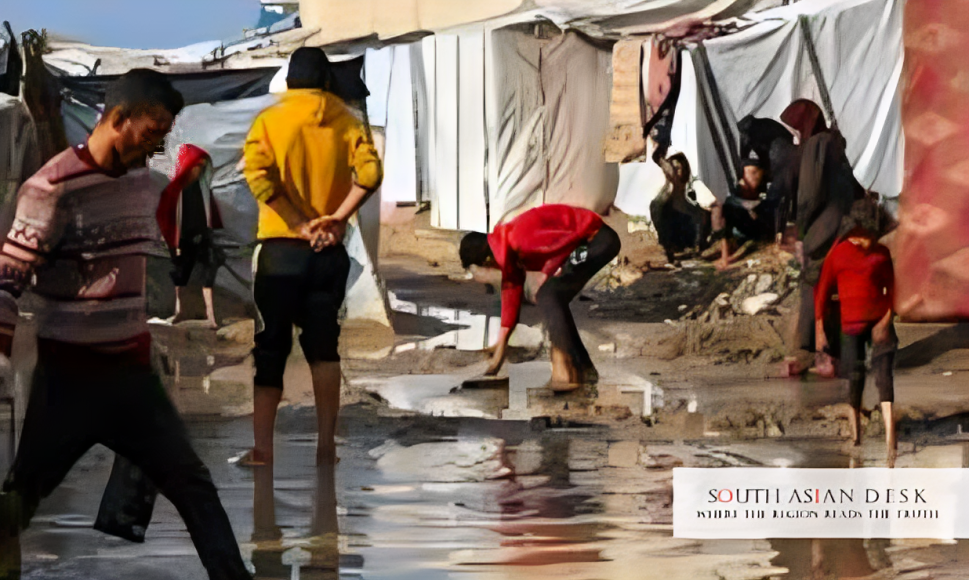
Returnees in Afghanistan returnees camps face dire living situations, exacerbated by recent weather shifts. In eastern provinces like Kunar, snowfall and rains have led to tent collapses, leaving families exposed to freezing nights. One returnee described the scene: “The rain turned everything to mud; we have no dry place to sleep.”
Data from the United Nations High Commissioner for Refugees (UNHCR) indicates that as of 31 December 2025, total returns to Afghanistan reached 2,917,500, including 1,448,250 deportations primarily from Pakistan. These figures highlight the scale of the Afghan returnees winter crisis, with many arriving without adequate preparation for winter. UNHCR Representative Arafat Jamal noted in a statement: “The situation remains hugely challenging for returnees during Afghanistan’s harsh winter season.”
Camps in Kabul and border areas like Torkham and Spin Boldak serve as initial reception points, but overcrowding persists. The International Organisation for Migration (IOM) reports that since September 2023, over five million Afghans have returned, straining resources. In Bamiyan Province, returnees struggle despite new housing projects, with provincial head Fazil Omar Rahmani stating plans to expand water networks under Taliban directives.
Cold Weather Afghan Refugees Battle Elements
Cold weather Afghan refugees endure temperatures dropping below zero, with limited access to heating or insulation. In Herat Province, compounded by October 2023 earthquakes, returnees report heightened vulnerabilities. UNHCR data shows 6.3 million internally displaced persons in Afghanistan, the second-highest globally, many overlapping with returnee populations.
A surge in returns from Pakistan, resuming under the Illegal Foreigners Repatriation Plan, saw 554,000 arrivals since April 2025, including 143,000 in August alone. By early September 2025, weekly figures hit nearly 100,000, overwhelming camps. IOM notes that these cold weather Afghan refugees often arrive exhausted, requiring immediate psychosocial support and essentials.
Taliban officials have responded by urging international aid. Abdulkabir, Minister of Refugees and Repatriations, met with UNHCR’s Jamal and emphasised: “The international community should not tie humanitarian aid to political issues, especially as returnee migrants from neighbouring countries face the harsh winter season.” This plea aligns with UNHCR’s call for upholding protection standards.
Rain Conditions Returnees Afghanistan Worsen Daily Life
Rain conditions returnees Afghanistan have intensified, flooding camps and closing key routes like the Salang Highway, which doubles travel difficulties for those heading inland. In 15 provinces, recent snowfall and rains caused 61 deaths and 110 injuries, per Taliban reports. Returnees in rain conditions returnees Afghanistan face food shortages, with only sporadic distributions reaching camps.
UNHCR’s operational dashboard details voluntary repatriations and forced returns, noting that 87.1 percent of deportations originate from Iran, but Pakistan’s share grows. The agency warns of a “crisis within a crisis,” as returns coincide with earthquake recovery in areas like Herat, where shelter needs spike.
Economic factors compound the Afghan returnees winter crisis. Afghanistan’s economy remains fragile post-2021 Taliban takeover, with frozen assets leading to unemployment and disrupted services. The UK Government’s August 2024 note states that 23.7 million people need humanitarian aid, up from 14 million in 2020, with 13.1 million facing acute food insecurity.
Access to water and sanitation is limited; only 20 percent have safe drinking water, and half have basic sanitation. Informal settlements house 390,000 households, or 2.7 million people, mixing IDPs and returnees. UNHCR reiterates concerns over protection risks, especially for women and girls, who face poverty, harassment, and abuse upon return.
Background
The Afghan returnees winter crisis stems from long-standing displacement. Pakistan hosted 1.75 million Afghan refugees, but policies shifted in 2023, targeting Afghan Citizen Card holders for deportation by April 2025, expanding to Proof of Registration cards by July. Iran launched a similar scheme, affecting two million Afghans by July 2025.
Since the Taliban regained power in August 2021, returns accelerated amid economic collapse and rights concerns. UNHCR’s non-return advisory since 2021 urges suspension of forced returns due to risks. Yet, mass deportations continue, creating humanitarian emergencies. In 2023, over 500,000 returned from Pakistan alone, adding to internal displacement.
Funding shortfalls hinder responses; only 24 percent of UNHCR’s USD 478 million requirement for 2025 was secured. Aid organisations like the Norwegian Refugee Council persist despite snow and funding challenges, providing essentials to cold weather Afghan refugees.
What’s Next
International agencies call for sustained support to mitigate the Afghan returnees winter crisis. UNHCR seeks clarity on Pakistan’s relocation measures for Afghans in Islamabad, advocating human rights compliance. Taliban authorities plan schools and clinics in returnee areas, per Rahmani, though timelines remain unclear.
As winter deepens, experts predict more casualties without urgent interventions. Regional cooperation could stabilise the flow, preventing further strain on Afghanistan’s resources. Forward-looking, depoliticised aid remains key to easing the Afghan returnees winter crisis and fostering reintegration.
Published in SouthAsianDesk, February 7th, 2026
Follow SouthAsianDesk on X, Instagram and Facebook for insights on business and current affairs from across South Asia.