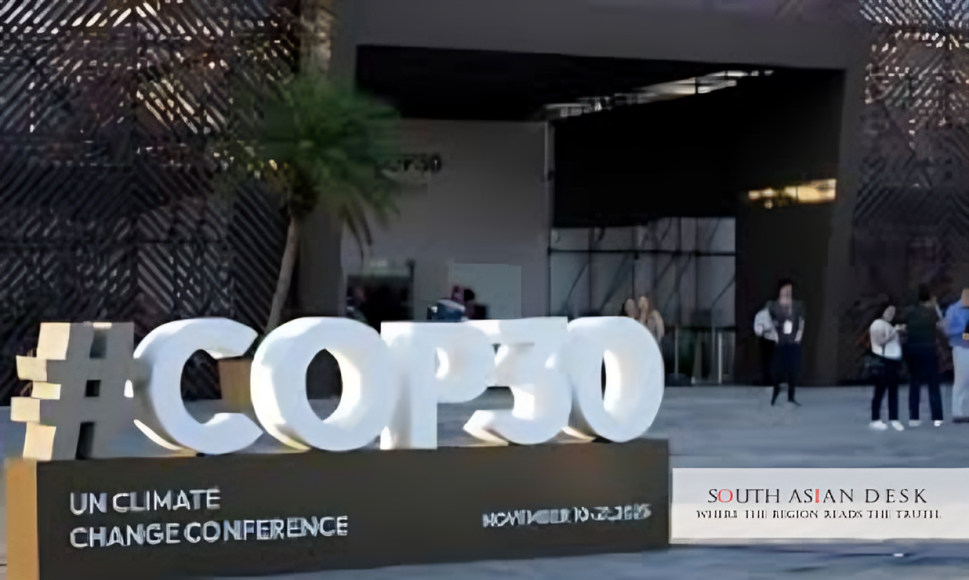
Kabul, Afghanistan (South Asian Desk) – Afghanistan has condemned its COP30 exclusion from climate summit in Brazil. The National Environmental Protection Agency (NEPA) issued a statement on Sunday highlighting the denial as a breach of climate justice. The conference opens on Monday, November 10, 2025, in Belém. Officials prepared a delegation but received no invitation. This absence sidelines a nation facing acute environmental threats.
Why This Snub Resonates Across South Asia
The story underscores broader tensions in international climate diplomacy. Afghanistan, though a minor emitter at 0.06% of global greenhouse gases, ranks among the world’s most vulnerable to climate impacts. Floods, droughts and glacial melts have displaced thousands yearly. In South Asia, where shared rivers like the Amu Darya flow from Afghan highlands, exclusion ripples to neighbours such as Pakistan and India.
These countries face heightened flood risks and water scarcity if Afghan voices remain unheard. The incident exposes how political isolation hampers regional resilience. For 89% of Afghans reliant on rain-fed agriculture, the stakes involve survival. Global funds for adaptation, totalling USD 100 billion annually under Paris Agreement pledges, often bypass non-participants. This gap widens inequalities in a region home to 1.9 billion people enduring similar perils.
Taliban Protests COP30 Invite Snub
The Taliban administration, through NEPA, voiced strong disapproval over the lack of an official invite. NEPA’s statement declared: “The exclusion of the Afghan people from the right to participate in this conference contradicts the principles of climate justice, global cooperation, and human solidarity.” Officials noted Afghanistan’s adherence to the UN Framework Convention on Climate Change and Paris Agreement obligations. Yet, without a seat, progress stalls.
Mohibullah Bahar, NEPA’s Head of Information and Public Awareness, elaborated: “With the help of environmental organisations, we were fully prepared to participate in this summit. All necessary documents were ready, but unfortunately, Afghanistan was not officially invited, and its rights in this convention were ignored.” This preparation included a coordination mechanism and comprehensive roadmap for contributions.
The protest aligns with prior experiences. At COP29 in Baku last year, a Taliban delegation attended as guests of host Azerbaijan. They observed but could not negotiate. This time, even observer status eludes them. The regime, in power since August 2021 and recognised by few states, argues environmental forums should transcend politics. “We call on the UN, the international community, and relevant organisations to recognise Afghanistan’s rightful position,” NEPA urged.
Environmental experts echoed the frustration. Abdulhadi Achakzai, head of a local green group, said: “No individual was granted representation under Afghanistan’s name at this conference. This exclusion silences the voices of those affected by climate change.” He pointed to recent disasters, including 2024 floods that killed over 300 and damaged 20,000 homes.
Afghanistan Climate Justice COP30 Exclusion
Afghanistan’s climate woes demand urgent representation. The Hindu Kush mountains, vital for regional water, lose glaciers at rates twice the global average. This fuels downstream tensions in South Asia. Pakistan, for instance, attributes 2022 floods – costing USD 30 billion – partly to Afghan meltwater surges. India monitors similar flows via the Indus basin.
NEPA data shows domestic impacts: Droughts affected 20 million Afghans in 2023, per UN estimates. Crop yields dropped 40% in key provinces like Herat and Kandahar. Despite low emissions, the country seeks adaptation finance. COP30 agendas include loss and damage funds, now at USD 700 million annually. Exclusion bars Afghanistan from claims processes.
Professor Mohammad Dawood Shirzad, from Kabul University’s Faculty of Environment, critiqued: “This proves to humanity that some only speak of human rights in words. In reality, human issues are not their concern; their only goals are political and economic interests.” He advocated depoliticising ecology. Shirzad cited UN reports ranking Afghanistan 179th out of 180 in climate risk indices.
The denial also questions UN protocols. Invites go to UN member states and observers. Afghanistan holds membership, but Taliban control complicates recognition. Only Russia and a handful of nations engage officially. Yet, climate pacts emphasise inclusivity. UNFCCC secretariat guidelines allow participation via acCredited entities, but none materialised here.
NEPA Statement Afghanistan COP30 Absence
NEPA’s full communique, released November 9, 2025, details the fallout. “Not inviting Afghanistan to such events proves that the United Nations is falling short in delivering global justice regarding the climate rights of Afghans,” it read. “The Afghan people had the right to be represented at this summit and to speak out for their legitimate rights.”
The agency prepared inputs on biodiversity loss and desertification. Afghanistan loses 100,000 hectares of forest yearly to illegal logging and overuse. NEPA aimed to push for reforestation aid under COP’s REDD+ scheme, worth USD 5 billion globally.
Absence means missed bilateral talks. Over 50,000 attendees, including heads from 196 parties, will set post-2030 targets. Brazil, as host, pledges Amazon focus, but Afghan pleas for arid adaptation fade without presence.
Regional advocates weigh in. Pakistan’s climate ministry, via a spokesperson, expressed solidarity: “South Asia’s interconnected vulnerabilities require all voices, including Afghanistan’s. India, meanwhile, prioritises its own pledges but notes transboundary risks.
Background: Afghanistan’s Climate Battle
Afghanistan’s environmental crisis predates current politics. Decades of conflict razed infrastructure. The 2001 Bonn Agreement included ecological rebuilding, yet progress lags. UNEP reports 80% of arable land erodes from overuse. Post-2021, Taliban decrees banned poppy cultivation, shifting to wheat but straining water. 2025 saw early snowmelt, halving Helmand River flows. This hit 5 million farmers.
Internationally, COP26 in Glasgow saw Afghan civil society observers. Subsequent events tightened amid sanctions. The 0.06% emission figure, from World Bank data, underscores injustice: High vulnerability, low culpability. Experts like Achakzai call for hybrid models. “Allow technical delegates, separate from politics,” he suggested. This mirrors Syria’s COP attendance despite civil war.
What’s Next for Global Climate Forums
As COP30 unfolds, pressure mounts for inclusivity. NEPA hints at parallel events or virtual submissions. Brazil’s presidency could mediate, given its neutral stance on Afghanistan.
Longer term, South Asia eyes integrated pacts. SAARC climate centres, dormant since 2016, might revive. Afghanistan condemns COP30 exclusion but pledges domestic action. Reforestation campaigns target 1 million trees by 2026. The summit ends November 21. Outcomes could redefine equity. For now, Kabul watches from afar, urging a seat for the silenced.
Published in SouthAsianDesk, November 10th, 2025
Follow SouthAsianDesk on X, Instagram, and Facebook for insights on business and current affairs from across South Asia.