A magnitude 6.0 earthquake struck eastern Afghanistan on Sunday, August 31, 2025, killing more than 1,400 people and injuring thousands, as rescue efforts continue amid challenging terrain.
Afghanistan earthquake hit eastern part near the Pakistan border on Sunday, August 31, 2025, at 11:47 PM local time, with the epicentre in Kunar Province, resulting in a death toll exceeding 1,400 and over 3,000 injuries, as Taliban authorities appealed for international aid to support overwhelmed rescue operations.
This earthquake, the third major one since the Taliban regained power in 2021, underscores the vulnerability of South Asia’s seismic zones, exacerbating humanitarian crises in Afghanistan, where funding cuts have strained health services, potentially impacting regional stability and aid flows from neighbouring countries like Pakistan and India.
Earthquake Details and Immediate Impact
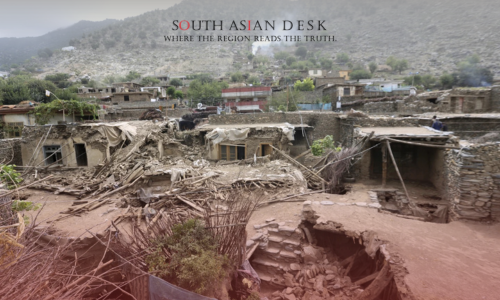
The United States Geological Survey (USGS) reported the earthquake’s magnitude at 6.0, with its epicentre located 27 kilometres east-northeast of Jalalabad in Kunar Province. The quake flattened villages built primarily of mud bricks and wood, which offered little resistance to the tremors. An aftershock of 5.2 magnitude followed on Tuesday, September 2, 2025, but no additional damage was immediately reported.
In Kunar Province, areas such as Mazar Dara and Dara Noor were severely affected, with entire villages destroyed. The rough, mountainous terrain has complicated rescue efforts, forcing authorities to air-drop commandos and aid workers to reach isolated communities. Save the Children reported that their teams walked over 12 miles to deliver medical equipment to cut-off villages blocked by rockfalls.
Afghanistan Earthquake 2025 Death Toll Update
According to Taliban spokesman Zabihullah Mujahid on X, the death toll stands at 1,411, with 3,124 people injured and 5,412 homes destroyed, primarily in Kunar Province. These figures, updated on Tuesday, September 2, 2025, reflect a steady rise from initial reports of around 800 fatalities. The United Nations has warned that the casualty numbers could increase further as rescuers access remote areas.
Health facilities in the region are overwhelmed, with more than 420 clinics closed or suspended due to international funding reductions. Indrika Ratwatte, the UN resident coordinator for Afghanistan, described the situation as a “race against time” to reach survivors, emphasising that “we cannot afford to forget the people of Afghanistan who are facing multiple crises.” Kate Carey, deputy head of the UN Office for the Coordination of Humanitarian Affairs in Afghanistan, noted that remaining facilities lack sufficient supplies and personnel, hindering emergency trauma care in the critical first 72 hours.
Government and International Response
The Taliban government has appealed for assistance from the international community and humanitarian organisations. In response, the United Kingdom pledged £1 million (approximately USD 1.3 million) to be distributed among aid agencies. The European Union is providing 1 million euros (approximately USD 1.16 million) and sending 130 tonnes of emergency supplies. The United Arab Emirates, India, and China have also committed disaster relief support.
Taliban authorities have established a camp in Kunar to coordinate aid distribution, including two centres for transporting the injured, burying the dead, and rescuing survivors. The World Health Organization has deployed medical teams to hospitals in the affected areas, supplying essential medicines.
Challenges in Aid Delivery
Aid efforts face significant obstacles due to Afghanistan’s rugged landscape and ongoing humanitarian constraints. Funding cuts have led to the closure of numerous health facilities, with 80 in the eastern region alone. This has left the remaining services ill-equipped to handle the influx of injured people. Additionally, the country’s isolation under Taliban rule has limited the scale of international involvement, though urgent appeals highlight the need for swift action to prevent further loss of life.
The earthquake’s timing, amid broader crises including economic hardship and natural disasters, has saturated community resilience, as noted by UN officials. Regional neighbours, sharing seismic risks, are monitoring the situation closely, with potential implications for cross-border aid and refugee movements.
Background
Afghanistan lies in a seismically active region along the Hindu Kush mountain range, where the Indian and Eurasian tectonic plates collide. This has led to frequent earthquakes, including a 6.3-magnitude event in 2022 that killed over 1,000 people and another in 2023, causing similar devastation. The 2025 earthquake follows this pattern, highlighting the need for improved building standards and disaster preparedness in vulnerable areas.
What’s Next
As rescue operations continue, the focus will shift to reconstruction and long-term aid, with international organisations urging sustained support to address the Afghanistan earthquake 2025 death toll update and prevent secondary crises like disease outbreaks in affected communities.
Published in SouthAsianDesk, September 3rd, 2025
Follow SouthAsianDesk on X, Instagram, and Facebook for insights on business and current affairs from across South Asia.