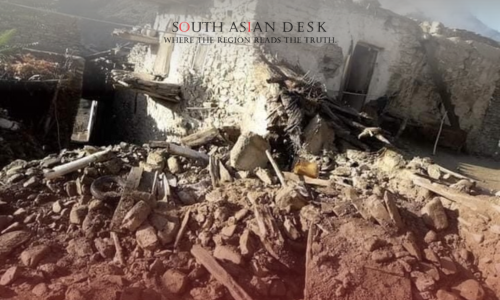
The 6.0 was the magnitude of the Afghanistan earthquake, which struck the eastern region, killing 622 and injuring over 1,500. A 6.0-magnitude earthquake struck eastern Afghanistan near Jalalabad on Sunday, August 31, 2025, at 11:47 PM local time, killing 622 people and injuring over 1,500, with rescue efforts ongoing in remote Kunar and Nangarhar provinces.
Why it Matters
The earthquake exacerbates Afghanistan’s humanitarian crisis, already strained by drought and repatriation, impacting South Asia’s stability due to its proximity to Pakistan and potential for cross-border aid challenges.
Afghanistan Earthquake Death Toll and Impact
The earthquake, centred 27 km east-northeast of Jalalabad in Nangarhar province, struck at a shallow depth of 8 km, intensifying its destructive power. According to the Afghan Interior Ministry, 622 deaths and over 1,500 injuries have been confirmed, primarily in Kunar’s Nur Gal, Sawki, Watpur, Manogi, and Chapa Dara districts. The shallow quake caused widespread damage to mud-and-rock homes, common in these impoverished mountainous regions.
Rescue Operations Underway
Rescue teams, including medical units from Kabul, Nangarhar, and Kunar, are deployed, with helicopters airlifting the injured. According to the Ministry of Public Health, “Medical teams are working tirelessly, but remote areas remain difficult to access.” Landslides and monsoon rains have hampered efforts, with several villages reported as completely razed. The United States Geological Survey (USGS) noted a 5.2-magnitude aftershock at 4:00 AM on Monday, September 1, 2025, complicating operations.
Regional and Humanitarian Context
The quake’s proximity to Pakistan’s border, just 17 miles from Jalalabad, caused tremors felt in Islamabad. Pakistan’s Meteorological Department reported no immediate casualties in Punjab or Khyber Pakhtunkhwa. Afghanistan’s ongoing crises—four years of drought and the return of 2.3 million citizens from Iran and Pakistan—strain resources. The Famine Early Warning Systems Network highlighted reduced food stocks, exacerbating the disaster’s impact.
Lack of International Aid
No foreign aid has been reported as of Monday, September 1, 2025, despite the Taliban’s call for assistance. Taliban spokesman Zabihullah Mujahid urged international organisations to provide support, citing significant human and financial losses. The absence of aid reflects Afghanistan’s isolation since the Taliban’s 2021 takeover, with sanctions and reduced foreign funding crippling healthcare and infrastructure.
Background
Afghanistan is prone to earthquakes due to its location near the Eurasian and Indian tectonic plates. A 5.9-magnitude quake in June 2022 killed over 1,000 in Paktika and Khost, while a 6.3-magnitude event in Herat in October 2023 claimed approximately 1,500 lives. Shallow quakes, like the current one, tend to cause more damage, especially in rural areas with fragile housing.
What’s Next
Rescue operations continue as teams reach remote villages, with the Afghanistan earthquake death toll expected to rise. International response remains uncertain, but regional cooperation, particularly with Pakistan, may shape aid efforts.
Published in SouthAsianDesk, September 1st, 2025
Follow SouthAsianDesk on X, Instagram, and Facebook for insights on business and current affairs from across South Asia.