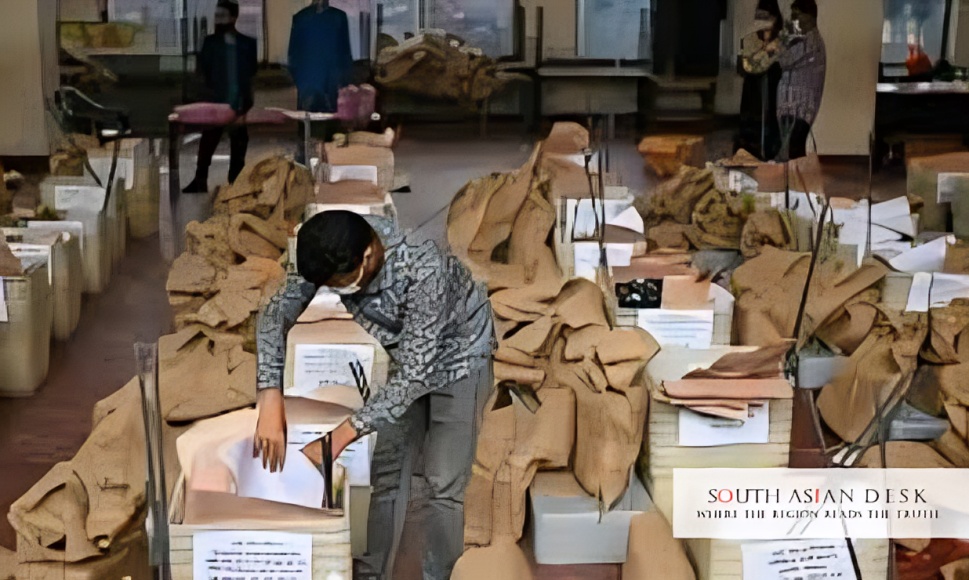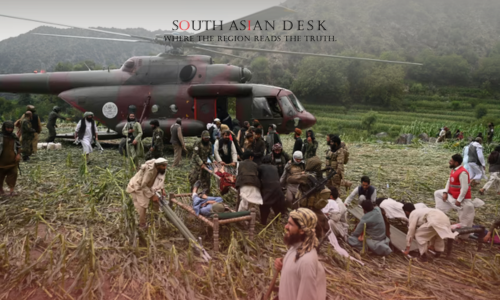
Rescue teams battle landslides to save survivors after a deadly quake in eastern Afghanistan. A 6.0 magnitude earthquake struck near Jalalabad, Afghanistan, on Sunday, August 31, 2025, at 11:47 PM, killing over 800 and injuring 2,800, with rescue operations racing against time in Kunar Province due to landslides and damaged infrastructure.
The earthquake exacerbates Afghanistan’s humanitarian crisis, straining regional disaster response systems and highlighting South Asia’s vulnerability to seismic events and aid shortages.
Afghanistan Earthquake Rescue Challenges
Rescue efforts following the Afghanistan earthquake in 2025 are underway in the rugged eastern provinces of Kunar and Nangarhar, where the quake’s epicenter, 27 km east-northeast of Jalalabad, caused widespread devastation. According to the Taliban’s Ministry of Defence, military teams conducted 40 helicopter flights by Monday, September 1, 2025, evacuating 420 casualties to Nangarhar Regional Hospital. Blocked roads and landslides, worsened by recent flash floods, have delayed ground access to remote villages like Mazar Dara in Kunar’s Nurgal District.
The shallow quake, at a depth of 8 km, razed mud-brick homes, trapping residents. According to UNICEF, poor mobile connectivity has hindered damage assessments, with children among the hardest hit. The Taliban reported 610 deaths in Kunar and 12 in Nangarhar.
Helicopter Rescue Operations
Helicopters have been critical in the Afghanistan earthquake rescue 2025 efforts, ferrying the injured from isolated areas. The Afghan Red Crescent Society deployed teams to search rubble, while local volunteers in Nangarhar donated blood to support overwhelmed hospitals. According to the United Nations, teams are delivering emergency assistance, with Secretary-General António Guterres pledging full support at 2:15 PM on Monday, September 1, 2025.
Landslides and Infrastructure Damage
Landslides triggered by the quake and prior flooding have blocked key roads, notably the Jalalabad-Kunar route, forcing reliance on air evacuations. The International Rescue Committee (IRC) reported 2,000 injuries within 12 hours, noting that entire communities remain cut off. In Nurgal District, villages like Wadir and Masud were nearly destroyed, with up to 90% of residents feared dead or injured in some areas.
International and Taliban Response
The Taliban appealed for global aid, with spokesperson Sharafat Zaman urging support due to extensive loss of life and homes. By Tuesday, September 2, 2025, India delivered 1,000 tents and 15 tons of food, while Iran and Japan pledged medical supplies and relief. Britain committed GBP 1 million through the UN and Red Cross, ensuring funds bypass the Taliban administration. The IRC highlighted funding shortages, with 2025 humanitarian aid at USD 767 million, down from USD 3.8 billion in 2022, limiting rescue capacity.
Background
Afghanistan lies on the Hindu Kush fault line, where the Indian and Eurasian tectonic plates meet, making it prone to earthquakes. A 6.3 magnitude quake in Herat Province in October 2023 killed thousands, exposing systemic disaster response gaps. Economic collapse since the Taliban’s 2021 takeover, coupled with reduced foreign aid, has left over 23 million Afghans needing humanitarian assistance.
What’s Next
As the Afghanistan earthquake rescue 2025 continues, international aid and infrastructure recovery will be critical to mitigate the disaster’s long-term impact on an already fragile region.
Published in SouthAsianDesk, September 2nd, 2025
Follow SouthAsianDesk on X, Instagram, and Facebook for insights on business and current affairs from across South Asia.