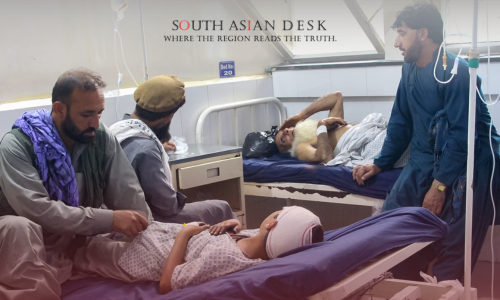
Over 2,000 earthquake victims are receiving treatment in Afghanistan’s health centres following a powerful quake in eastern provinces.
On Monday, September 1, 2025, a powerful earthquake struck eastern Afghanistan, injuring over 2,000 people who are now being treated in hospitals across Kunar, Nangarhar, Badakhshan, Laghman, and Nuristan, with helicopter evacuations aiding rescue efforts.
The treatment of Afghanistan earthquake victims in hospitals highlights the region’s strained healthcare system, impacting South Asia’s humanitarian response and regional stability amid ongoing crises.
Earthquake Impact and Medical Response
A significant earthquake hit eastern Afghanistan on Monday, September 1, 2025, in provinces including Kunar, Nangarhar, Badakhshan, Laghman, and Nuristan. According to the Ministry of Public Health, over 2,300 injured victims have been transferred to health centres, with some receiving on-site treatment in affected areas. The ministry reported that hospitals in these provinces are operating at full capacity to manage the influx of patients.
The earthquake caused widespread structural damage, leaving many trapped under rubble. Rescue operations, supported by helicopter evacuations, have been critical in reaching remote villages. The United Nations Office for the Coordination of Humanitarian Affairs (OCHA) noted that the rugged terrain and limited healthcare infrastructure pose significant challenges to timely medical care.
Afghanistan Earthquake Victims Treated in Hospitals
The Ministry of Public Health confirmed that over 2,000 earthquake victims are being treated in hospitals, with 2,300 transferred to facilities in eastern provinces as of Tuesday, September 2, 2025. According to the ministry’s statement, 20 health centres in Kunar and Nangarhar are providing emergency care, including surgeries for severe injuries. Mobile health teams have been deployed to treat minor injuries on-site, reducing pressure on hospitals.
Dr. Mohammad Naseem Haqqani, Acting Minister of Public Health, stated, “Our teams are working tirelessly to save lives, but we urgently need international support to bolster medical supplies.” The ministry has appealed for medical equipment and personnel to address the crisis, as many facilities lack adequate resources due to prior funding cuts.
Challenges in Treatment and Rescue
The treatment of earthquake victims is complicated by Afghanistan’s strained healthcare system. Over 420 health facilities have closed in recent years due to reduced international aid, leaving remaining centres overwhelmed. The World Health Organization (WHO) reported that hospitals in Nangarhar and Kunar are facing shortages of essential supplies like bandages and painkillers.
Rescue efforts are further hindered by the region’s mountainous terrain and damaged infrastructure. Helicopter evacuations have been crucial, with the Ministry of Defence reporting that military choppers airlifted 150 critically injured victims to Jalalabad’s regional hospital by Tuesday evening, September 2, 2025. However, some victims remain trapped, delaying treatment.
International and Regional Support
The international community has begun responding to the crisis. The United Nations has pledged emergency medical supplies, while Pakistan and India have offered logistical support for relief operations. The Red Crescent is providing first aid and temporary shelters in affected provinces, focusing on vulnerable groups like women and children.
Neighbouring countries, sharing seismic risks, are monitoring the situation, as the earthquake underscores the need for regional disaster preparedness. The response also highlights Afghanistan’s reliance on external aid amid its ongoing isolation.
Background
Afghanistan is prone to earthquakes due to its location along the Hindu Kush fault lines. Recent quakes, including a 6.3-magnitude event in 2022 and another in 2023, each killed over 1,000 people, exposing the country’s vulnerability to natural disasters. The 2025 earthquake follows this pattern, with eastern provinces frequently bearing the brunt due to their proximity to tectonic boundaries.
What’s Next
As Afghanistan earthquake victims treated in hospitals continue to receive care, long-term recovery efforts will depend on sustained international aid and rebuilding healthcare infrastructure to support survivors.
Published in SouthAsianDesk, September 3rd, 2025
Follow SouthAsianDesk on X, Instagram, and Facebook for insights on business and current affairs from across South Asia.