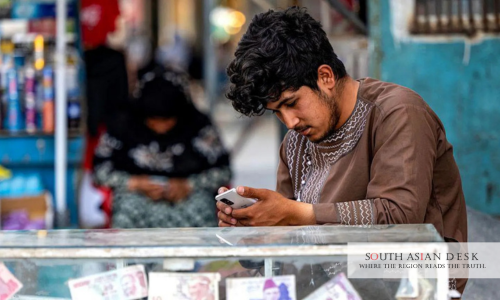
The Taliban authorities in Afghanistan triggered a nationwide internet shutdown on Monday, August 25, 2025, at 4:35pm local time, plunging 38 million residents into a Taliban telecom blackout. This move targets perceived immorality under Sharia law. The action disrupts mobile data, landlines, and satellite broadcasts. It follows weeks of fibre optic disruptions in key provinces. How will this reshape daily life?
This Afghanistan internet shutdown strikes at the heart of South Asia’s fragile digital ecosystem. Neighbouring Pakistan reports spillover effects on cross-border trade worth PKR 500 million annually. India voices concerns over refugee communications. The blackout hampers humanitarian aid coordination, vital for 15 million Afghans facing food insecurity, per UN data. Regional stability hangs in balance as isolation fuels unrest.
Taliban Telecom Blackout Grips the Capital
Kabul residents first felt the Afghanistan communications cut off around 4pm. Shops shuttered early. Families rushed to stockpile cash as ATMs failed. NetBlocks, the internet observatory, confirmed the total collapse. “Afghanistan now faces a full internet blackout,” the group posted on its platform. “Taliban measures disconnected networks stepwise through the afternoon.”
The Taliban telecom blackout extends beyond the capital. Mazar-i-Sharif and Herat report zero signal. Satellite TV providers like Ariana lose feeds. Mobile operators Roshan and MTN confirm outages. A local Taliban official in northern Afghanistan told reporters the order came from supreme leader Hibatullah Akhundzada. “This prevents immoral activities,” the spokesperson said. No timeline for restoration emerged.
Businesses scramble. The Afghanistan Chamber of Commerce warns of PKR 1 billion daily losses. Exporters cannot process orders. Remittances, a lifeline for 20% of households, halt. One trader in Kandahar said staff queued at money changers. “We operate blind now,” he noted.
Fibre Optic Shutdown Afghanistan: Roots in Weeks-Long Disruptions
The fibre optic shutdown Afghanistan predates Monday’s escalation. Since early August, Taliban teams severed cables in 10 provinces. Users in Jalalabad logged speeds below 1Mbps. The group cited “immoral content” on social media. An alternative domestic network was promised but details remain scarce.
NetBlocks data shows connectivity dropped 95% nationwide by 5pm. Pre-shutdown, Afghanistan’s internet penetration stood at 20%. Now, urban areas match rural voids. The International Telecommunication Union tracks this as the sharpest fall since 2021 Taliban takeover.
Experts link the fibre optic shutdown Afghanistan to broader controls. Since August 2021, women face education bans beyond grade six. Media outlets closed 50 channels. This Taliban telecom blackout aligns with those steps. “It isolates dissent,” said a Kabul-based analyst, speaking anonymously.
Impacts of Afghanistan Communications Cut Off on Daily Life
The Afghanistan communications cut off hits hardest at home. Mothers cannot reach midwives. Students miss online lessons, already scarce under restrictions. Hospitals report delayed supplies. One clinic in Bamyan lost contact with suppliers. “Patients suffer without diagnostics,” a doctor said.
Journalists face silence. Agence France-Presse lost Kabul bureau links. Reporters Without Borders logs 200 media workers displaced since 2021. “This blackout muzzles truth,” the group stated in a release.
Economically, the Taliban telecom blackout stalls growth. Afghanistan’s GDP, at USD 14 billion, relies on digital remittances. The World Bank estimates 5% contraction from prolonged outage. Neighbours feel ripples. Pakistan’s border posts delay 500 trucks daily.
Background: Taliban Controls Since 2021
The current Afghanistan internet shutdown builds on patterns. Taliban forces captured Kabul on August 15, 2021. They imposed vice police patrols. By 2023, 80% of women lost jobs. Internet filters blocked 1,000 sites by 2024.
Fibre optic networks, laid in 2010s with Chinese aid, carried 90% of traffic. Severing them echoes 1990s bans. A 2022 UN report flagged similar risks. Now, the fibre optic shutdown Afghanistan realises those fears.
Regional powers watch closely. Pakistan hosts 1.3 million refugees. India aids USD 100 million yearly. Both urge restraint. Yet, Taliban envoys dismiss calls.
What’s Next for the Afghanistan Internet Shutdown
Restoration hinges on Taliban compliance. Officials hint at a “secure network” within weeks. NetBlocks monitors for flickers. Aid agencies stockpile satellite phones, limited to 5,000 units.
The Afghanistan internet shutdown may spur smuggling. VPNs surged 300% pre-blackout. Border towns buzz with illegal modems. Long-term, experts predict brain drain. 500,000 youth fled since 2021.
As darkness lingers, the Afghanistan internet shutdown underscores control’s cost. Will it fracture South Asia further? Only time reveals.
Published in SouthAsianDesk, September 30th, 2025
Follow SouthAsianDesk on X, Instagram, and Facebook for insights on business and current affairs from across South Asia.