Afghanistan’s decision to skip the 10th ECO Ministerial Meeting on disaster risk reduction in Pakistan highlights strains in regional ties, as Kabul cites limited benefits amid ongoing vulnerabilities to natural hazards.
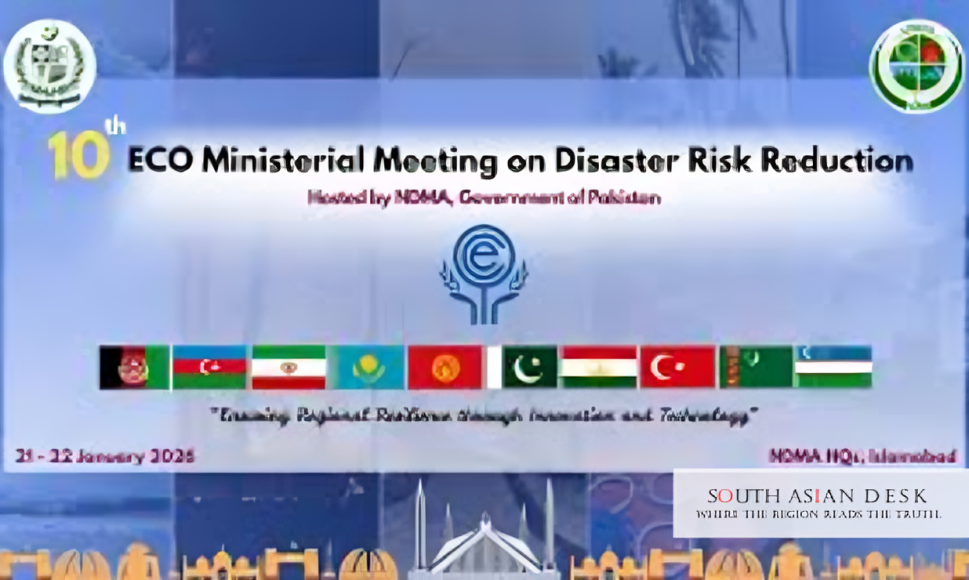
Afghanistan skipped the 10th ECO Meeting on disaster risk reduction in Pakistan, hosted by the National Disaster Management Authority in Islamabad from January 21 to 22, 2026. The Islamic Emirate’s Ministry of Foreign Affairs confirmed no representative attended despite an invitation, assessing participation as not beneficial to Afghanistan’s interests.
The absence underscores challenges in Afghanistan Pakistan regional cooperation, particularly as South Asia faces rising climate threats. ECO member states, vulnerable to floods, earthquakes, and droughts, rely on such forums to build resilience. Afghanistan, ranked among the most disaster-prone nations, could miss opportunities for shared strategies in a region where transboundary risks demand joint action.
ECO Disaster Risk Reduction Pakistan Hosts Key Forum
The meeting, the first hosted by Pakistan on this theme, gathered ministers and officials from nine ECO states: Pakistan, Turkey, Azerbaijan, Kazakhstan, Kyrgyzstan, Tajikistan, Turkmenistan, Iran, and Uzbekistan. Representatives from the ECO Secretariat and international partners also joined. Afghanistan’s seat remained empty, with reports showing its flag at an unoccupied spot.
Pakistan proposed a Regional Innovation Hub for early warning technologies and risk-informed infrastructure. Discussions covered updating the ECO Regional Framework on DRR for 2025-2030 and endorsing the Islamabad Declaration. The declaration commits to enhanced coordination, data sharing, and innovation against hazards.
NDMA Chairman Lieutenant General Inam Haider Malik chaired sessions, emphasising Pakistan’s role in regional resilience. The event reviewed progress since the 9th meeting and addressed transboundary threats like those affecting Afghanistan Pakistan regional cooperation.
Kabul Absence ECO Summit Raises Concerns
Kabul absence from the ECO summit drew expert commentary. Environmental specialist Seyed Shah Guharpour stated the forum offered Afghanistan a platform to voice concerns on vulnerabilities. Analyst Seyed Mohammad Suleimankhel noted geographic similarities with neighbours, making attendance vital for shared disaster responses.
Afghanistan faced severe events in 2026, including floods in early January killing dozens in Kunar and Samangan provinces, plus earthquakes. The United Nations ranks Afghanistan high on disaster risk indices, with climate change amplifying threats. Skipping the meeting may limit access to regional tools for mitigation.
Pakistan’s Foreign Office expressed commitment to ECO goals but did not address the absence directly.
Background on ECO and Regional Ties
The Economic Cooperation Organisation, founded in 1985 by Iran, Pakistan, and Turkey, expanded to 10 members post-Soviet era, including Afghanistan in 1992. It promotes trade, transport, and disaster cooperation across 8 million square kilometres and 500 million people.
Afghanistan Pakistan regional cooperation has fluctuated. Border tensions, including closures at Torkham and Chaman in 2025, strained trade worth USD 1.5 billion annually. ECO forums aim to bridge such gaps, but Kabul’s selective engagement reflects priorities under the Islamic Emirate.
Recent ECO efforts include the 2025 framework, which prioritised early warnings. Pakistan’s hosting aligns with its PKR 10 billion investments in DRR since 2022 floods affecting 33 million.
What’s Next for Collaboration in ECO Meeting
Future ECO engagements may test Afghanistan Pakistan regional cooperation. The next ministerial, potentially in 2027, could address gaps from Kabul absence in the ECO summit. Pakistan pushes for hub activation by mid-2026, inviting all members.
International partners like the UN urge inclusive participation. Afghanistan’s isolation risks excluding it from funding, with ECO pledging USD 50 million for regional projects. Observers watch if Kabul re-engages amid donor fatigue.
As Afghanistan skips ECO meeting, questions linger on its strategy for disaster resilience in a interconnected South Asia.
The two-day gathering concluded with endorsements, but without Afghanistan’s input, the region’s collective approach to hazards remains incomplete. Experts warn that fragmented efforts could exacerbate vulnerabilities, especially for landlocked nations like Afghanistan reliant on neighbours for aid flows.
Pakistan highlighted successes, including its National Emergencies Operation Centre, showcased to delegates. The hub proposal targets technologies like AI-driven forecasts, potentially benefiting Afghanistan if ties improve.
Afghanistan’s decision aligns with broader diplomacy. In 2025, it diversified trade via Iran and India, reducing Pakistan dependence by 70 percent in some sectors. This shift may influence future ECO involvement.
Regional analysts note ECO’s potential for stability. With South Asia projected to face 20 percent more extreme weather by 2030 per IPCC data, cooperation is essential. Afghanistan’s 2026 disasters cost USD 200 million in damages, underscoring the stakes.
The Islamabad Declaration calls for harmonised frameworks, but implementation hinges on all members. Pakistan aims to lead follow-ups, including workshops in March 2026.
Kabul absence from the ECO summit may prompt bilateral talks. Pakistan and Afghanistan share 2,600 kilometres of border, prone to cross-frontier floods. Joint mechanisms, like 2018 agreements, remain underused.
As climate risks mount, Afghanistan skips ECO meeting could signal a pivot to other forums, like SAARC or bilateral deals. Yet, ECO’s focus on Central-South Asia ties makes it key for long-term stability.
Pakistan reiterated openness to collaboration. The event’s outcomes, including the declaration, set a roadmap. For Afghanistan, re-engagement could unlock resources amid economic strains, with GDP growth at 2 percent in 2025.
In summary, Afghanistan skips ECO meeting reflects cautious foreign policy, but South Asia’s shared threats demand renewed Afghanistan Pakistan regional cooperation.
Published in SouthAsianDesk, January 22nd, 2026
Follow SouthAsianDesk on X, Instagram and Facebook for insights on business and current affairs from across South Asia.