A coalition of six regional powers convened in Tehran to confront Afghanistan terrorism head-on, demanding the Taliban dismantle terror networks on Afghan soil. The forum highlighted persistent threats that undermine stability across borders.
Multi-State Forum Targets Afghanistan Terrorism
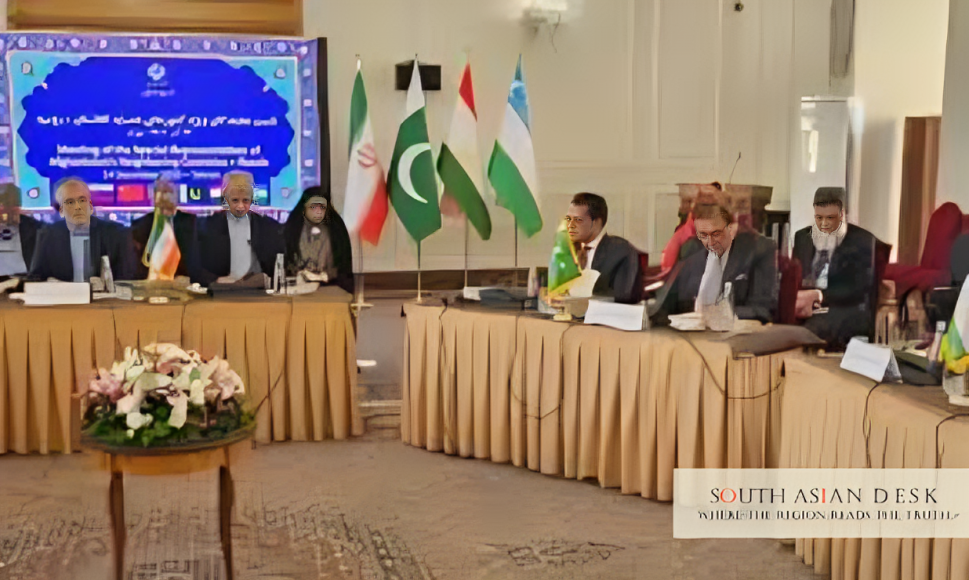
Representatives from Pakistan, China, Russia, Tajikistan, Uzbekistan, and Turkmenistan gathered in Tehran on Monday for the latest iteration of the Special Representatives’ meeting on Afghanistan. Hosted by Iran, the forum focused on counter terrorism Afghanistan efforts amid rising cross-border attacks. Pakistan’s Special Representative Mohammad Sadiq led calls for immediate action, stating the threat of terrorism emanating from Afghan soil poses a grave challenge to the region.
The meeting, which began at 10:00 AM local time, lasted four hours. Participants reviewed intelligence on militant activities and economic corridors disrupted by insecurity. Sadiq emphasised that Afghanistan’s de facto rulers must rid their territory of all terrorist groups without exception. “The people of Afghanistan have already suffered enough and they deserve better,” Sadiq posted on X earlier today.
Iran’s Foreign Minister Seyed Abbas Araghchi opened the session with a keynote address. He described Afghanistan’s stability as a strategic imperative for neighbours. “Experience has shown that imported prescriptions and trans-regional decisions have failed to bring stability to crisis-hit countries,” Araghchi said. He stressed that counter terrorism Afghanistan requires collective resolve, not unilateral measures.
The Taliban regime declined Iran’s invitation to attend, a move Iran’s Foreign Ministry spokesperson Esmaeil Baqaei called regrettable but respected. “Afghanistan chose not to attend the meeting,” Baqaei told reporters. Iran shares nearly 2,000 kilometres of border with Afghanistan and Pakistan, making any escalation a direct concern for Tehran.
This Tehran Afghanistan forum marks the third such gathering since Pakistan initiated the process in September 2021. Previous sessions in October 2021 and March 2022 yielded joint communiques on humanitarian aid and refugee flows, but progress on security lagged. Today’s discussions centred on verifiable steps to curb Afghanistan terrorism, including enhanced border patrols and intelligence sharing.
Regional Security Afghanistan Hangs in Balance
The Tehran Afghanistan forum underscored how Afghanistan terrorism erodes regional security Afghanistan. Pakistan reported over 200 cross-border incursions linked to Tehrik-i-Taliban Pakistan (TTP) militants since January 2025, displacing 50,000 civilians in border districts. Data from Pakistan’s Inter-Services Intelligence (ISI) indicates TTP fighters operate training camps in eastern Afghanistan provinces like Kunar and Nangarhar.
China voiced concerns over East Turkestan Islamic Movement (ETIM) affiliates, who exploit Afghan safe havens to launch attacks into Xinjiang. A joint statement from the forum called for dismantling these networks to protect Belt and Road Initiative projects worth USD 62 billion in the region. Russia’s envoy highlighted Islamic State Khorasan Province (ISKP) bombings that killed 150 in Moscow last year, tracing explosives to Afghan sources.
Tajikistan, sharing a 1,344-kilometre border, warned of spillover from Afghan opium trade fuelling militancy. Over 90 per cent of global heroin originates from Afghanistan, generating PKR 500 billion annually for terror financiers, according to United Nations Office on Drugs and Crime (UNODC) figures released in July 2025. The forum proposed a trilateral monitoring mechanism with Uzbekistan and Turkmenistan to track smuggling routes.
In bilateral sideline talks, Pakistan and Iran agreed to resume direct flights between Islamabad and Kabul, conditional on Taliban commitments to counter terrorism Afghanistan. “Any tension between Afghanistan and Pakistan will inevitably affect us,” Baqaei reiterated, pointing to Iran’s 950,000 Afghan refugees hosted since 2021.
Counter Terrorism Afghanistan: Demands and Deadlines
Counter terrorism Afghanistan dominated the agenda, with participants setting a 90-day deadline for Taliban compliance. Sadiq demanded indiscriminate action against all groups, including al-Qaeda remnants and Lashkar-e-Taiba offshoots. “It is imperative that the current de-facto rulers take steps to ameliorate their suffering,” he declared.
Araghchi echoed this, framing regional security Afghanistan as intertwined with global peace. Iran’s proposal included a regional fund for de-radicalisation programmes, seeded with USD 100 million from participating states. Uzbekistan pledged technical aid for drone surveillance along the Amu Darya river, a key infiltration point.
The joint communique, released at 3:00 PM, listed 12 action points. These include extradition treaties for 50 high-value targets and quarterly audits of Afghan border posts. Failure to engage, the document warned, could prompt sanctions coordinated with the United Nations Security Council.
Afghanistan terrorism has intensified since the Taliban’s 2021 takeover. Attacks in Pakistan rose 65 per cent in 2024, per the South Asia Terrorism Portal, claiming 1,500 lives. In Iran, ISKP suicide bombings in Kerman killed 94 during January commemorations. Central Asian states report 300 foreign fighters returning to Afghanistan, bolstering local cells.
The forum’s resolve signals a shift from dialogue to accountability. Turkmenistan’s representative stressed economic incentives: unlocking Afghanistan’s USD 1 trillion mineral reserves requires secure transit routes free from Afghanistan terrorism.
Background: Evolution of the Tehran Afghanistan Forum
The Tehran Afghanistan forum evolved from ad-hoc consultations post-US withdrawal. Pakistan proposed the format in 2021 to foster inclusive talks. Iran’s hosting reflects its stake in Afghan stability, with 4 million undocumented migrants straining resources.
Early meetings focused on humanitarian corridors, delivering 500,000 tonnes of wheat aid by 2023. Security took precedence after TTP’s resurgence, with 2024 seeing coordinated strikes across three countries. This iteration, amid global scrutiny, positions the group as a counterweight to Western-led formats like the Doha process.
Data from the Institute for Economics and Peace’s Global Terrorism Index 2025 ranks Afghanistan first for impact, with 8,000 deaths linked to extremism. Neighbours bear 70 per cent of the fallout, justifying the forum’s urgency.
What’s Next: Pathways to Regional Security Afghanistan
Participants scheduled follow-up virtual sessions in October. Pakistan plans bilateral envoys to Kabul next week to relay demands. Success hinges on Taliban reciprocity; refusal could isolate the regime further.
As regional powers unite against Afghanistan terrorism, the path to counter terrorism Afghanistan clarity emerges. A secure Afghanistan promises trade booms, from Chabahar port to CASA-1000 energy lines. Yet, without action, shadows of instability loom large over South Asia.
The Tehran Afghanistan forum closes on a note of cautious optimism. Regional security Afghanistan demands vigilance, but collective pressure may yet yield a terror-free horizon.
Published in SouthAsianDesk, December 15th, 2025
Follow SouthAsianDesk on X, Instagram, and Facebook for insights on business and current affairs from across South Asia.