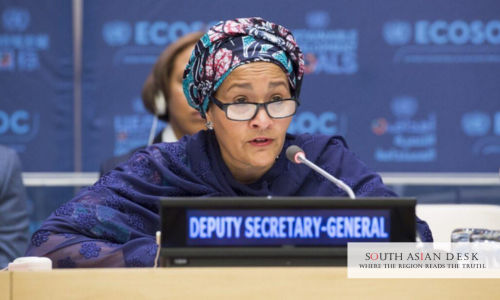
United Nations Deputy Secretary-General Amina Mohammed voiced deep concern over Afghanistan women’s rights on Saturday, January 4, 2026, stating millions of women and girls endure severe limits on education, employment, security, and movement under Taliban rule.
The UN’s concern about Afghan women highlights persistent human rights challenges in Afghanistan. These issues could hinder humanitarian aid flows and strain relations with South Asian neighbours, where women’s empowerment drives regional stability and economic growth.
UN Concerns Afghanistan Women Detailed
Amina Mohammed posted on her official X account about the dire state of Afghanistan’s women’s rights. “Millions of women and girls in Afghanistan face severe restrictions on their basic rights: education, work, security, and freedom of movement,” she wrote. “The world must not turn a blind eye to these violations. Women’s rights are human rights, everywhere.”
The statement came amid ongoing reports of systematic curbs imposed by the Taliban since their 2021 takeover. UN officials have repeatedly flagged these as violations of international norms.
Mohammed’s remarks align with broader UN efforts to address the crisis. In previous visits and statements, she has called for reversals of Taliban policies. The latest expression of UN concern, Afghan women urge global action to uphold universal rights.
Data from UN agencies indicate over 1 million girls remain barred from secondary education since September 2021. Women face bans from most public sector jobs and NGO work, with decrees limiting travel without male guardians.
Taliban Women’s Rights Afghanistan: Official Stance
Taliban authorities reject criticisms of Taliban women’s rights in Afghanistan. They assert women enjoy dignity and rights under Islamic Sharia law.
A six-point decree issued by the Taliban’s supreme leader on December 3, 2021, outlines protections. It mandates consent for marriage, prohibits forced unions, ensures inheritance and property rights, and requires officials to enforce these.
The decree states: “No one can force women to marry by coercion or pressure.” It also directs religious scholars, tribal elders, and community leaders to prevent practices like excessive dowries.
Taliban spokespersons claim girls’ education will resume once an appropriate Islamic environment exists. They argue that restrictions safeguard women’s honour.
However, critics note that the decree omits provisions for education and access to employment. Taliban women’s rights policies in Afghanistan continue to exclude women from universities and many professions.
Impacts on Afghan Society
The restrictions exacerbate Afghanistan’s humanitarian crisis. UN reports show increased poverty and malnutrition among women-headed households. Limits on movement hinder access to healthcare and aid.
In urban areas like Kabul, women report feeling increasingly isolated. Rural regions face compounded issues with traditional norms amplified by Taliban edicts.
International organisations have paused operations due to bans on female staff, affecting millions who rely on aid. The UN’s concern about Afghan women echoes calls for conditional engagement with the Taliban.
South Asian countries are closely monitoring the situation. Neighbouring Pakistan and India host Afghan refugees, many fleeing rights abuses. Regional forums like SAARC could address spillover effects on women’s rights advocacy.
Background
The Taliban regained control of Afghanistan on August 15, 2021, after US-led forces withdrew. They immediately imposed gender-based restrictions, reversing the gains made over the prior two decades.
Girls’ secondary schools closed in September 2021. University bans followed in December 2022. NGO work curbs began in December 2022, extending to UN female staff in April 2023.
The Islamic Emirate of Afghanistan maintains that these measures align with Sharia. International recognition remains withheld, partly due to concerns about women’s rights.
UN delegations, including Mohammed’s January 2023 visit, have engaged Taliban leaders. Those talks sought exemptions but yielded limited results.
Afghanistan women’s rights advocates operate underground or in exile. Groups like the Afghan Women’s Network document violations and lobby globally.
What’s Next
The UN may convene special sessions on women’s rights in Afghanistan. Potential steps include targeted sanctions or aid conditions tied to improvements in rights.
Mohammed’s statement could prompt renewed diplomatic pressure. Taliban engagement at forums like the Doha talks might address the UN concern about Afghan women.
Aid agencies seek ways to deliver support without endorsing restrictions. In the long term, education reforms remain crucial to empowering future generations.
In conclusion, addressing the erosion of Afghanistan’s women’s rights requires sustained international commitment to reverse Taliban policies.
Published in SouthAsianDesk, January 5th, 2026
Follow SouthAsianDesk on X, Instagram and Facebook for insights on business and current affairs from across South Asia.