The Army Rocket Force Command, announced by Prime Minister Shehbaz Sharif, marks a significant leap in Pakistan’s efforts to bolster its military might, stirring both pride and concern among its citizens. Unveiled during a vibrant ceremony in Islamabad on the eve of Pakistan’s 78th Independence Day, this new military unit aims to enhance the nation’s conventional warfare capabilities, particularly in response to recent tensions with India. For a country that has long navigated a volatile regional landscape, the formation of the Army Rocket Force Command is a bold statement of resilience and readiness.
Pakistan Launches Army Rocket Force Command Amid Defense Budget Surge
Speaking at Jinnah Sports Stadium, amidst a display of national unity and military pride, the prime minister declared the Army Rocket Force Command a cornerstone of Pakistan’s evolving defence strategy. Equipped with cutting-edge technology, this unit will oversee the country’s advanced missile systems, including ballistic and cruise missiles, capable of striking with precision from multiple fronts. The announcement comes on the heels of a 20 per cent increase in Pakistan’s defence budget for 2025-2026, reflecting a determined push to fortify its arsenal following a brief but intense conflict with India in May.
The conflict, referred to as Marka-i-Haq or the Battle of Truth, erupted after India blamed Pakistan for an attack in Pahalgam, Kashmir, which claimed 26 civilian lives. Pakistan denied involvement, but the ensuing four-day clash saw both nations deploy missiles, drones, and fighter jets, including Pakistan’s J-10C and JF-17 Thunder. A US-brokered ceasefire halted the violence, but the scars remain fresh. The prime minister, addressing a crowd that included President Asif Ali Zardari and Chief of Army Staff Field Marshal Asim Munir, hailed the Army Rocket Force Command as a response to India’s aggression, asserting that Pakistan’s swift victory proved its military spirit outweighs mere weaponry and underscores its unyielding resolve to defend sovereignty.
Pakistan Forms Army Rocket Force Command to Counter India’s Missile Edge
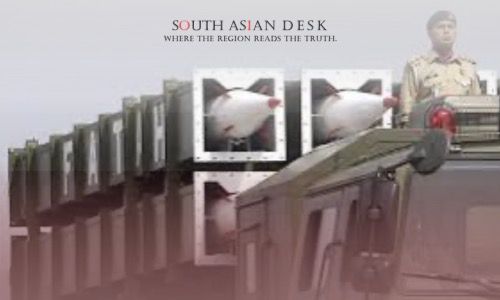
For families of soldiers and civilians caught in the crossfire, the Army Rocket Force Command represents both hope and a stark reminder of the region’s fragility. The unit, inspired by China’s People’s Liberation Army Rocket Force, will centralise Pakistan’s missile capabilities under a dedicated command, enhancing its ability to respond to threats with speed and precision. Military analysts suggest this move, coupled with acquisitions like the Fatah-I and Fatah-II rocket systems and Chinese-supplied hardware, aims to counter India’s missile prowess, particularly systems like BrahMos and S-400, while reinforcing Pakistan’s long-term strategic deterrence posture against evolving regional challenges.
The announcement, made amid fireworks and a military parade featuring Turkish and Azerbaijani contingents, resonated deeply with Pakistanis celebrating their nation’s independence. Yet, it also sparked unease about escalating tensions. The prime minister’s call for a ‘Misaq-i-Istehkam-i-Pakistan’, a pact for national stability, underscored the need for unity in the face of external challenges. He praised the armed forces’ leadership, crediting their coordinated response for Pakistan’s success in May, while reaffirming that the nation’s nuclear arsenal remains a shield, not a sword.
As Pakistan moves to establish the Army Rocket Force Command, the region watches closely. For communities along the Line of Control, the unit symbolises strength but also the ever-present shadow of conflict. The road ahead demands careful navigation, balancing deterrence with diplomacy to avoid further escalation and maintain fragile peace in an already tense environment. For now, the Army Rocket Force Command stands as a testament to Pakistan’s resolve, a beacon of national pride, and a sobering reminder of the high stakes in South Asia’s complex and volatile security landscape.
Published in SouthAsianDesk, August 13th,2025
Follow SouthAsianDesk on X, Instagram, and Facebook for insights on business and current affairs from across South Asia.