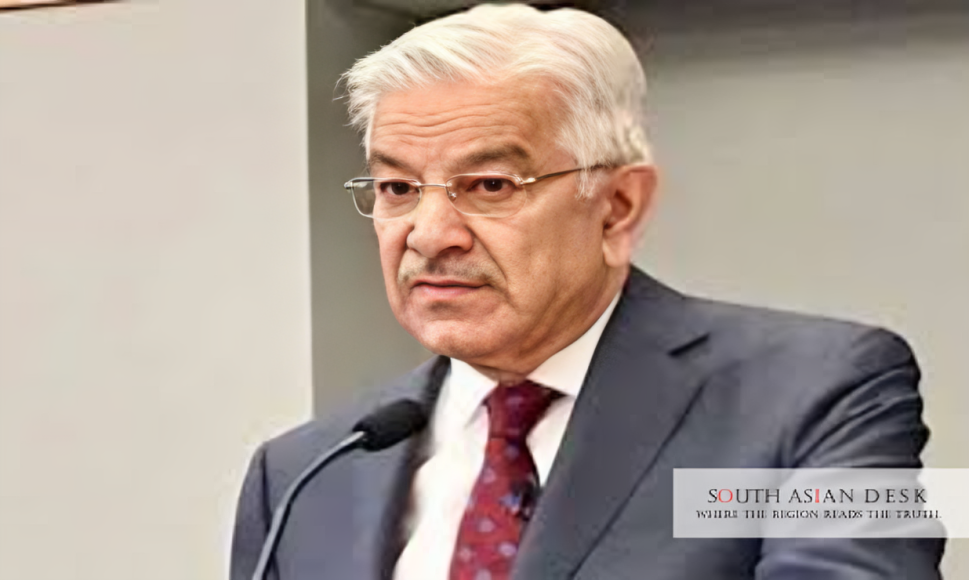
Defence Minister Khawaja Asif warned on Tuesday that attacks on Afghan terror hideouts in Afghanistan cannot be ruled out. This came hours after suicide blasts in Islamabad and Wana claimed 21 lives on Monday. The strikes targeted a court complex and a cadet college, exposing urban vulnerabilities. Asif linked the assaults to cross-border militants, vowing a firm reply to restore security.
The developments underscore a deepening security crisis in South Asia. Pakistan faces renewed threats from groups like the Tehrik-e-Taliban Pakistan (TTP), allegedly sheltered by Afghanistan’s Taliban regime. This risks broader instability, disrupting trade routes, displacing communities and drawing in regional powers. With economic recovery fragile, such volatility hampers progress across the subcontinent, from energy corridors to counter-terror pacts.
Deadly Assaults Shake Capital and Frontier
Pakistan endured a harrowing day on Monday, November 11, 2025. A suicide bomber struck outside the Islamabad District Judicial Complex in the G-11 sector at around 10:45 AM. The blast killed 12 people, including lawyers and passers-by, and wounded 36 others. Rescue teams rushed the injured to nearby hospitals, where officials reported critical conditions for several victims.
The attack unfolded amid high-profile events. Delegations gathered for the Inter-Parliamentary Speakers’ Conference and the 6th Margalla Dialogue. A cricket match between Pakistan and Sri Lanka packed Rawalpindi Stadium nearby. Eyewitnesses described chaos as debris scattered and smoke billowed from the site. No group claimed responsibility at first, but the TTP later took Credit via a statement.
In parallel, militants targeted Cadet College Wana in South Waziristan, Khyber Pakhtunkhwa. At 2:30 PM, assailants rammed an explosive-laden vehicle into the main gate. Five terrorists attempted to breach the perimeter, but security forces neutralised all of them. The operation, led by the military, evacuated over 500 students and staff unharmed. Nine civilians suffered injuries from collapsing nearby roofs due to the blast’s force.
The Inter-Services Public Relations (ISPR) confirmed these details in a press release. It noted the Wana assailants belonged to a banned outfit affiliated with cross-border networks. “Security forces responded swiftly, ensuring no harm to innocents,” the ISPR stated. President Asif Ali Zardari condemned both incidents as “cowardly acts aimed at derailing peace.”
These assaults mark a shift. Terror operations, once confined to border zones, now reach urban hearts. Islamabad’s strike, the deadliest in the capital since 2009, signals tactical evolution by militants.
Asif’s Firm Stance on Pakistan Possible Strikes Afghanistan Terrorists
Defence Minister Khawaja Asif addressed the crisis in an interview on Geo News’ ‘Aaj Shahzeb Khanzada Kay Sath’ on Tuesday, November 12, 2025. He declared Pakistan in a “state of war,” urging citizens to recognise the nationwide threat. “This is not just a border skirmish. The Pakistan Army sacrifices daily to keep you safe,” Asif said.
Questions About Afghan Terror Hideouts
Questioned on retaliation, Asif was unequivocal. “Attacks on terrorist sanctuaries in Afghanistan cannot be ruled out. God willing, they could happen,” he affirmed. He stressed compulsion: “We asked only one thing from the Afghan Taliban: stop terrorism from your soil. They failed.” Asif dismissed illusions about Kabul’s sincerity, citing three failed dialogue rounds.
Data bolstered his claims. “Around 2,500 to 3,000 militants infiltrated over the past year. Formations penetrated slowly, stationing in various areas,” Asif revealed. He added that 55 per cent of terrorists killed in Pakistan operations were Afghan nationals, not locals. “How can you deny this reality?” he challenged.
Asif also flagged external hands. “I won’t be surprised if India blames us soon, staging drama ahead of their elections,” he noted. Yet, he reassured: “Pakistan will never initiate war or support terror. But if targeted, we respond in kind.”
This rhetoric echoes prior warnings. On October 29, 2025, Asif posted on X: “Any terrorist attack inside Pakistan shall give you the bitter taste of such misadventures.” That followed Pakistani airstrikes on TTP hideouts in Khost and Paktika, killing dozens of insurgents but also civilians, per Afghan reports.
TTP Safe Havens Demand Intensifies
Pakistan’s demands centre on dismantling TTP safe havens. The TTP, distinct from Afghanistan’s Taliban yet ideologically aligned, has surged since Kabul’s 2021 takeover. Many leaders fled to Afghanistan post-2014 pacts. Islamabad accuses the Taliban of harbouring them, enabling cross-border raids.
Talks collapsed recently. Mediated sessions in Istanbul on November 8 sought de-escalation but ended without accord. Afghanistan decried Pakistan’s “irrational demands,” including verifiable action against militants. A prior Doha ceasefire in October held briefly, but clashes resumed.
Asif portrayed Kabul’s regime as fractured. “It’s not united, factions with agendas, some India-linked,” he said. “Verbal guarantees mean nothing now.” Pakistan pursued hot pursuits: ground forces chase infiltrators, with aerial support if needed. “We intensify these to protect our borders,” Asif added.
Official data from the ISPR underscores the toll. In 2025 alone, over 600 security personnel died in TTP-linked violence, up 40 per cent from last year. Border incidents rose 25 per cent, per internal tallies. These figures, shared in briefings, highlight the sanctuary issue.
Afghanistan rejects blame, viewing TTP as Pakistan’s internal matter. Yet, incidents like Wana, where attackers crossed from Afghan soil fuel distrust. The Durand Line, a colonial remnant Afghanistan disputes, remains a flashpoint, with fences breached routinely.
Asif Response Islamabad Wana Attacks Signals Resolve
Asif framed the Islamabad and Wana assaults as coordinated. “Bringing war to our capital is a message from Kabul. Pakistan has full strength to reply,” he stated. Security heightened nationwide, with checkpoints in major cities and drone surveillance along the frontier.
The military’s Wana clearance wrapped by evening Monday. ISPR reported: “All threats eliminated; college secured.” Forensic teams probed the Islamabad site, tracing the bomber’s path to tribal areas. Anti-Terrorism Squads detained suspects in linked probes.
Economically, fallout looms. The blasts halted events, denting tourism. Border trade, worth PKR 1.2 billion daily, faces delays amid closures. Analysts warn prolonged tensions could spike inflation, already at 12 per cent.
Regionally, India watches closely. Asif’s nod to possible blame games recalls May 2025 skirmishes. “We assure the world: no adventures from us,” he reiterated. Yet, readiness is clear. Troops are on high alert since October clashes that killed 23 Pakistani soldiers.
Background: A Cycle of Strikes and Stalemate
Tensions trace to 2021. TTP attacks quadrupled post-Taliban victory, exploiting ungoverned spaces. Pakistan’s March 2024 offensive cleared 15,000 square kilometres but displaced 100,000. Airstrikes in September targeted planners, drawing Taliban fire.
Three dialogue rounds yielded promises but no action. Kabul’s interior minister visited Islamabad in July, pledging cooperation. Yet, incidents persisted, eroding trust.
What’s Next: Balancing Retaliation and Diplomacy
Pakistan weighs options. Diplomatic channels, via Qatar and China, push for revival. But Asif signalled limits: “No more illusions.” Military planners eye precision strikes on verified sites, minimising civilian risk.
International calls urge restraint. The UN urged probes; the US pressed Kabul on counter-terror. For South Asia, de-escalation is vital, Afghan stability affects 3 million refugees in Pakistan and regional security pacts.
In closing, Khawaja Asif warns attacks on Afghan terror hideouts loom large. Pakistan prioritises peace but stands ready to defend its people, charting a precarious path forward.
Published in SouthAsianDesk, November 12th, 2025
Follow SouthAsianDesk on X, Instagram, and Facebook for insights on business and current affairs from across South Asia.