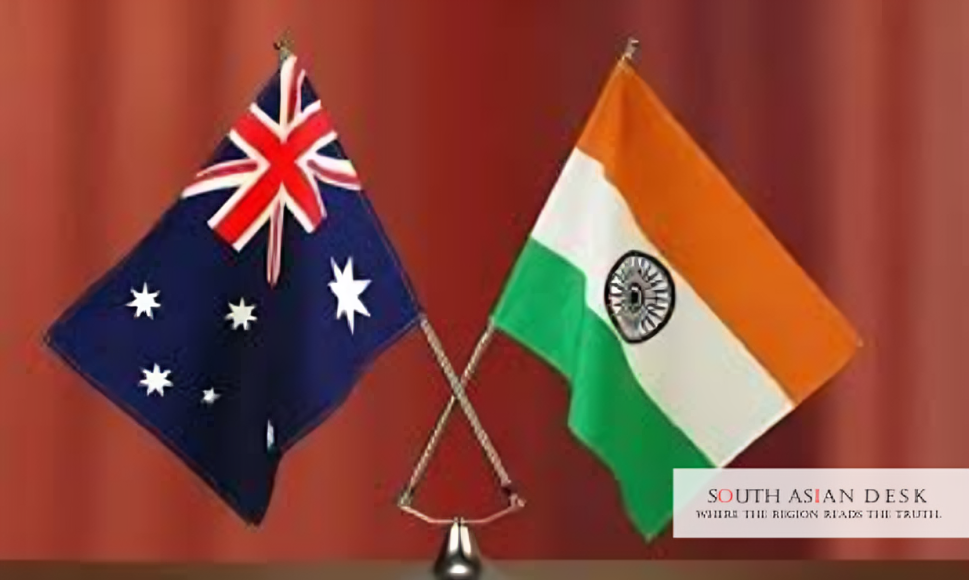
Australia has reclassified India and three neighbouring countries to the highest risk category for student visa, effective 8 January 2026, due to integrity concerns.
Australia has moved India, Nepal, Bangladesh, and Bhutan to Evidence Level 3 for student visa assessments. This change, announced by the Department of Home Affairs, aims to address rising fraudulent applications. The adjustment affects thousands of South Asian students planning to study in Australia.
This development matters for South Asia as Australia hosts over 140,000 Indian students alone. With the four countries representing nearly one-third of recent international enrolments, tighter rules could disrupt education migration flows and economic ties between the regions.
Australia Student Visa Changes Impact South Asian Applicants
The Department of Home Affairs updated evidence levels for several South Asian countries on 8 January 2026. This out-of-cycle adjustment responds to emerging integrity risks. Officials cited increased suspected fraudulent documentation in financial and academic records.
India’s shift to Level 3 means applicants face stricter scrutiny. Previously at a lower level, Indian students now join Nepal, Bangladesh, and Bhutan in the highest category.
Australian Minister for International Education Julian Hill described Australia as “the least bad country of choice amongst the Big Four” for international students. He noted restrictions in the US, UK, and Canada have driven more applications to Australia, prompting stronger emphasis on documentary evidence and risk filtering.
Phil Honeywood, chief executive of the International Education Association of Australia, said: “It recently became obvious that student applicants who couldn’t get into those other three countries are increasingly applying to come to Australia, and in many cases we’ve seen an increase in fraudulent financial and academic documents.”
He added: “By placing a number of these countries into the highest risk rating level, it automatically enhances any filtering of the student visa applicants to ensure bona fide study motivation.”
The change coincides with Australia’s efforts to manage international student numbers. In 2025, total international students reached about 650,000. India contributed around 140,000, making it a key source market.
Australia Visa Risk Levels Explained
Australia’s Simplified Student Visa Framework uses evidence levels to assess risk. Level 1 represents the lowest risk, with minimal additional documentation. Level 3, the highest, requires extensive proof.
For Level 3 countries, applicants must provide more evidence of financial capacity, English language proficiency, and genuine intent to study temporarily. This includes bank statements, sponsorship details, and academic transcripts.
The framework combines country risk with education provider risk. Providers are rated separately, but country levels influence overall requirements.
Recent data shows a rise in visa refusals due to fraud. Home Affairs processes student visas under priorities, with higher-risk applications in standard queues.
Experts warn the shift could slow processing times. Applicants may wait longer for decisions, increasing costs for agents and tests.
Honeywood expressed concern: “The frequency of change is causing confusion among providers here and agents offshore. Educational institutions needed stability and clear policy signals to properly plan recruitment efforts.”
Student Visa Australia Requirements Under New Rules
Student visa Australia requirements now demand more from Level 3 applicants. Financial evidence must show funds for tuition, living costs, and travel. Minimum amounts are AUD 29,710 for the primary applicant, plus extras for dependents.
English proficiency requires scores from tests like IELTS or PTE. Genuine student assessments evaluate study plans, ties to home country, and immigration history.
Applicants must enrol in a registered course. Health and character checks apply. Overstaying or working beyond limits can lead to cancellations.
For India, this means heightened checks on documents. Recent reports highlight fake degree cases, though no direct link was stated for the reclassification.
Students from affected countries should prepare early. Agents advise gathering authentic papers to avoid rejections.
The Department of Education and Home Affairs plans to issue detailed guidance. This will clarify impacts on 2026 intakes.
Background
Australia introduced the Simplified Student Visa Framework in 2016 to streamline processes. It replaced older assessment levels with a risk-based approach.
Country evidence levels adjust periodically based on data like refusal rates, overstays, and fraud incidents. Home Affairs uses weighted averages from student numbers and compliance.
South Asia has seen growing student flows to Australia. Indian enrolments surged post-pandemic, driven by quality education and work opportunities.
Australia allows students to work up to 48 hours fortnightly during terms. Post-study work visas offer pathways for graduates.
However, integrity issues prompted caps on international students in 2025. The government aims to balance growth with system sustainability.
Data from Home Affairs shows student visa grants to Indians rose 20% in 2025.
The latest Australia student visa changes reflect broader migration reforms. They target abuse while welcoming genuine students.
What’s Next
Officials expect the new Australia visa risk levels to stabilise applications. Monitoring will continue, with possible reviews in mid-2026.
Students should check Home Affairs updates. Genuine applicants from India can still succeed under student visa Australia requirements.
The adjustment underscores Australia’s commitment to visa integrity. For South Asian hopefuls, adapting to these Australia student visa changes is key.
Prospective students eyeing Australia student visa India options must now prioritise robust documentation to navigate the elevated scrutiny.
Published in SouthAsianDesk, January 12th, 2026
Follow SouthAsianDesk on X, Instagram and Facebook for insights on business and current affairs from across South Asia.