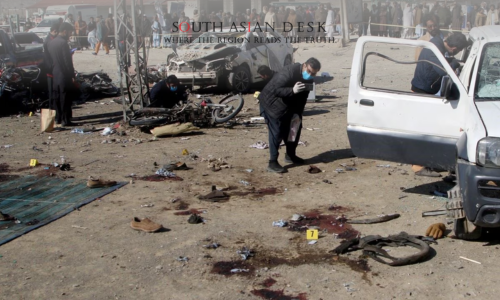
A suicide bombing at a Balochistan National Party rally in Quetta kills at least 5 and injures 29. On Tuesday, September 2, 2025, a suicide bombing struck a Balochistan National Party (BNP) rally in Quetta’s Shahwani Stadium, killing at least 5 people and injuring 29, shortly after an event marking the fourth death anniversary of Sardar Attaullah Mengal.
The Balochistan National Party attack underscores the persistent security challenges in Pakistan’s volatile Balochistan province, raising concerns about political violence and its impact on democratic processes in South Asia.
Shahwani Stadium Explosion: Details of the Attack
The explosion occurred in the parking lot of Shahwani Stadium in Quetta’s Sariab area, moments after the rally of Balochistan National Party-Mengal (BNP-M) concluded. The event commemorated the fourth death anniversary of BNP founder Sardar Attaullah Mengal. According to police officials, the blast was a suicide attack, with the bomber detonating an explosives-laden jacket as attendees were leaving. Security forces cordoned off the area, and rescue teams rushed the injured to Quetta Civil Hospital and Bolan Medical Complex.
Initial reports from the Balochistan Health Department confirmed 5 deaths and 29 injuries, though BNP-M acting president Advocate Sajid Tareen claimed 13 party workers were killed. According to a post, BNP chief Sardar Akhtar Mengal, who was present, escaped unharmed but expressed deep sorrow, stating, “Around 15 have been martyred and many injured. Their sacrifice will never be forgotten.”
Balochistan National Party Attack: Political and Security Context
The rally of Balochistan National Party-Mengal (BNP-M) was attended by key political figures, including Pakhtunkhwa Milli Awami Party chief Mehmood Khan Achakzai and former senator Mir Kabeer Muhammad Shai. The attack targeted the convoy of Akhtar Mengal, though he and other senior leaders remained safe. According to sources, preliminary investigations suggest the bomber aimed for Mengal’s vehicle, which had just passed the blast site.
Balochistan Chief Minister Mir Sarfraz Bugti condemned the attack as a “cowardly act by the enemies of humanity,” ordering top-quality medical care for the injured and a high-level investigation. No group has claimed responsibility, though prior ISIS threats against Baloch nationalist leaders, including Mengal, suggesting a pattern of targeted violence.
Impact on Balochistan’s Political Landscape
The Balochistan National Party attack highlights the region’s ongoing security struggles, with Balochistan facing separatist insurgencies and militant violence. The province, Pakistan’s largest yet poorest, has seen over 430 deaths in 2025 due to armed group activities, according to AFP figures. The BNP campaigns for greater Baloch rights and economic investment, making it a frequent target. A similar attack in March 2025 near Mastung saw a suicide bomber intercepted before reaching a BNP-M sit-in, preventing casualties.
Balochistan Health Minister Bakht Muhammad Kakar oversaw emergency medical responses, with hospitals declaring an emergency and mobilising blood supplies. Addiitonally several of the injured remain in critical condition, raising fears of a rising death toll.
Background
The Balochistan National Party-Mengal, led by Sardar Akhtar Mengal, has long advocated for Baloch rights amid tensions with the state. The province’s strategic importance, bordering Afghanistan and Iran, and its resource wealth make it a hotspot for violence. Recent floods and economic challenges have further strained Balochistan, amplifying the impact of such attacks on political stability.
What’s Next
Authorities have launched a high-level investigation into the Shahwani Stadium explosion, with heightened security measures in Quetta. This attack should seriously be investigated, BNP demanded. The resilience of the Balochistan National Party (BNP) rally Pakistan will be tested as it navigates ongoing threats to its leadership and supporters.
Published in SouthAsianDesk, September 3rd, 2025
Follow SouthAsianDesk on X, Instagram, and Facebook for insights on business and current affairs from across South Asia.