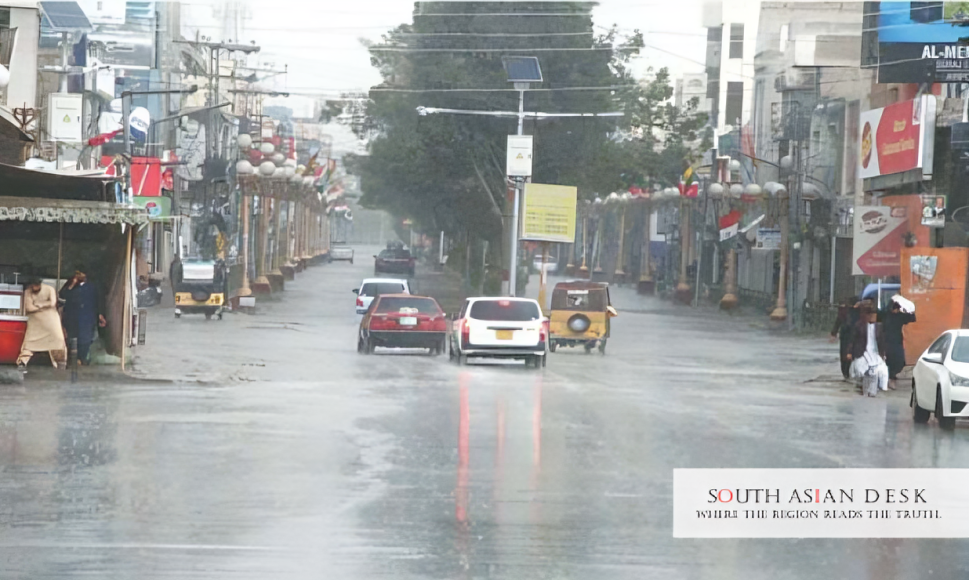
Heavy winter lashed Balochistan rains on Saturday, 20 December, 2025, killing two women in a road accident in Noshki district and injuring at least 13 others across the province. Power supply halted in Quetta and other areas, causing major disruptions as residents faced flooded roads and communication breakdowns.
Winter rains in Balochistan ended a prolonged dry spell that had raised alarms over drought conditions. The sudden downpour exposed gaps in infrastructure readiness across this arid South Asian province, where such events can trigger both relief for agriculture and risks to public safety.
Winter Rains Balochistan: Casualties and Immediate Impacts
Heavy rainfall struck multiple districts in Balochistan starting around noon on 20 December. In Noshki, a passenger wagon skidded on a wet highway near Sher Jan Agha and collided with a truck. This accident claimed the lives of two women and injured five others. Two of the injured were in critical condition and transferred to Quetta for treatment.
In Quetta, at least eight people sustained injuries in rain-related incidents and received care at Civil Hospital. The provincial capital saw low-lying areas flooded, with water entering homes, particularly those built from mud. Roads turned slippery, leading to traffic jams and halted public transport.
Power outages affected Quetta and surrounding regions. Electricity supply suspended due to the storm, leaving parts of the city in darkness until late night. Mobile phone services and communication networks also faced interruptions.
Affected districts included Ziarat, Pishin, Kalat, Chaman, Qila Abdullah, Harnai, Qila Saifullah, Zhob, Loralai, Mastung, Sibi, and Bolan. Rainfall continued intermittently into the evening, intensifying cold weather across northern, central, and eastern Balochistan.
Quetta Rainfall: Disruptions to Daily Life
Quetta rainfall measured significant amounts, though exact figures await confirmation from authorities. The downpour followed clouds hovering over the valley for two days prior. Residents had anticipated snowfall, but temperatures did not drop enough to cause it.
Balochistan weather disruptions extended to coastal areas like Gwadar, where rain was recorded. In Quetta, major roads flooded, causing severe congestion. Public transport services grounded, stranding commuters. Utility services strained as the storm damaged infrastructure.
The Pakistan Meteorological Department had forecasted a westerly wave entering Balochistan on 19 December, bringing rain and potential snowfall in hills. This system intensified on 20 December, contrary to initial predictions of weak activity.
Balochistan Weather Disruptions: Forecasts and Preparations
The National Disaster Management Authority issued an advisory on 17 December warning of rain-thunderstorm with snowfall over hills from 19 to 22 December. It highlighted risks like landslides, utility disruptions, and hailstorm damage in Balochistan.
NDMA’s winter contingency plan for October to December 2025 outlined preparations for such events. The plan identified mild to moderate drought risks in districts like Killa Saifullah, Kharan, Awaran, Kalat, Zhob, Mastung, Chagai, Washuk, Nushki, Panjgur, and parts of Gwadar. It stressed resource mapping, early warnings, and response strategies.
Precipitation outlook indicated near-normal levels in western Balochistan for October, mostly dry in November, and dry in southern parts for December. Temperatures expected slightly above normal during days, with normal night cooling.
The plan called for earth-moving machinery placement in vulnerable areas, mock exercises, and awareness campaigns. It emphasized coordination among provincial disaster management authorities, district administrations, and federal bodies.
PMD’s advisory on 19 December noted the westerly disturbance affecting western Balochistan, potentially bringing the first winter snowfall. However, no snowfall occurred on 20 December.
NDMA urged precautions: secure loose structures, avoid outdoor exposure during storms, and plan travel carefully. Farmers advised to manage activities amid hail risks. Tourists cautioned against hilly travel due to landslide threats.
Background of Balochistan Rains
Balochistan has faced below-normal rainfall forecasts till February 2026, with higher-than-usual temperatures aggravating drought-like conditions. The province’s arid climate makes winter rains vital for water recharge and agriculture. Past winters saw average snowfall in northern catchments, but recent dry spells raised concerns.
The 2025 winter plan built on lessons from prior seasons, where rainfall declined significantly from December 2024 to March 2025. Balochistan recorded above-average rain in some areas last winter, but overall trends pointed to drier conditions.
Infrastructure vulnerabilities persist in remote districts. Power grids and roads often fail during storms, as seen in previous events. Government data shows localized droughts in arid zones, reliant on groundwater.
What’s Next
Authorities monitor the weather system through 22 December. NDMA and PMD will issue updates if conditions worsen. Relief efforts may activate if damages mount. Residents in affected areas should heed advisories to mitigate further Balochistan rains impacts.
Winter rains in Balochistan could continue sporadically, providing relief from drought but requiring sustained infrastructure improvements.
Published in SouthAsianDesk, December 21st, 2025
Follow SouthAsianDesk on X, Instagram, and Facebook for insights on business and current affairs from across South Asia.